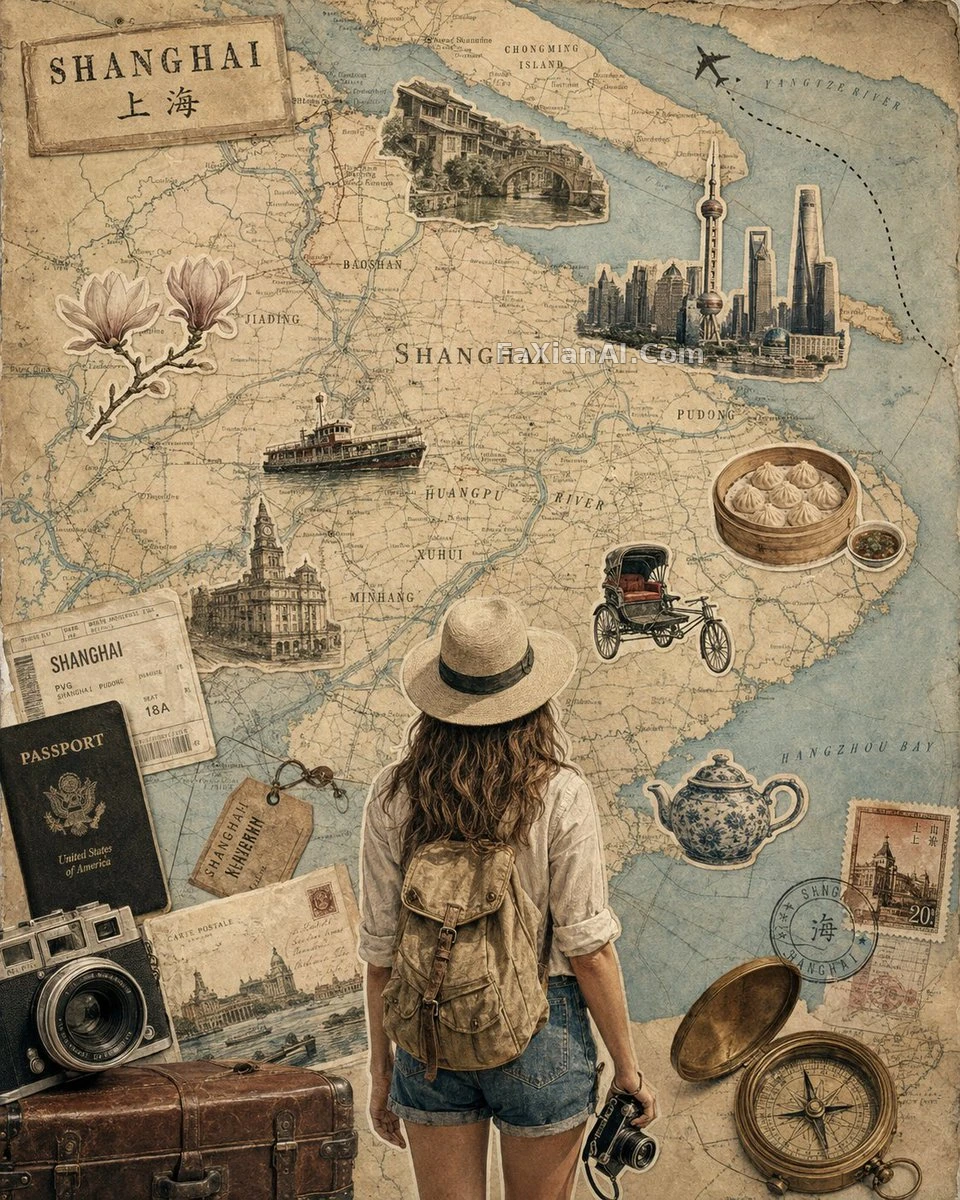
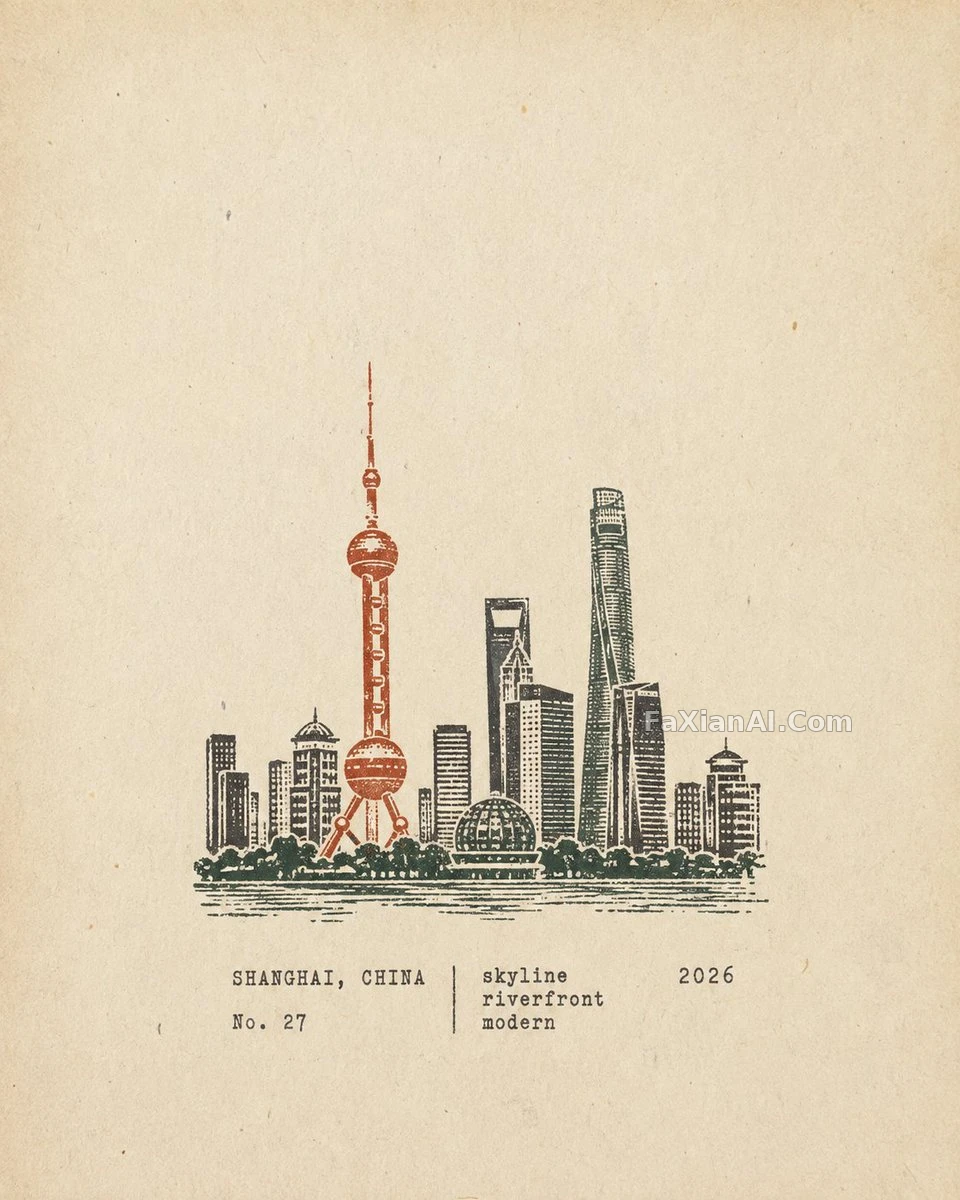
一枚橡皮章,盖出一座城的轮廓
留白铺满旧纸感,中下方一枚多色刻章,克制到只剩识别度。
✍️ 识别度靠减法堆出来,不是加法——去掉人群车辆和重复窗户,只留下能一眼认出地方的那几笔轮廓。印章占画面三成左右,多一分就抢戏,少一分又认不出来。
📋 提示词 YAML 分段式2637 字符
Output each scene as its own separate poster -- never merge scenes into a collage.
Format: strict 4:5 portrait. Cover the full frame in warm off-white aged paper -- subtle fibers, natural grain, light wear, matte tactile texture -- and keep generous blank whitespace.
Stamp artwork: a compact, multi-color carved rubber stamp depicting the location's most recognizable features -- distinctive architecture, mountains, terrain, vegetation, roads, shorelines, skyline, or key foreground shapes. Simplify aggressively, keeping only the visual information needed to instantly recognize the place and scene; strip out crowds, vehicles, repetitive windows, dense buildings, fragmented vegetation, decorative details and irrelevant background elements.
Position the stamp lower-middle, occupying about 30-38% of the frame height, with ample whitespace around it -- compact and understated, not a full landscape illustration, painting, logo or oversized graphic.
Let the subject decide the layout:
- Architecture -> distinctive silhouettes, roofs, domes, arches, towers and main structures.
- Mountain settlements -> simplified terraced buildings that follow the terrain.
- Coastal scenes -> mountains, settlement layers, shoreline and a few sparse water marks.
- City panoramas -> the main skyline, one iconic structure and distant mountains.
- Natural landscapes -> the primary mountains, trees, shorelines and the direction of roads.
Ink and texture: 2-4 muted spot colors drawn from the scene itself -- carbon black, deep green, brick red, ochre, slate blue or taupe, for example. Print every color as its own hand-stamped layer carrying real carved-rubber flaws: engraved marks, uneven lines, chipped edges, dry-ink gaps, paper showing through, granular ink, uneven pressure, ghosting and a subtle 1-2 mm misregistration. It has to read as an actual rubber stamp pressed into aged paper -- never a smooth vector, a filtered photo or a digital logo.
Typography, set in the whitespace below or beside the stamp in a small, restrained, slightly imperfect typewriter face -- minimal, accurate, documentary:
- the location's English name
- No. [number]
- three short English keywords
- the year 2026
Mood: quiet, tactile, restrained, regional, observational, collectible -- like field notes kept by an architect, a travel writer or a naturalist.
Avoid: circular seals, Chinese red seal stamps, postage perforations, wax seals, stickers, souvenir templates, generic city icons, smooth vector logos, cartoon styling, 3D rendering, glossy gradients, plastic textures, oversaturation, excessive detail, excessive text and decorative clutter.
📋 中文译写版 自然语言827 字符
每个场景单独输出成一张海报——绝不把多个场景合并成拼贴画。
格式:严格4:5竖版。整个画面覆盖暖米白色做旧纸张——细微纤维感、自然颗粒、轻微磨损、哑光触感——并保留大量空白。
印章图案:一枚紧凑的多色雕刻橡皮章,描绘该地点最具辨识度的特征——独特建筑、山脉、地形、植被、道路、海岸线、天际线或关键前景轮廓。大幅简化,只保留能让人一眼认出地点与场景所需的视觉信息;去掉人群、车辆、重复窗户、密集建筑、零碎植被、装饰细节与无关背景元素。
将印章放在中下方位置,占画面高度约30%到38%,四周留有充足空白——保持紧凑克制,不是完整的风景插画、绘画、徽标或超大图形。
让题材决定布局:
- 建筑类 → 独特轮廓、屋顶、穹顶、拱门、塔楼与主体结构。
- 山地聚落 → 顺着地形排布的简化梯田式建筑。
- 海岸场景 → 山体、聚落层次、海岸线,加几笔稀疏的水纹。
- 城市全景 → 主天际线、一座标志性建筑和远处山峦。
- 自然风景 → 主山体、树木、海岸线与道路走向。
油墨与质感:从场景里取2到4个低饱和专色,例如炭黑、深绿、砖红、赭黄、石板蓝或灰褐。每个颜色单独一层手盖,带真实橡皮雕刻的瑕疵:刻痕、线条不匀、边缘崩口、干墨缺口、纸色透出、颗粒状油墨、压力不均、重影,以及1到2毫米的轻微套色错位。必须看起来是真的橡皮章按在旧纸上——绝不能像平滑矢量图、滤镜照片或数字标志。
文字排在印章下方或侧边的空白处,用小号、克制、略带瑕疵的打字机字体,简洁、准确、像档案记录:
- 地点的英文名
- No. [编号]
- 三个简短的英文关键词
- 年份 2026
情绪:安静、有触感、克制、有地域性、观察式、有收藏感——像建筑师、旅行作家或博物观察者随手记下的田野笔记。
避免:圆形印章、中式红色印章、邮票齿孔、火漆印、贴纸、旅游纪念品模板、泛泛的城市图标、光滑矢量标志、卡通风格、3D渲染、光面渐变、塑料质感、过饱和、细节过多、文字过多和装饰堆砌。