
"Clear Contours with Just a Few Ink Colors"
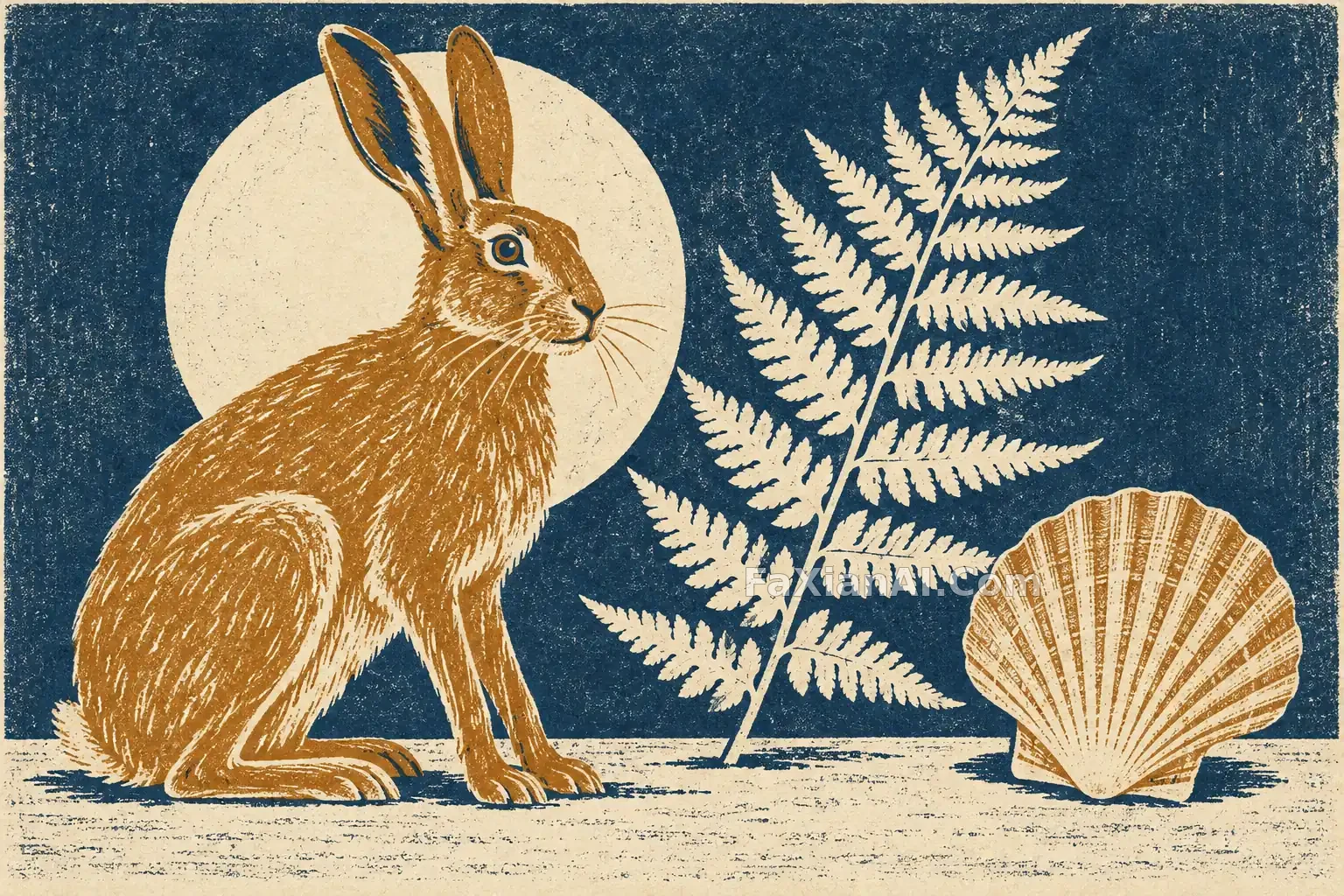
Stencil prints, etchings and ink lines share negative space, but need different grain and edges.
Assign each color a job
In the hare stencil, ginger defines the subject while deep blue defines grass and motion. Cream paper supplies a third value without another white ink layer. Restrict misregistration to a few edges; the eye and hind legs still need clear placement. The existing woodland-food Risograph case shows how colors separate the subject from supporting objects.
A Ginger Hare in Two Stencil Colors
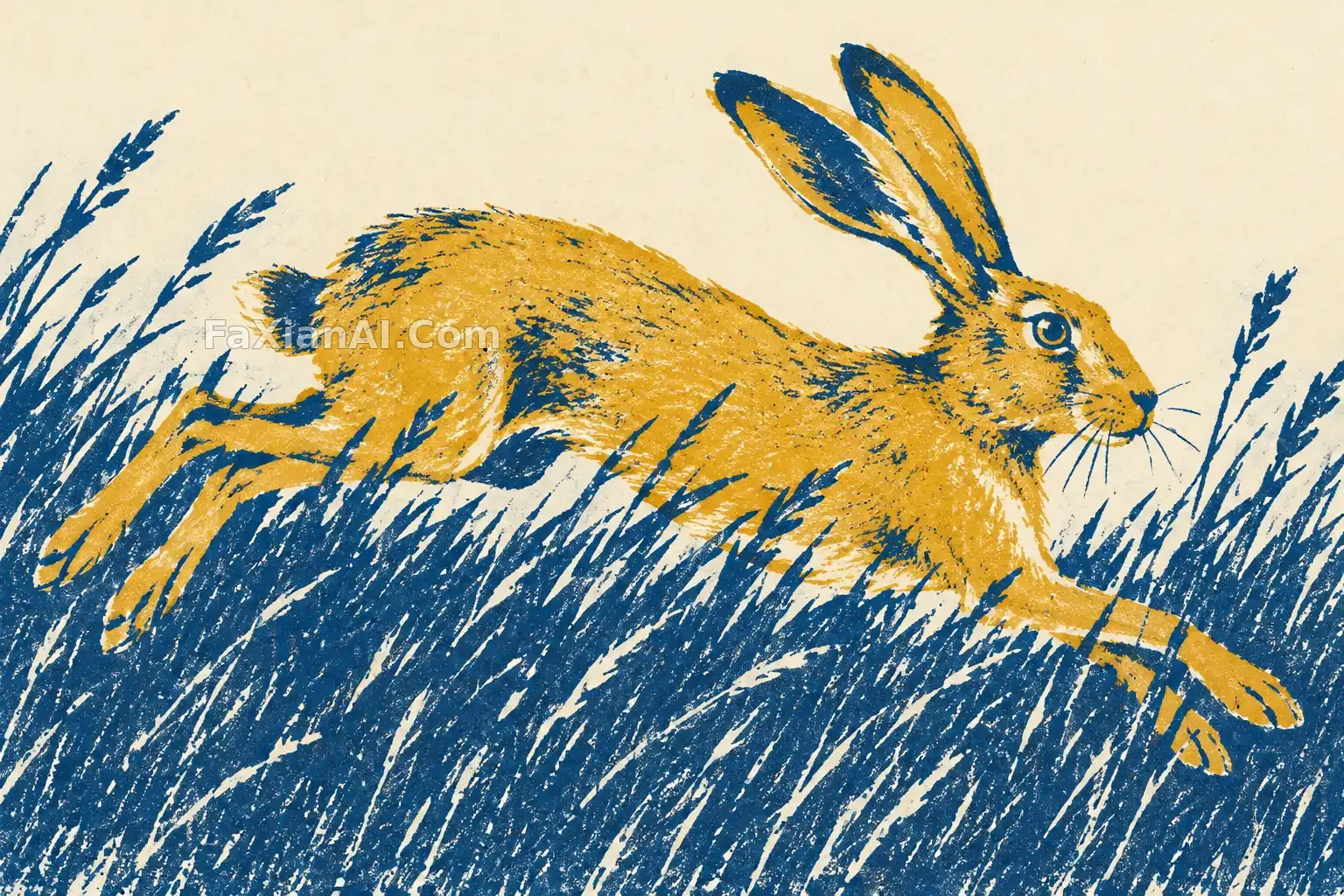
Let lines follow structure
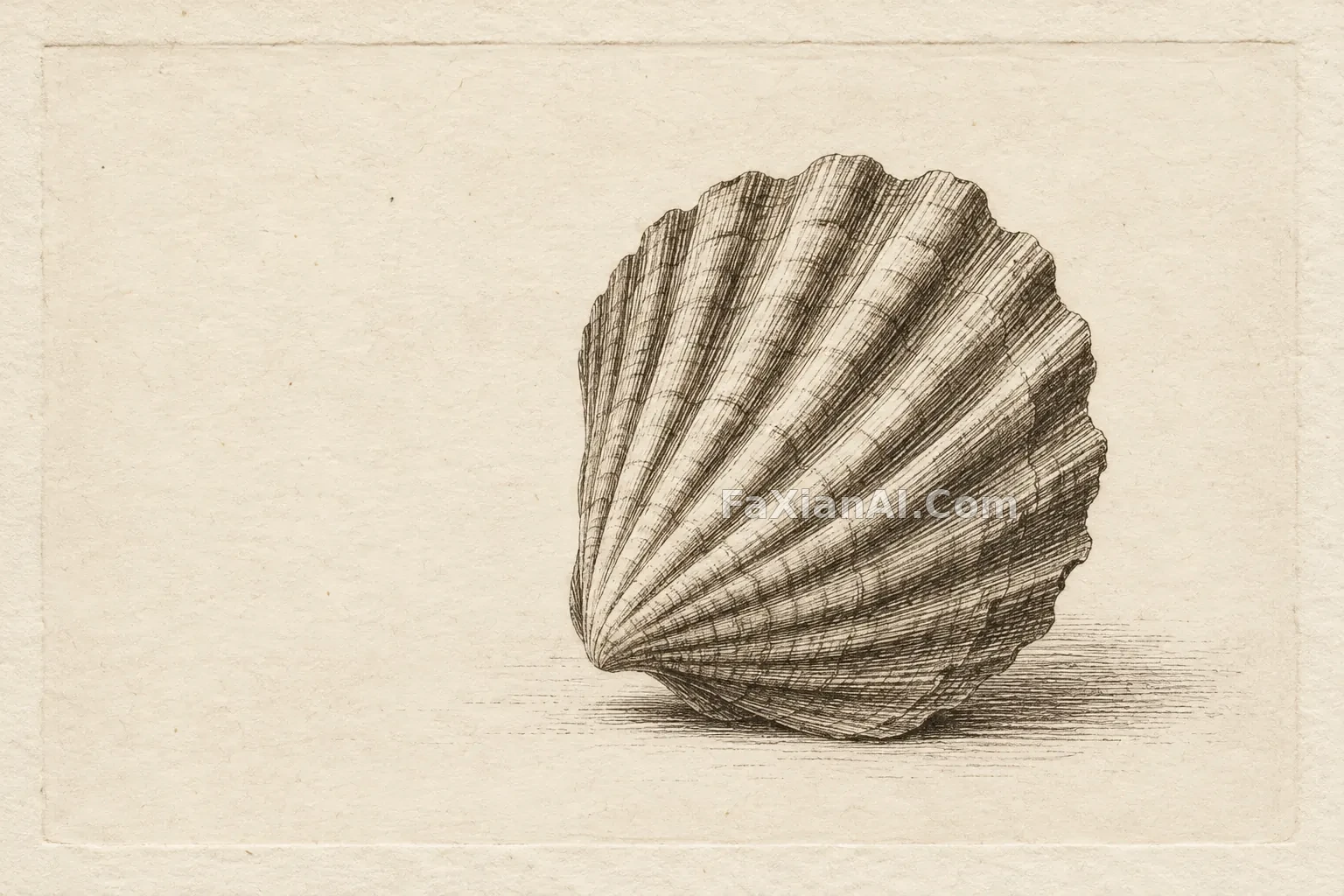
Scallop hatching curves along the shell ridges, thickens in shadow and leaves paper exposed in light. Uniform detail becomes scanning noise and loses volume. Compare the existing origami crane: etching explains turns through line density, while folded paper uses real planes and cast shadows. A shared sharpness slogan cannot replace the structure specific to each medium.
Etched Lines Along a Scallop Shell
Negative space should retain movement
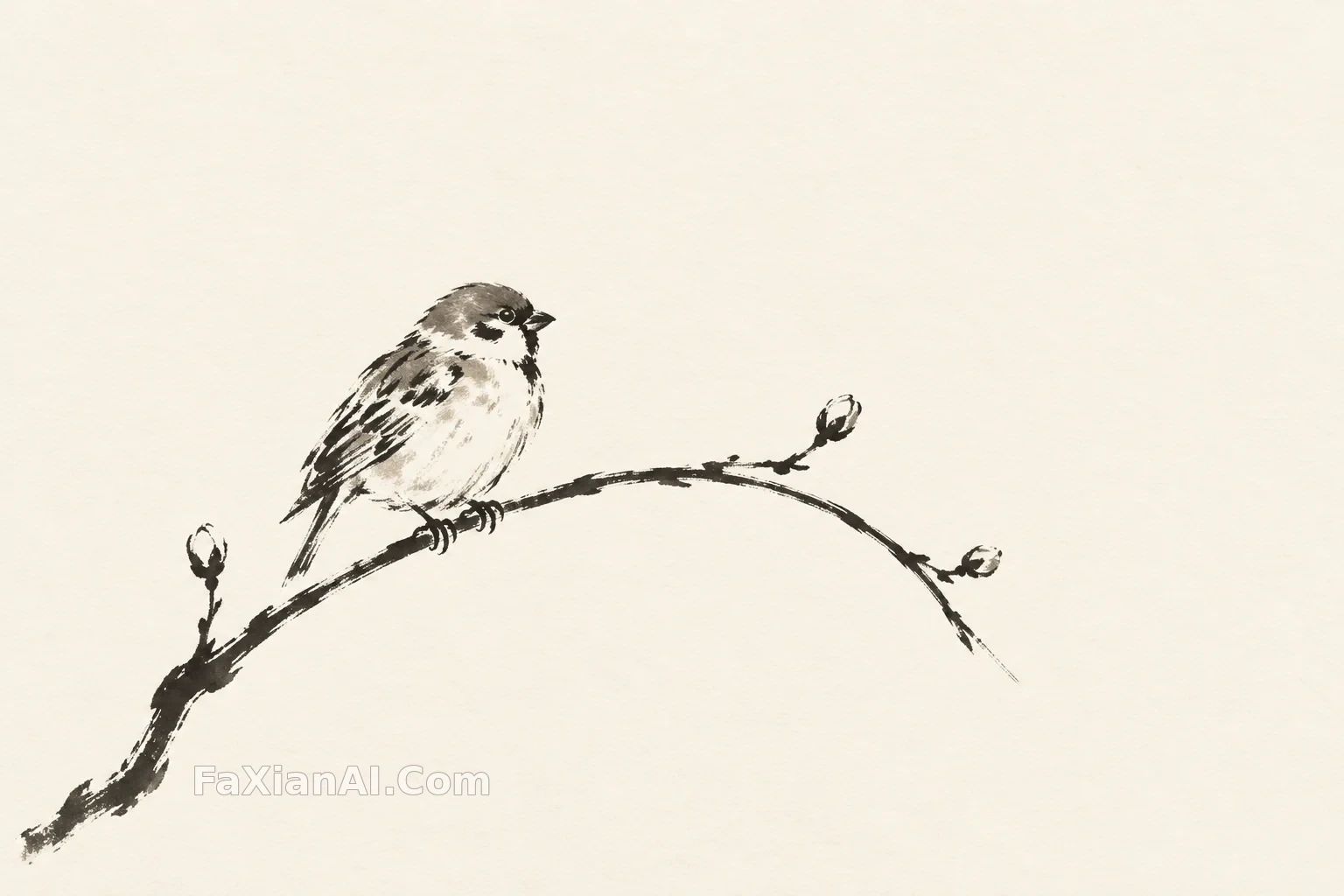
The sparrow needs just three plum buds and one curved branch. Space between body and branch makes its balance clear. Dry-brush gaps describe a medium; they do not excuse missing anatomy. Count the foot contacts, then inspect eye and beak. Print effects suit editorial covers and paper patterns, but dense grain looks dirty at small sizes. Background grain should support the content.
A Sparrow on Sparse Ink Plum Branches
Check thumbnails before fine lines
Write a clear scene in deep blue, ochre and paper color, assigning a task to each. Then change only line density, not the object count. Check the silhouette at thumbnail size and enlarge the final image to see whether fine lines merge into dark blocks. Generated print texture is a visual simulation, not proof of a physical process, and does not guarantee seamless repeats.
Compare these published cases for folded-plane shadows and two-color roles.
An Indigo Crane and Its Long Shadow