
One Side Light, Three Materials: Porcelain, Metal and Linen
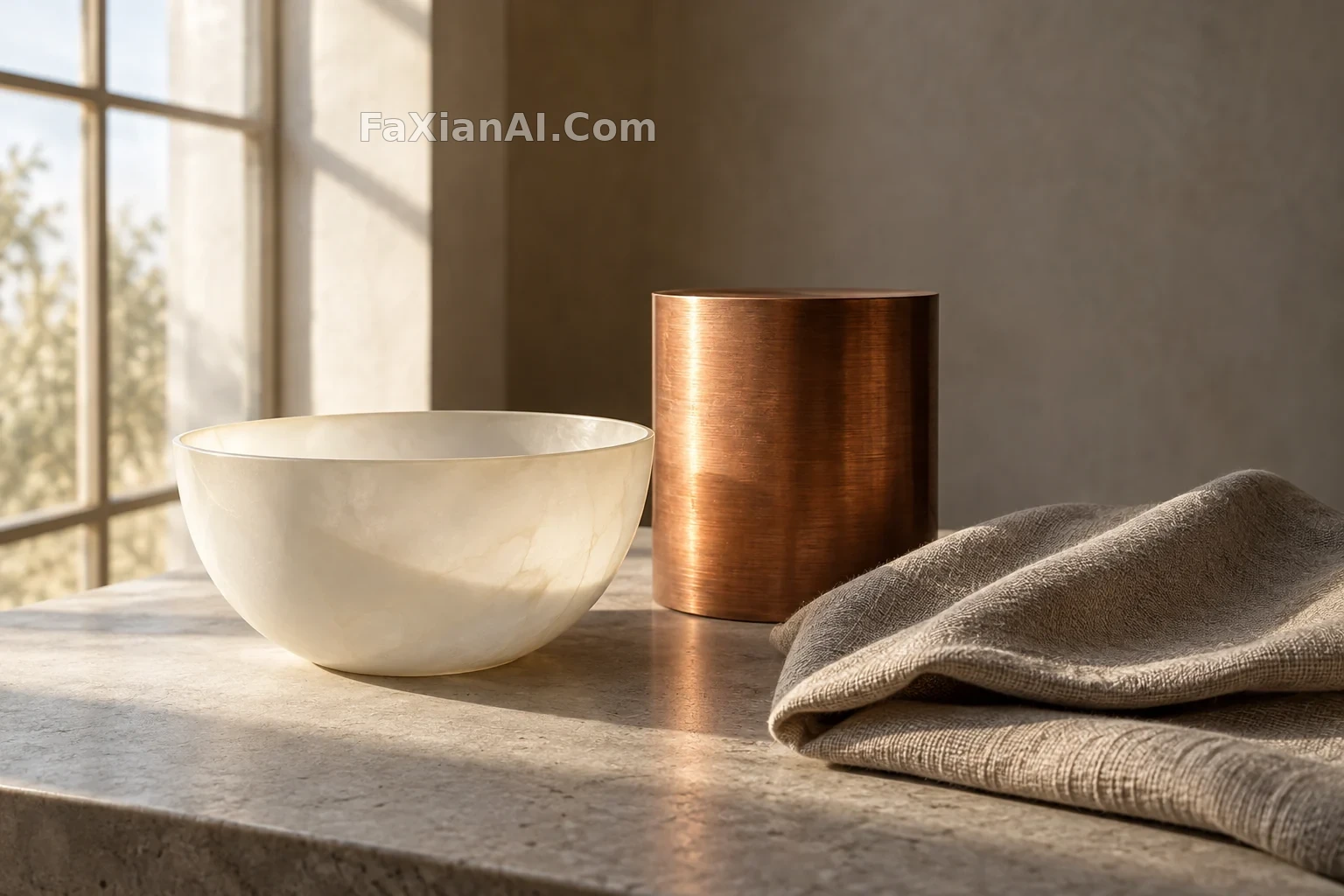
A stack of adjectives such as refined, detailed and realistic can produce an attractive still life whose materials remain ambiguous. Start with an explainable light source, then describe each surface's response. These porcelain, silver and headphone examples compare transmission, reflection and diffuse light; they are generated visual studies, not physical material tests.
Thin Porcelain: Describe Thickness at the Edge
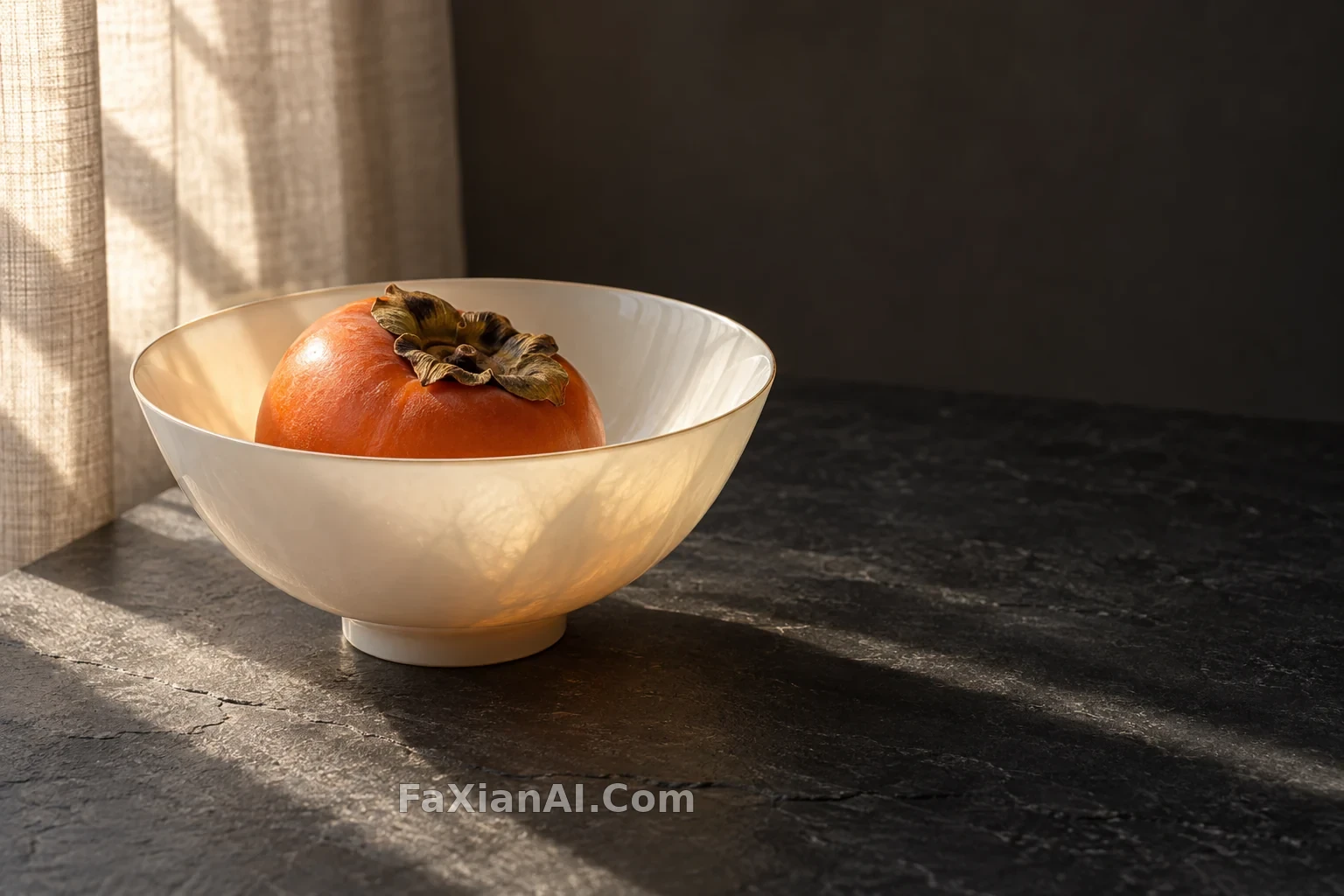
The persimmon study combines a low viewpoint, a thin rim and side-window light. The illuminated edge preserves the bowl's volume, while the orange fruit supplies a warm reference. Applying translucent to the entire vessel can turn porcelain into glass. Limit transmission to thin walls and edges. Check that the rim stays continuous and the contact shadow supports the bowl's weight.
Persimmon Warmth Through Bone China
Silver: Give Reflections a Source
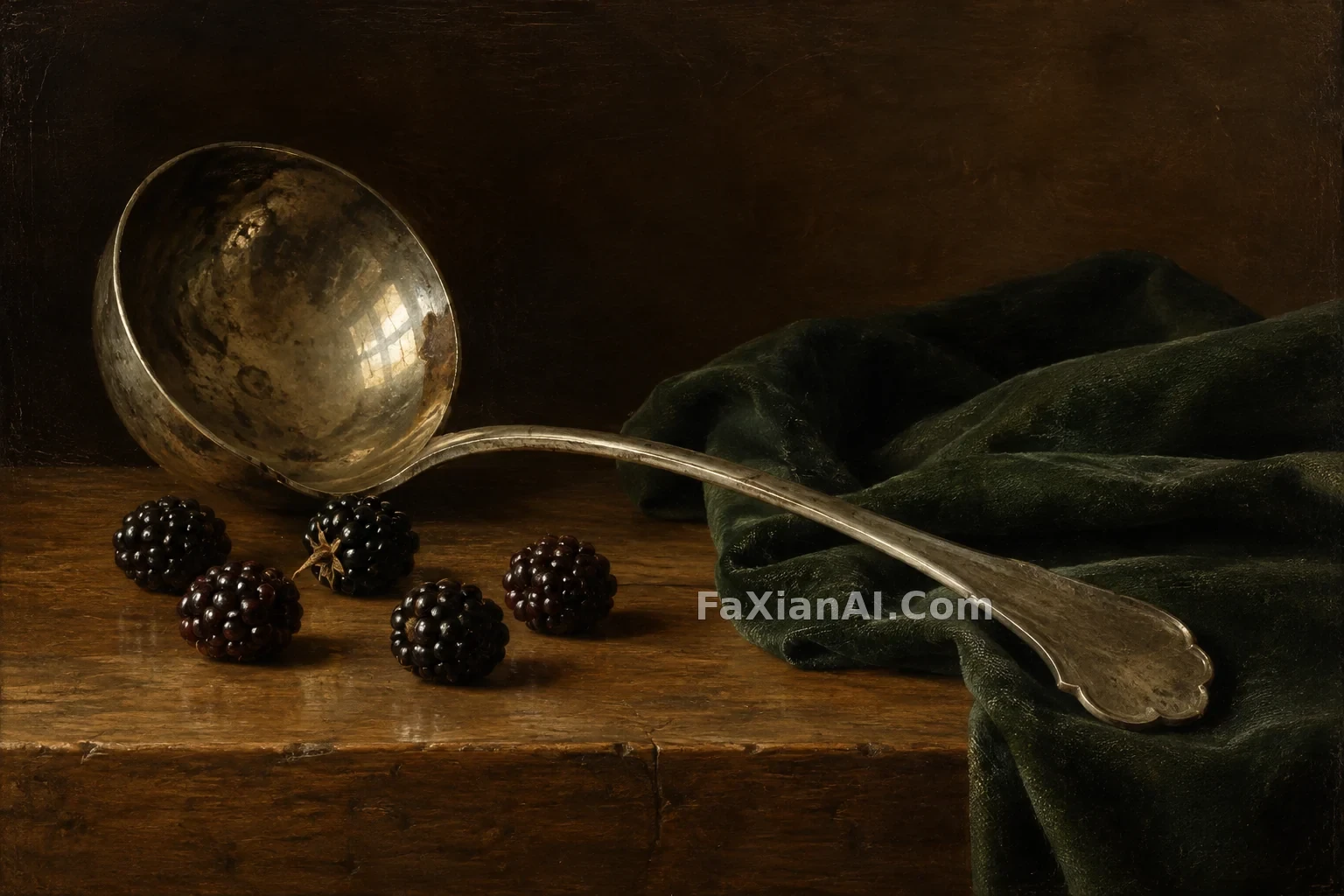
The ladle and blackberries use a dark background to receive the window highlight; tarnished silver contrasts with bright edges. Metal describes its shape through environmental reflections. Shiny alone often creates arbitrary bright patches. Oil-painting brushwork can simplify detail while preserving the relationship between bowl, handle and table. For commerce imagery, try a large softbox and reduce textures that resemble scratches.
Silver Ladle and Blackberries in Shadow
Fabric and Cork: Let Small Shadows Explain Texture
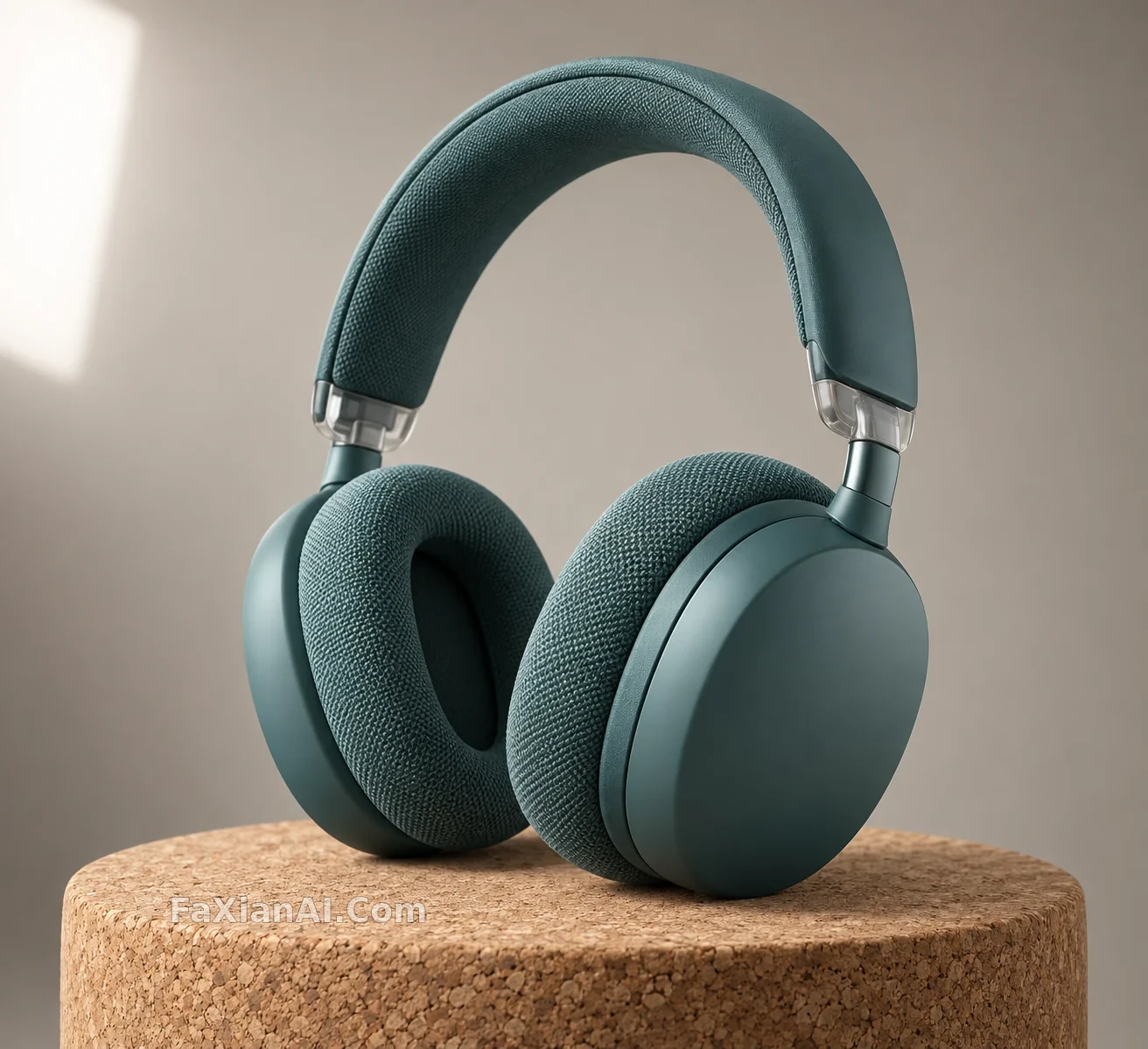
The teal headphones separate matte housing, woven pads and cork support. Fabric needs small pores and soft edges; cork needs irregular grains. Calling all three smooth erases their differences. Check pad contours and hinges before microtexture, so extra texture is not mistaken for sharpness.
Exercise: Change One Material Response
Keep the subject, viewpoint and large left window. Replace a translucent porcelain edge with a narrow bright reflection on brushed metal, then with soft microshadows between linen fibers. Compare material response rather than changing the subject. Example: a thin-walled white porcelain cup on warm gray slate, soft light from a large left window, slight transmission at the rim, an opaque volumetric body and a complete contact shadow. Check the shape after every generation; a material word does not prove accuracy.
Continue with still-life and commerce examples, and compare lighting choices in the structure-and-light article.