
Material Prompts Need Structure and Light
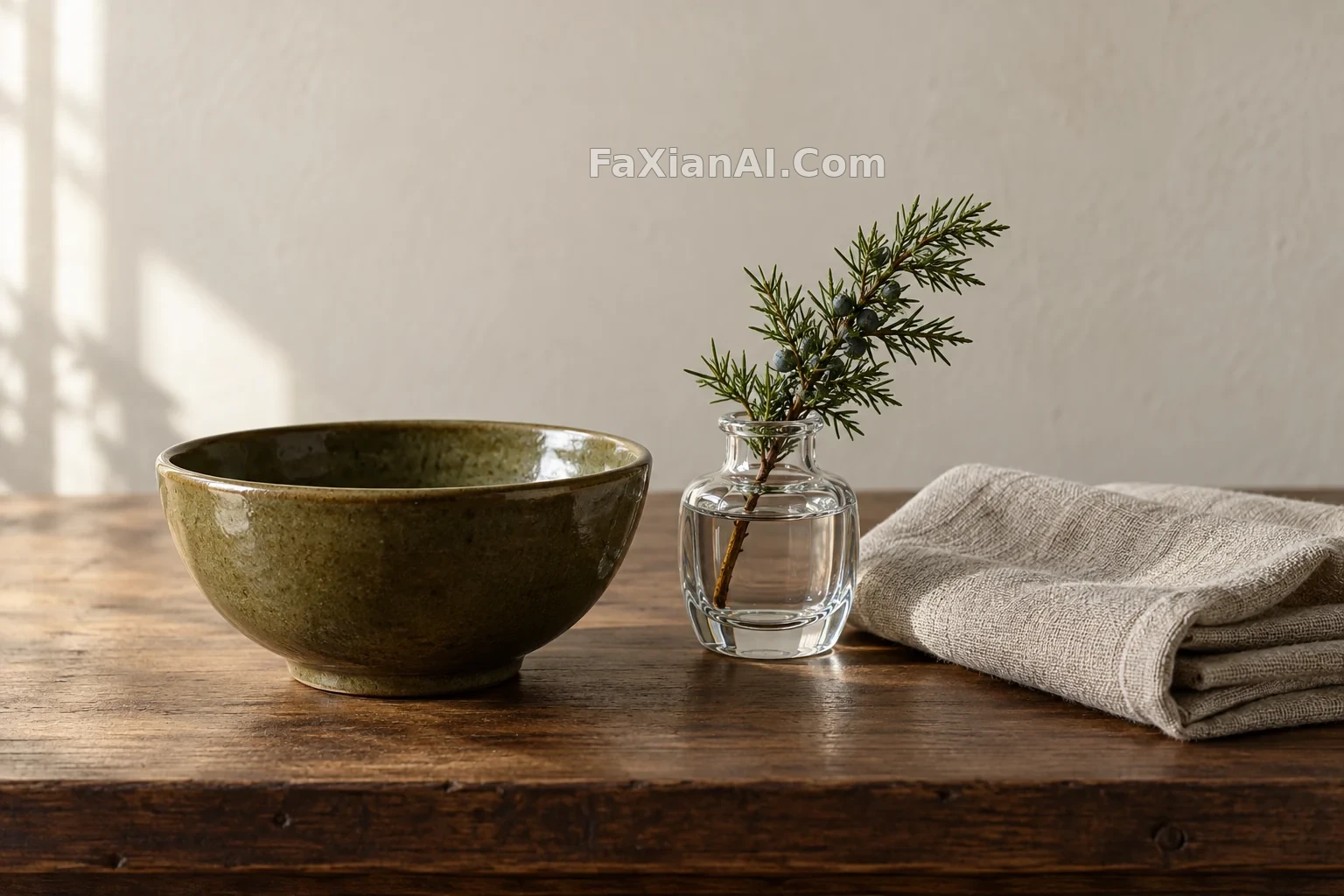
“Luxurious wood” or “delicate ceramic” supplies a mood. A convincing material needs an object that connects properly, light that describes its surface, and a few details that remain visible. The hero illustrates that order with wood, ceramic, cloth and glass on one workbench; it is an illustration for this article, rather than a photographed materials test.
Establish structure before texture
The sand-cast aluminum chair specifies a low seat, back, four stable legs and a plausible load-bearing structure. Granular casting and polished contact edges then have a physical place to belong. Count the legs, inspect their joints and contact shadows, and only then judge the grain. Rich texture cannot rescue floating supports.
Today's exploded pebble-chair concept applies the same idea to separated parts. Each component still needs a matching connection. Arranging a disassembly along one axis gives a more interpretable structure than simply requesting floating pieces.
Describe the light and its reflection
The celadon studio source asks for soft side-window light, an intact rim and a contact shadow. The highlight follows the curved body while the crackle remains fine and subordinate. Compare shapes in the ceramic glaze collection to see how similar light behaves on curves and corners.
Soft light still casts shadows. Without a contact shadow, the vase can appear pasted onto the background; a reflection covering every crack can flatten its surface. A prompt can request a highlight narrower than the body and visible crackle on the side, but the result must be inspected to confirm it happened.
Give details a readable scale
The walnut salt-cellar catalogue image uses an oblique view to expose the lid seam, grain and a few salt crystals. Salt supplies scale; grain supplies material. Neither needs to fill the entire frame. Explore the product-image category for compositions, and the scale-cues tutorial for judging prop size.
The canal lantern embroidery instead relies on stitch direction, bridge boundaries and French knots. Inspect the encoded image after specifying the thread: a smaller file may preserve the whole bridge while merging adjacent strands. Adding “ultra HD” cannot replace that visual check.
A reusable sequence
Write subject and count, connection or boundary, viewpoint, light direction and size, two important surface details, then background. For example: one closed walnut salt cellar, a continuous lid seam, an oblique close view, narrow soft light from the left, legible wood grain and salt edges, and open gray tabletop. Avoid combining contradictory macro and wide views, or strong gloss and a completely matte finish.
Inspect in the same order: coherent structure, consistent light, important details in focus, and a background that supports the subject. Change the most consequential problem first and keep the previous image for comparison, so the effect of the prompt revision can actually be judged.