
Pet Portrait Prompts: How to Write Fur, Eyes, Light and Background So Cats and Dogs Don't Melt into a Blob of Fluff
When people make an AI portrait of their own cat or dog, or a header image for a pet shop or pet product, the prompt is often a single line: "a cute cat, high quality, 8k". What comes back usually looks like this: the fur is one even slab of fuzz with no sense of length or softness; the eyes have color but no life; the white dog is blown out into a blob, and the grey cat sitting against a grey wall simply disappears.
Looking through the pet portrait cases collected on the site, the ones that come out reliably all write four things beyond the breed name: what the fur feels like, where the focus is pinned, how the light divides its work, and how the background relates to the coat color. Here they are in that order.
1. Fur: Write the Feel, Not Just the Breed
A breed name only fixes the silhouette and the markings. How fluffy the coat is has to be spelled out separately.
The British Shorthair blue cat studio shot hinges on one phrase: dense plush teddy-bear coat. "A teddy bear's thick plush" is far more specific than fluffy; the model renders short, dense fur that swallows light, and the round cheeks puff out along with it.
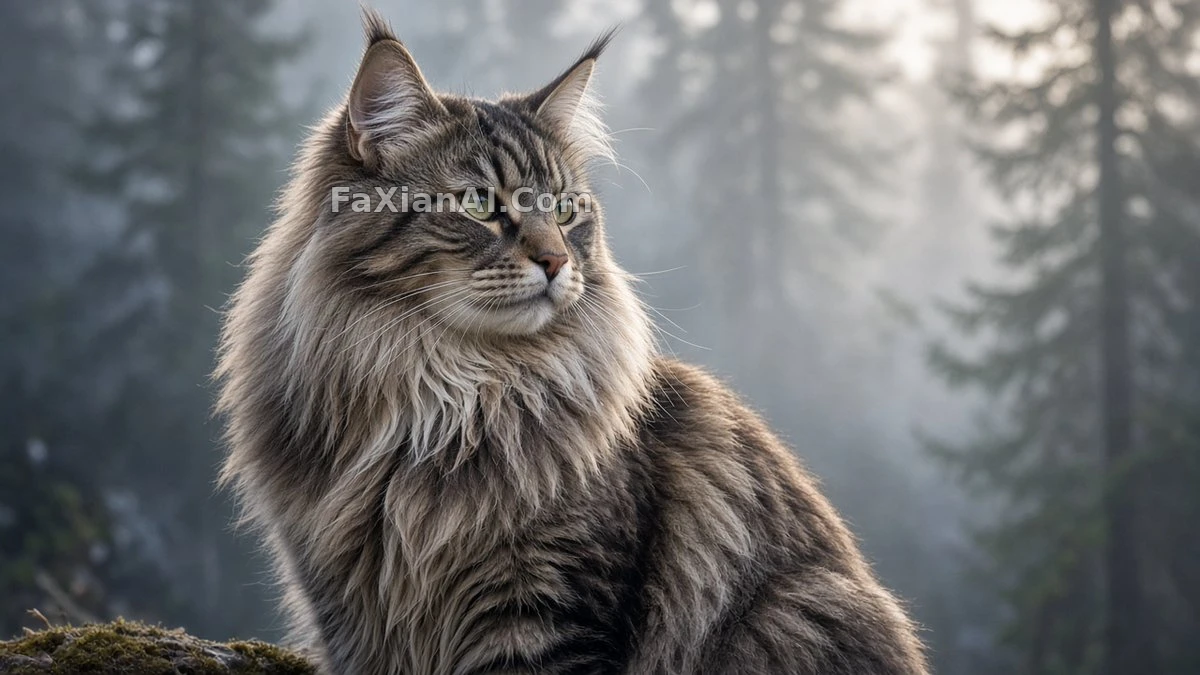
The Norwegian Forest Cat goes the opposite way: long wild ruff, lynx-tipped ears, a long untidy neck ruff and a tuft at each ear tip. Both are cats, but one is written "dense" and the other "wild", and the character that comes out is completely different.
If something else in the frame has its own material, let it contrast with the fur. In the husky puppy and butterfly case, the real effort goes into the board underneath: weathered, visible cracks, dark stains. The rougher the wood, the softer the fur looks.
2. Eyes: Pin the Focus on Them
Whether a pet photo has "spirit" comes down eight times out of ten to the eyes. Two techniques show up in almost every good case:
1. Write the catchlight. The British Shorthair case says bright copper eyes carrying clear catchlights. Without that line, the eyes often come out as two flat patches of color.
2. Write depth of field as "only this part is sharp." The cat peeking out of a cardboard box states outright that only the cat's eyes and nose stay tack-sharp and everything else may blur. Write only shallow depth of field and the model sometimes puts the focus on the whiskers or the edge of the box.
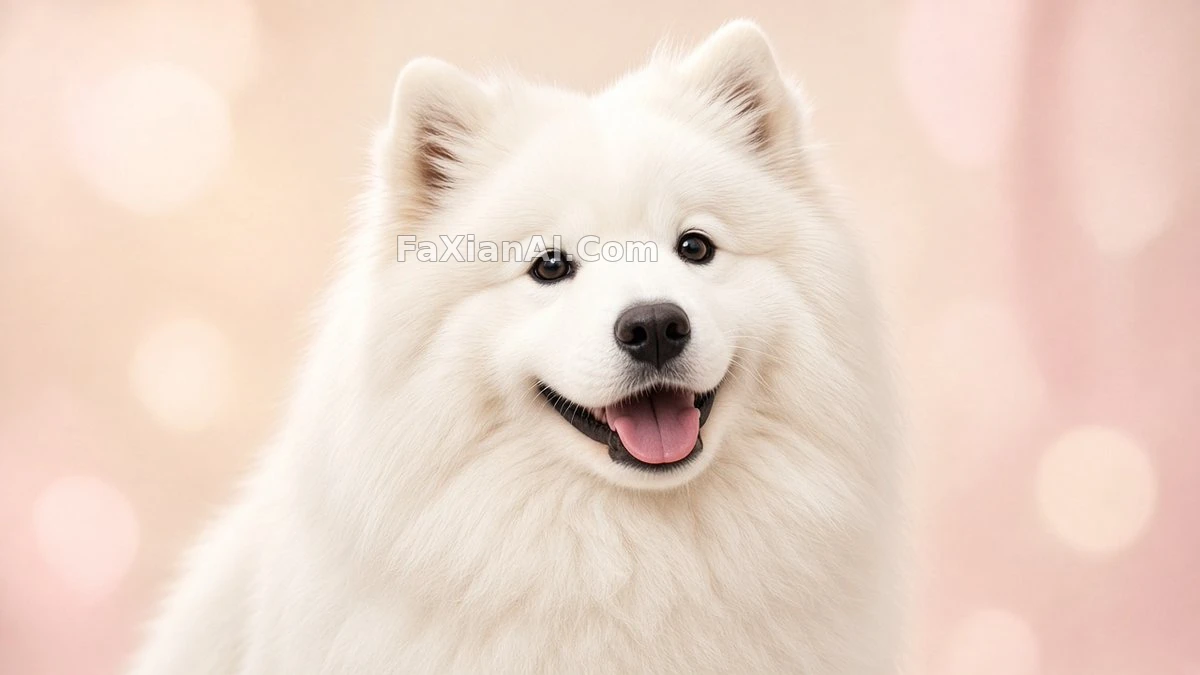
Expression words also work better than breed adjectives. The Norwegian Forest Cat uses calm, alert expression, "calm but watchful"; the Samoyed case writes black eyes curved in a smile, eyes crinkled into crescents. Compared with generic words like majestic or adorable, this lands directly on the facial features.
3. Light: One Key Light Isn't Enough, Say Who Does What
For studio pet shots, the most common setup is a softbox key plus a reflector fill. The British Shorthair case is exactly that: softbox as key with a gentle reflector for fill. The fill lifts the shadows so the fur doesn't clog into black.
For more drama, borrow the division of labor from the Maltese rocking out: a narrow warm rim plus a broader cool ambient fill. A narrow warm edge light runs along the outline of the coat while a wide cool ambient layer holds the background. With the tips of the fur lit warm, the subject separates from the dark backdrop. The Norwegian Forest Cat's soft cinematic rim light follows the same idea, only the background is a misty pine forest.
4. Background: Pull It Away from the Coat, or Match It on Purpose
Background color should be considered together with coat color. There are generally two approaches:
- Same color family, held up by the eyes. The blue British Shorthair sits against a seamless soft grey backdrop, grey cat on grey. It looks very refined, but only if the earlier lines set up the catchlight and the fill, so the copper eyes become the one warm bright spot in the frame.
- Shift warm/cool or brightness. The Samoyed has pure white fur, so the background is a soft pastel seamless backdrop, a thin wash of pastel, to keep the white coat from merging with a pure white background. It also uses gentle beauty-style softbox light, broad soft light rather than hard light, because white fur is most afraid of blown highlights, and the layering at the fur tips survives only under soft light.
Outdoor scenes work the same way. The Norwegian Forest Cat uses a telephoto to compress the pine forest into a layer of cool mist, so the cat's warm mane "floats" in front.
5. A Common Trap: Contradictory Parameters
The sunlit dog case writes a camera, a lens and a set of shooting parameters: Sony A7R IV, 24-70mm f/2.8 GM, then ISO 100, 1/100s, f/8, while also asking for soft, luscious bokeh. In real life f/8 is a stopped-down setting that keeps the background fairly sharp, which fights with "creamy blur". The model usually satisfies the visual word like bokeh first and treats the parameters as a style hint.
So when writing pet portraits, describe the visual effect in plain descriptive words and treat camera parameters as garnish; when the two conflict, the description wins, and the parameters are better left out.
6. For Fun, Give the Dog a "Human Action"
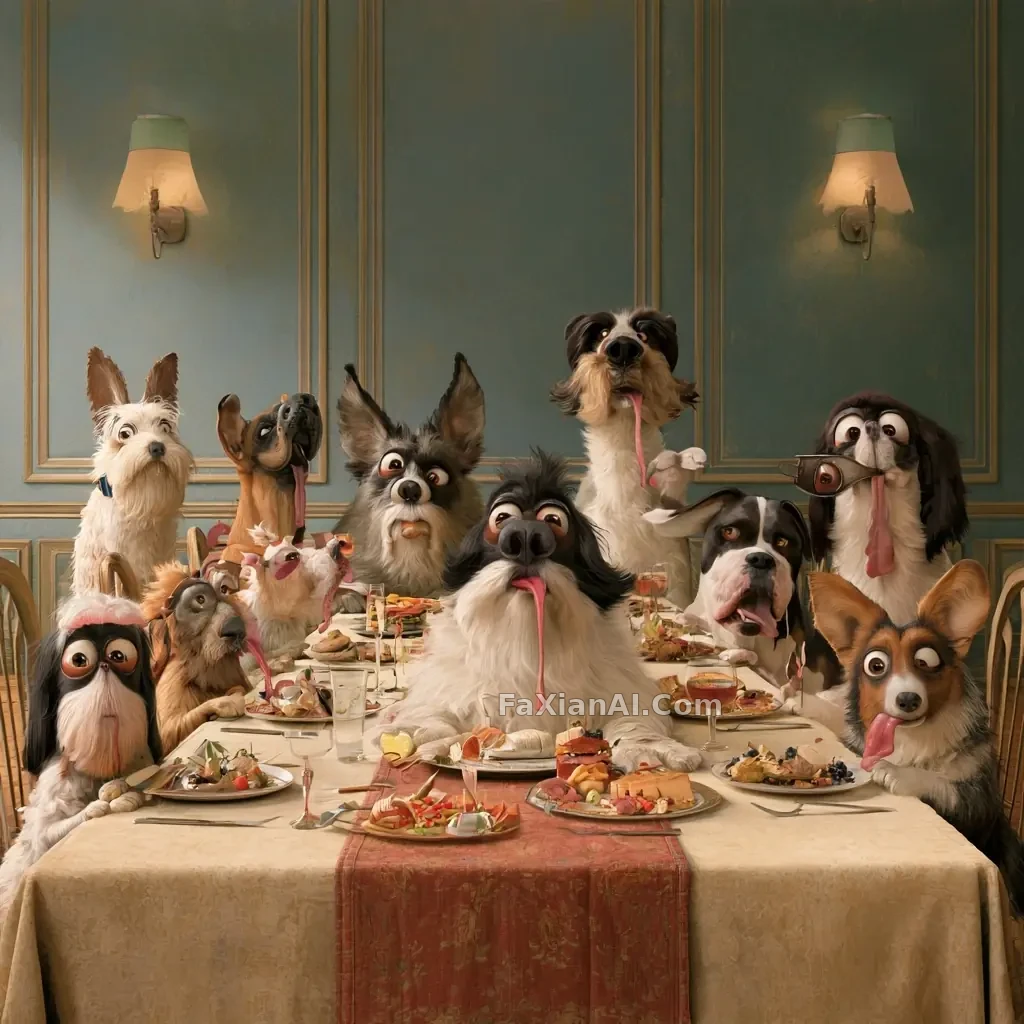
If it isn't a pure portrait and you want a memorable, playful image, look at the dogs at a long dinner table and the bulldog in a suit. The first one's hook is dogs sitting like people and eating human food; the second carries its joke through composition constraints: chair, armrests, chair legs and casters all in frame, both front paws resting on the armrests, and cutting any one of them loses the deadpan air.
A General Template
Put the points above together and you get a skeleton for a pet portrait. Swap the bracketed parts for your own:
```
Editorial pet photography, 85mm, shallow depth of field: a photoreal portrait of [breed], [coat texture: dense plush / long wild ruff / cloud-white double coat], [eye color] eyes with clear catchlights, [expression: calm and alert / smiling]. Only the eyes and nose are tack-sharp. Lit by a large softbox as key with a gentle reflector for fill [or: narrow warm rim light plus cool ambient fill], against a [background that contrasts with the coat]. --ar 4:5
```
For white fur, remember large soft light and a touch of color in the background; for dark fur, remember fill or rim light; for a same-color background, always write the catchlight.
For more on lighting portraits, see how to write portrait lighting that doesn't look plastic; to leave room for text on a pet image, see negative space in prompts.