
Portrait Lighting Prompts That Retain Skin and Occupational Detail

Cinematic mood does not replace specific lighting instructions. Establish pose, clothing and held objects before describing light direction and strength. Facial depth, occupational context and hand structure build credibility more effectively than a string of refinement adjectives. These three approaches suit studio portraits, interview illustrations and character studies.
Three-point lighting: restrain the fill
The potter uses a broad key to shape the face, weak fill for shadow detail and a narrow rim to separate hair from the background. Making all three lights strong flattens the face. The white bowl also provides an exposure reference: its edge should remain shaped rather than becoming a blank white patch.
A Potter Under Three-Point Lighting

Half-light: dark areas still need information
One side of the sculptor's face enters deep shadow, but skin and collar remain readable. The blurred sculpture avoids competing with the face. This suits a dignified mood rather than a catalogue requiring even makeup visibility. Darkness should not conceal implausible eyes or hands.
A Sculptor's Half-Lit Portrait

Two colors: let color support form
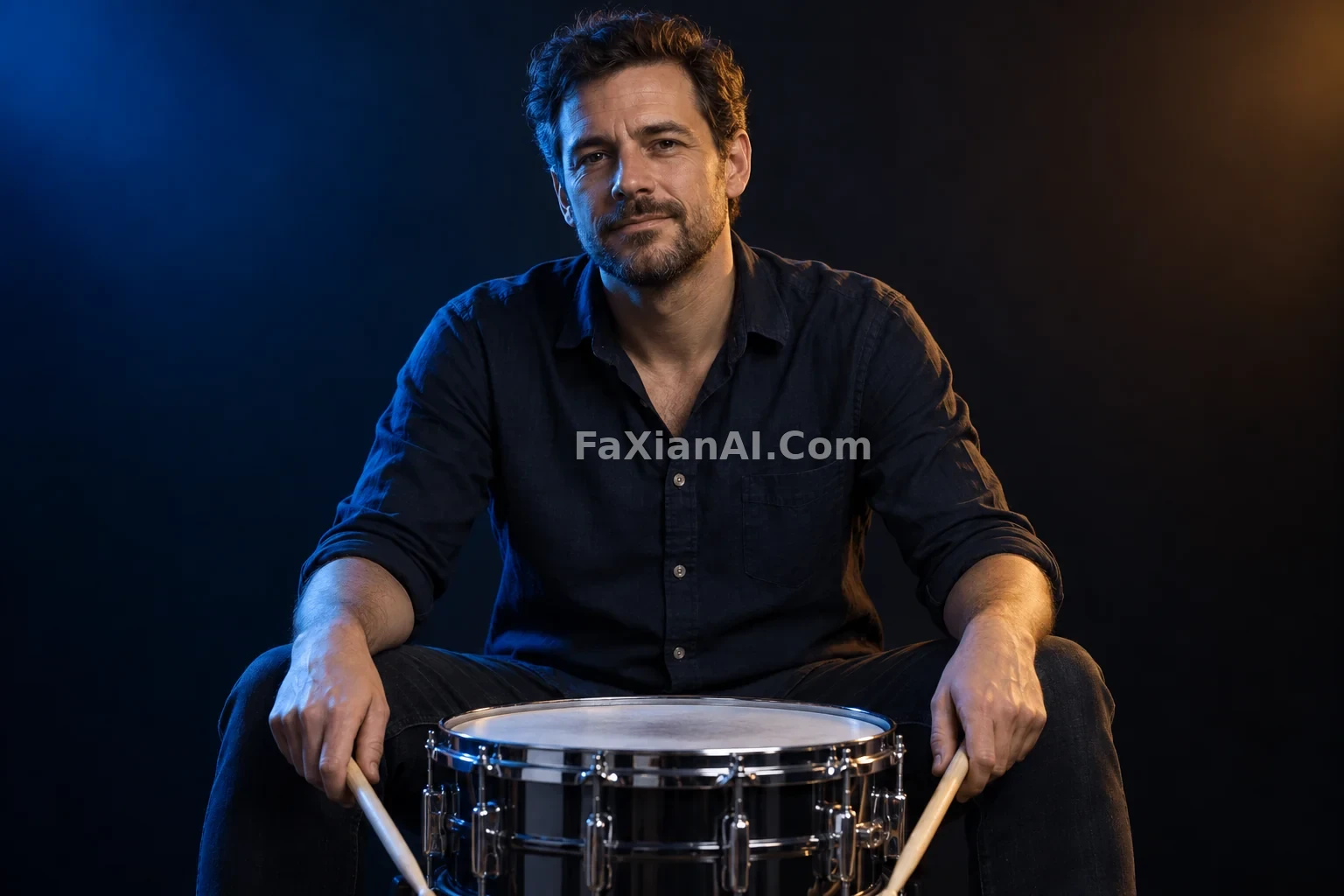
The drummer's blue left key and warm right rim clarify the drum edge and shoulder. Saturated blue and orange across the entire face erase skin differences. Check illumination on the nose, eye sockets and drum rim before adjusting color strength. Colors alone do not prove correct light placement.
A Drummer in Blue and Amber Light
Describe lighting as relationships
Fix the potter and bowl, then reduce only fill intensity. Check whether the shadow side retains detail. Restore fill and change rim width, checking for glowing hair edges. Finally inspect fingers, bowl lip and natural skin. A generated picture is not a lighting measurement; local materials or posture may still drift.
Browse the three-point lighting theme and portrait category, or the case article on structure and light.