
Prompting Handmade Materials Through Visible Evidence
“Handmade texture” gives an image model little to work with. It says nothing about the force applied to a material, how an edge ends, or where light catches the surface. I start with details a viewer could actually point to, then choose the camera and light. These five cases cover repair, printing, wool, cloth and layered paper. They need different instructions.
Let a repair follow the object
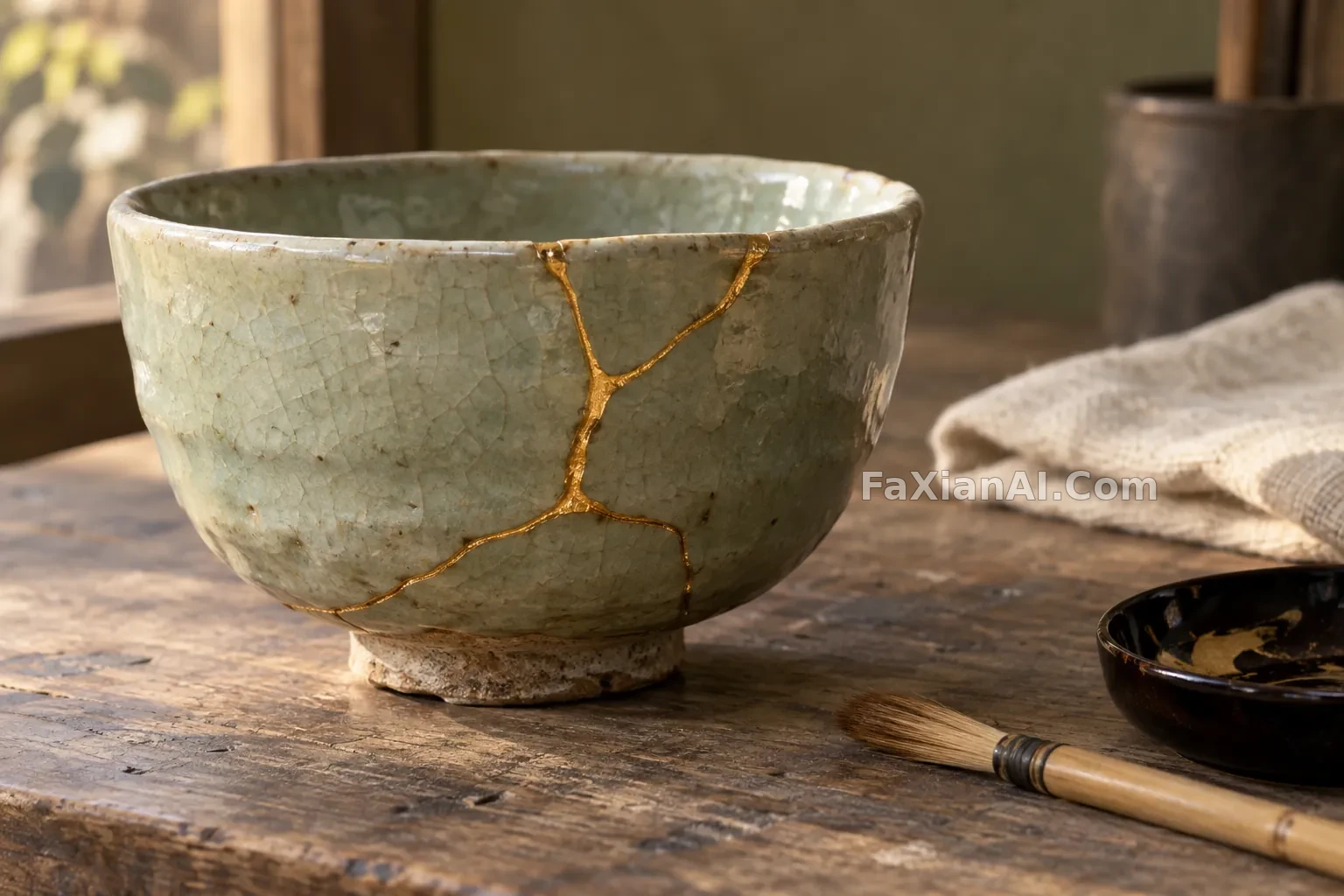
In the repaired celadon bowl, narrow gold seams branch along a visible fracture while the rim, foot and glaze crazing remain in view. The gold has a structural reason to be there. “Golden cracks” alone can turn the whole bowl into decoration. Low sidelight separates the seam's thickness from the fine lines in the glaze.
Keep the pressure of the print
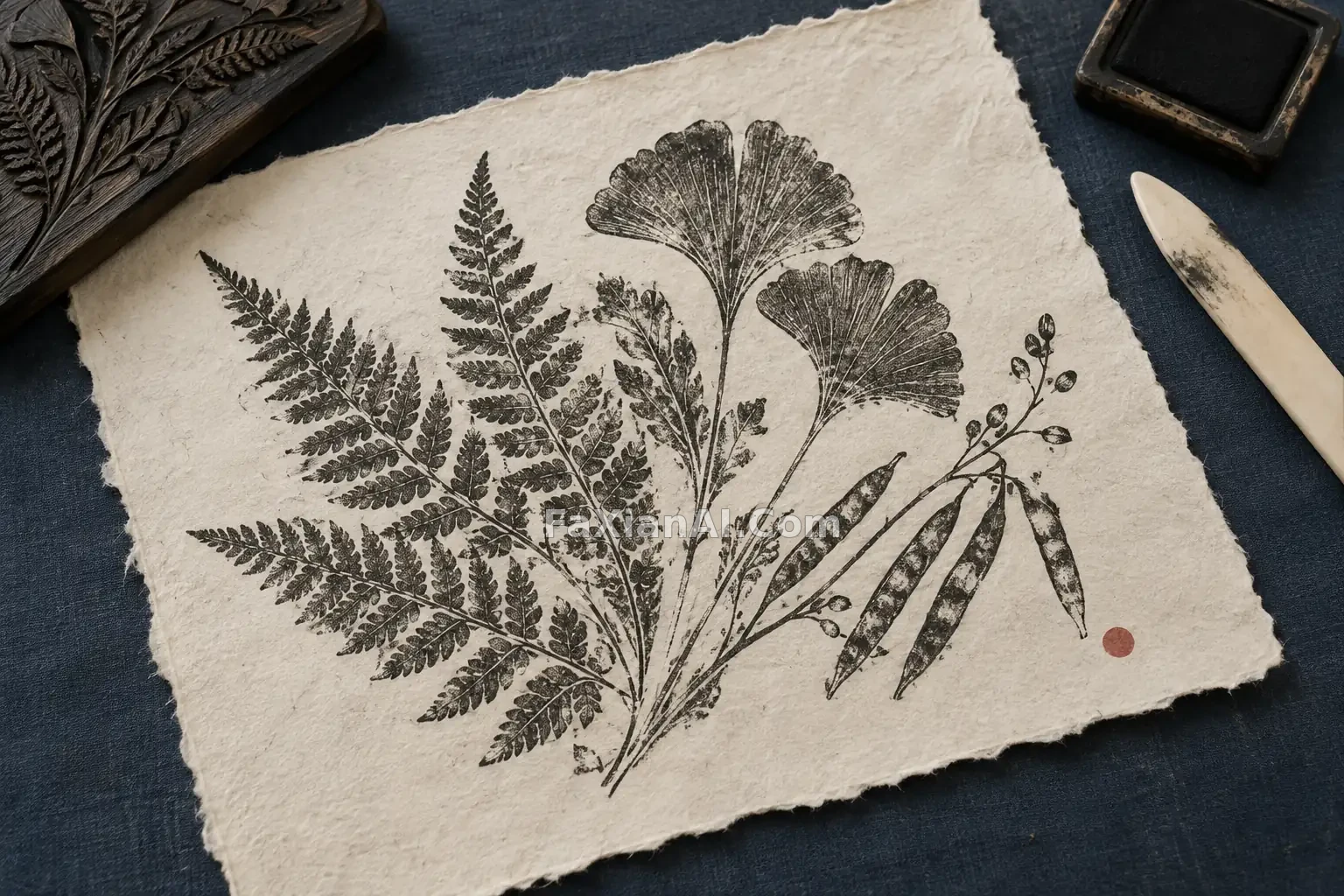
The botanical woodblock rubbing uses fibrous mulberry paper, uneven black ink and white leaf veins. Each cue does a job: paper identifies the receiving surface, ink records pressure, and white lines reveal the relief block. Calling it a “refined monochrome botanical illustration” would erase the process. A bone folder and ink pad establish the scale of the working table.
Wool and cloth need different surfaces
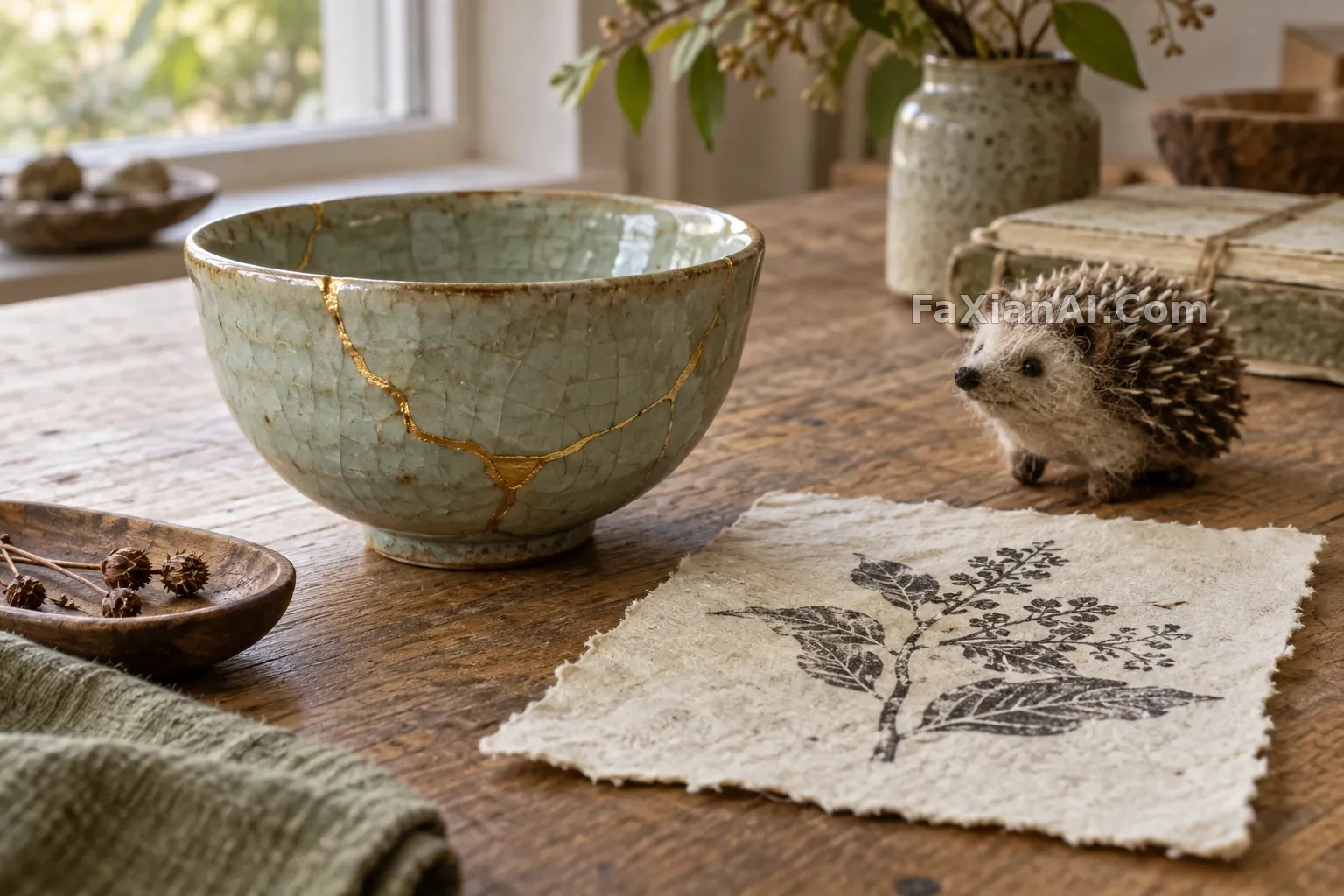
The needle-felt hedgehog depends on individually punched spines, loose wool edges and slightly uneven feet. Macro sidelight lifts the fibers. The linen leaf runner instead needs a visible weave, fold and minor drift in the block print. One relies on the volume of wool tufts; the other on contact between ink and fabric. “Soft and artisanal” would flatten both into the same vague look.
The layered paper bridge town offers another comparison: spacers and shadows between paper planes explain depth better than texture adjectives. For more on edges and scale, see the material-edge prompt guide. The kintsugi and rubbing-print archives collect related examples.
A reusable sequence, with limits
Name the subject and material, the action that left the trace, and the camera and light that reveal it. “Join celadon fractures with narrow gold seams; show their thickness in low sidelight” is more testable than “premium kintsugi style.” Inspect generated text, marks and objects with precise assembly requirements separately. A persuasive image alone cannot prove a real craft process or product mechanism.