
Paper, Stone, Glass, and Linen — Make Materials Shape the Image
Similarly, if you write "textured", the generated image may add plastic highlights to the paper, or the stone sculpture may be painted soft and plush. First write down how the object is shaped and how the edges are stressed, and then specify the light. Only then will the material truly participate in the picture. The picture below puts the four materials on the same table to facilitate comparison of paper fold lines, stone chisel surfaces, glass refraction and flax fibers.
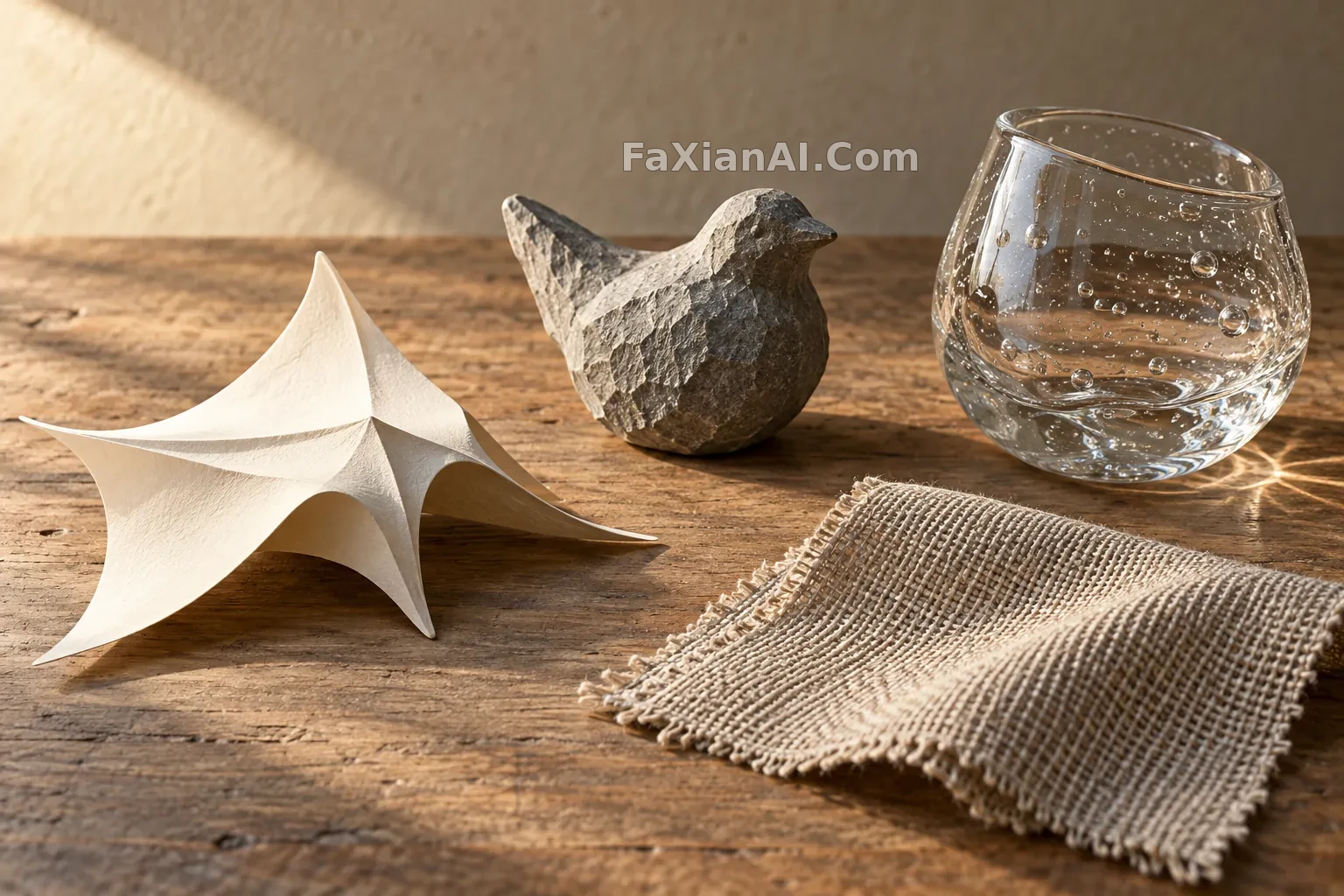
Paper and stone require different structural words
Chisel mark practice for stone carving birdsThe base is left unsmoothed, and the wings are represented only by a few lightly scored lines. The prompt words should explain which parts are rough and which parts are polished, so that side lighting can show the traces of handwork.Colored pencil observations of tide pool organismsThe edges are formed by overlapping strokes of color and grains of paper; describing this painting as a "smooth stone surface" would destroy the characteristics of the medium. Both images have texture, but the way they create texture is different.
In paper art, you should first write about the continuity of "a piece of paper" and the fold line, and then write about the suspension height and projection. ComparablePaper-folded manta ray's suspended bone lines: The folds of the wide wing must connect to the central axis, and light and shadow cannot replace the foldable structure. When examining the image, look for creases, pivots, and shadows, especially the edges away from the lens.
Transparency and fiber allow light to pass through in the right places
Transparent bubble flower vessel in baroque nicheMake the internal bubbles visible against a dark background, and the bright edges only appear where the glass receives light. If the entire flower vessel is illuminated evenly, the transparency will turn into a gray solid.Linen jacket fabric enlargementOn the contrary: the soft light close to the cuff should fall on the surface of the texture and stitching, without the need for strong glass-like highlights. Can be viewed separatelyProduct classificationandIllustration classificationThe material case here.
When actually writing the prompt words, arrange them in three steps: "material source - connection or processing method - the light that best proves the material." Finally, check to see if there is a specific edge in the image that proves the words worked.