
Reading Material Edges: Prompting Glass, Copper and Folded Paper
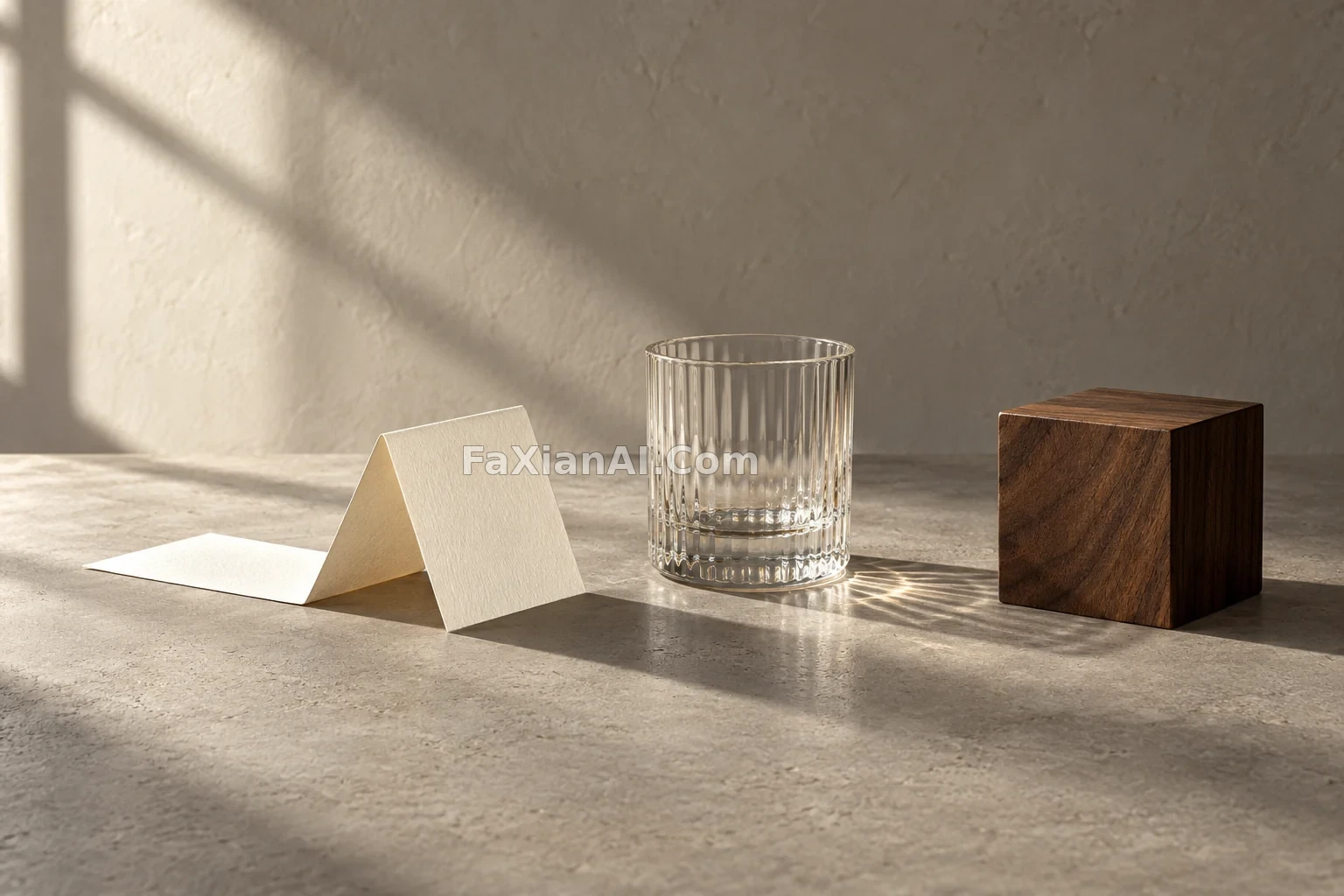
Glass, copper, and paper can all be described as delicate, but the visual cues they rely on are not the same. Glass needs light to pass through, copper surfaces use reflections to convey curvature, and paper requires edge thickness and fold shadows. Writing these cues into prompts is more likely to yield checkable images than repeatedly asking for high-end texture.
For Glass, Write Waterline and Refraction First, Then Cleanliness
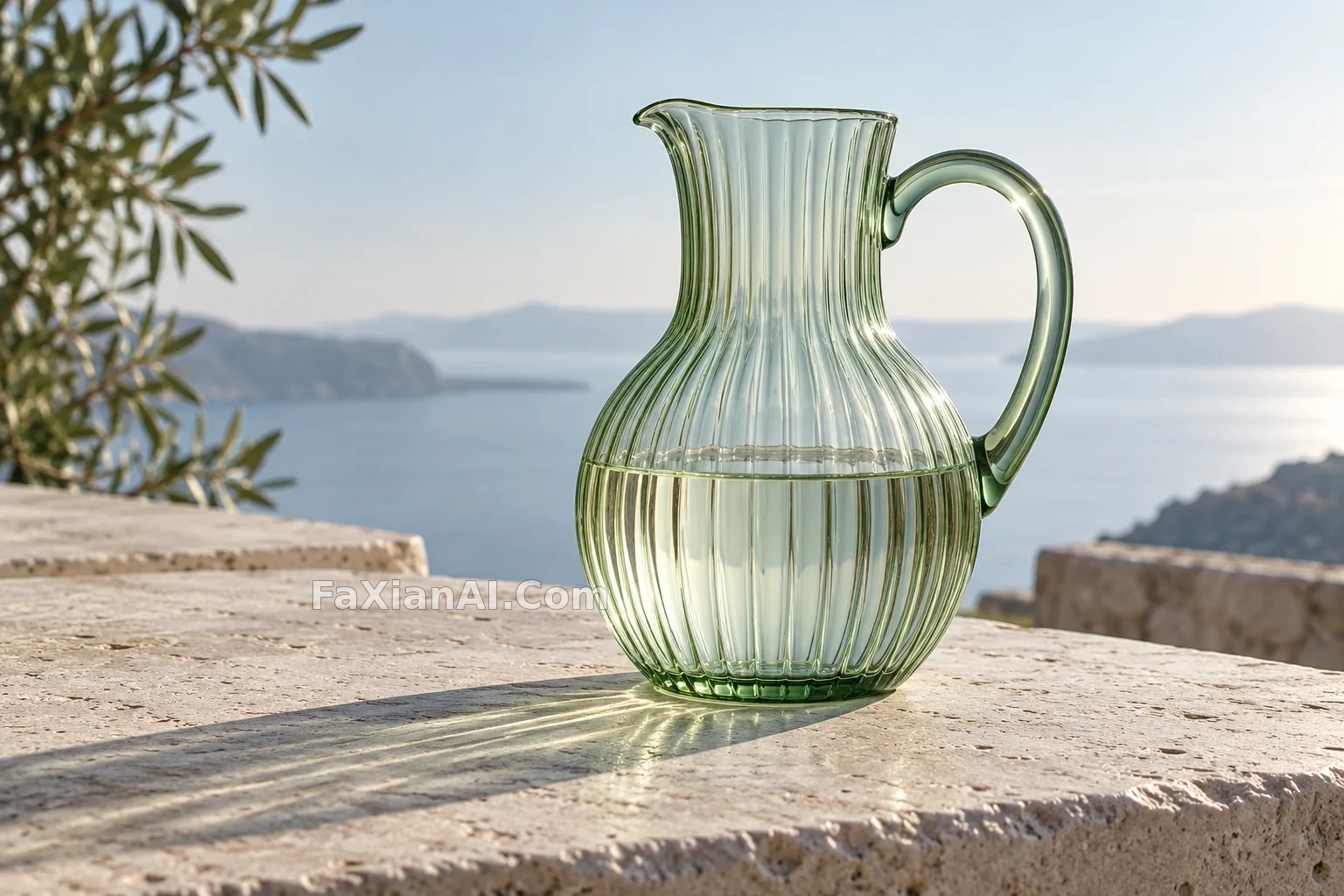
The challenge with a ribbed glass pitcher is that the transparent part must not become a pale green solid block. The prompt first describes half a pitcher of water, then the continuous water surface and the refraction caused by the vertical ribs, so the transparency has a concrete basis. When checking, trace around the rim, handle, and spout to confirm they are continuous; then see whether the waterline is at the same height and whether the background changes credibly through the glass. Too many highlights do not make it more transparent; they may cover the water surface. For a product concept image, the complete silhouette and recognizable surface should come before decorative light spots. The generated result can inspire lighting, but it does not prove the real optical or production structure of any container.
Ribbed Glass Carafe Casts Pale Green Light
Copper Hammer Marks Rely on Reflection; Do Not Just Warm the Color
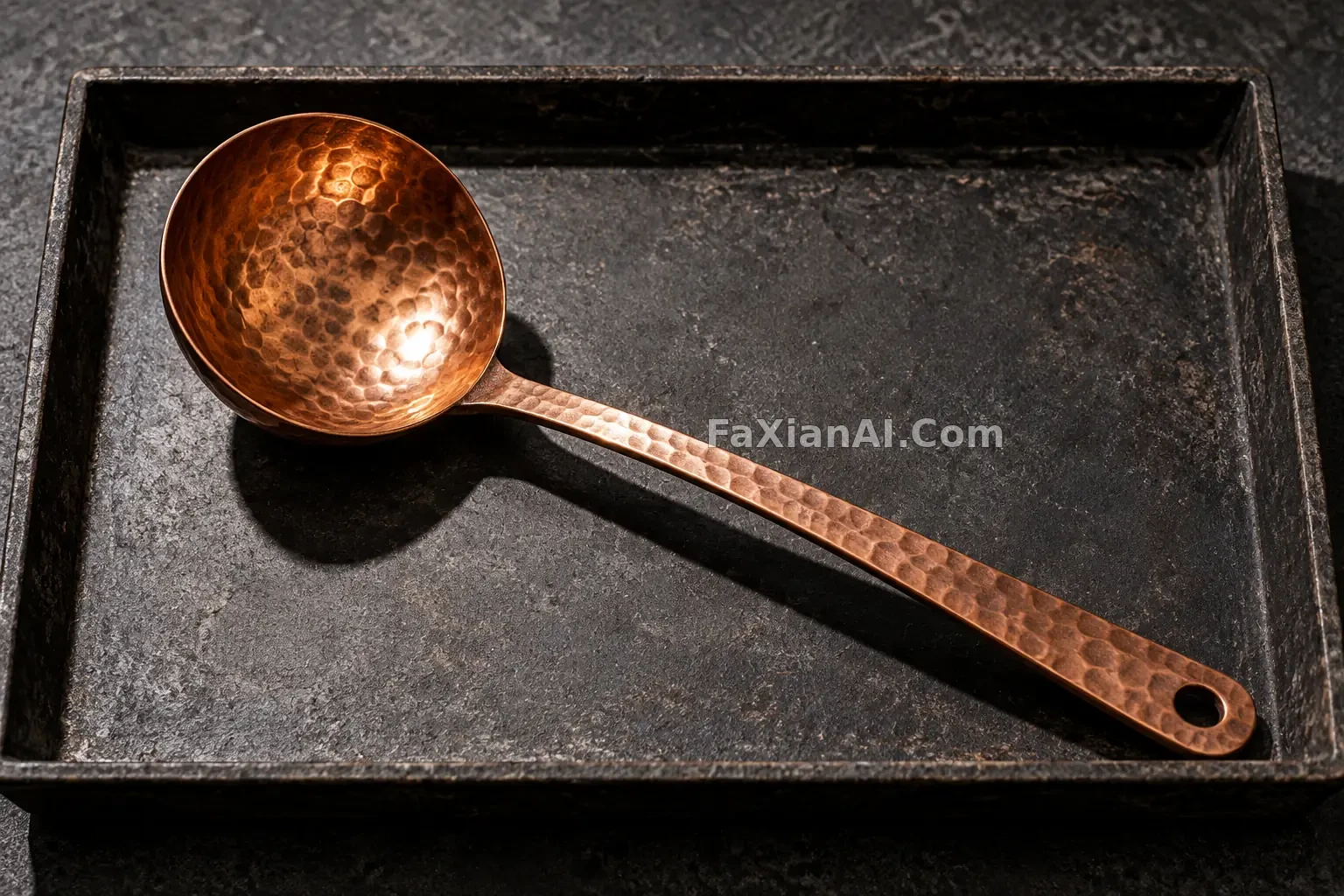
The relationship between the copper ladle and the dark tray is simple, so small dents under top light are easier to read. Copper color is only a starting point; narrow dark areas and continuous bright surfaces describe the ladle's curvature. The prompt specifies a single beam of top light and places the ladle in the tray, so compact shadows indicate contact points. If every hammer mark is drawn as the same white dot, the metal looks like it has glitter; if the shadows are brightened too much, the tray and ladle handle easily blend together. First check whether the overall curve is smooth, then whether the hammer marks follow the surface turns, and only then examine the finest scratches. This order also applies to low-key product photography prompts.
Top Light Reveals Shallow Dents in a Copper Ladle
The Thickness of Folded Paper Is Hidden in Edges and Layer Spacing
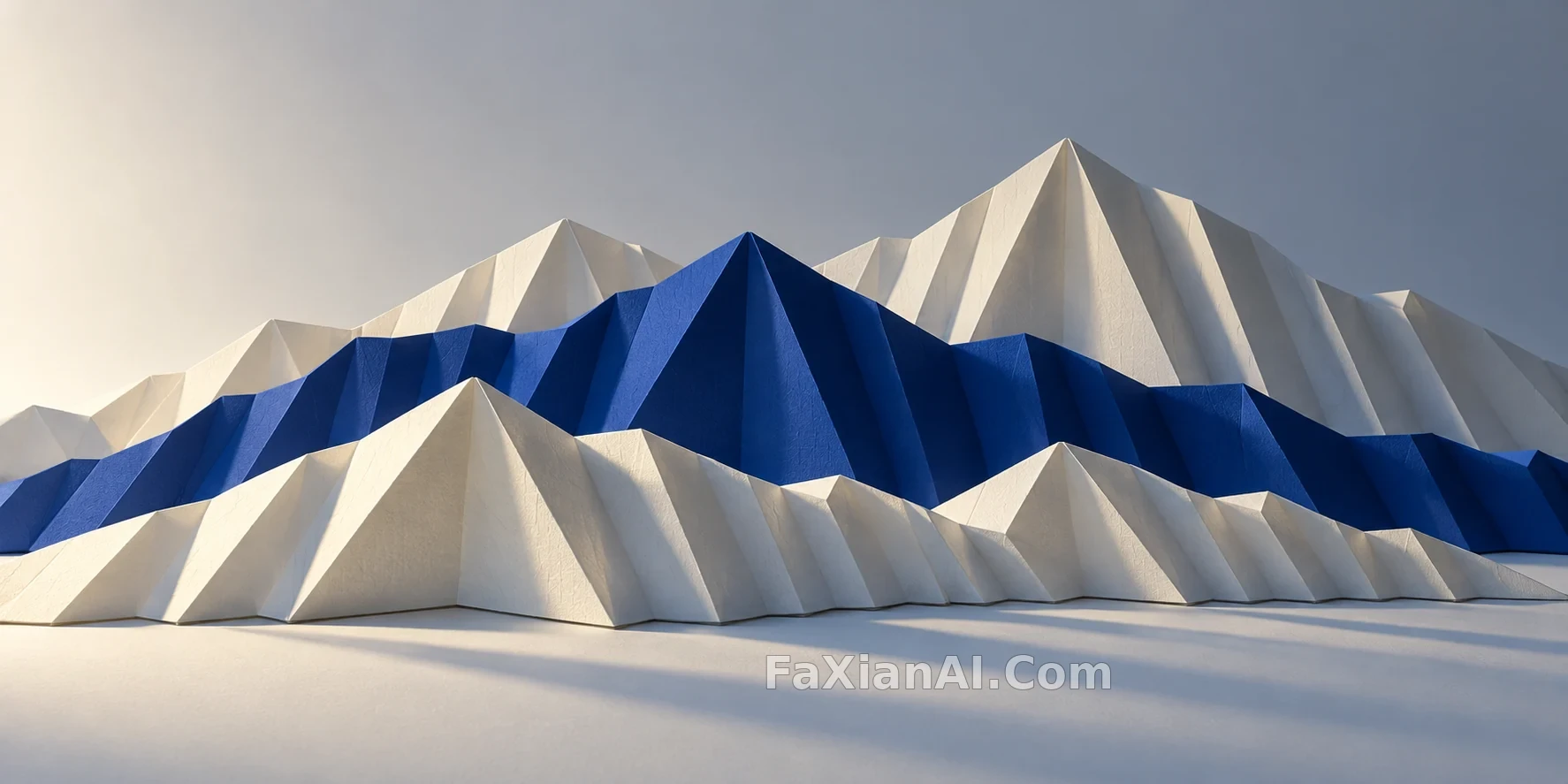
The folded paper mountain uses ivory and cobalt blue paper to separate three layers of ridges; the material cues come from flat folded surfaces, narrow paper edges, and small shadows aligned in the same direction. There is no need for realistic stone mountain texture, nor for crumpling every sheet to look handmade. If the fold lines lack a clear direction, the shadows will look like gray blocks randomly painted on the surface. You can first reduce the paper layers, check only the front-to-back order and contact points, then gradually add the second color. Compared with glass, the paper surface should block light; compared with copper, its highlights are broader and weaker. When the three are placed in one editorial still life, the main light direction can be the same, but each material should still respond to light in its own way.
A Cobalt Blue Shadow on a Folded Paper Mountain
Same Camera Position, Replace Only One Material Cue at a Time
First write a complete object, one contact plane, and one main light direction. For the glass version, add waterline and refraction; for the metal version, switch to continuous reflections and fine hammer marks; for the folded paper version, emphasize folded surfaces, paper edges, and layer spacing. Do not just replace the material name and keep all the highlight descriptions. When comparing, first zoom out to see the silhouette, then zoom in to see the edges, and finally check the contact shadows. Also look at the original and compressed images separately: when fine lines are erased or highlights clump into color blocks, further compression will lose key evidence.
The inkstone and plum pit in this batch offer another comparison of how dry, rough surfaces respond to the same side light. The existing article on material structure extends these observations into fuller prompts. The hero is an editorial still life of paper, glass and wood, rather than a diagram of a real craft process.
A Plum Seed Beside an Inkstone
Further reading on material structure
Original prompts and editorial analysis: FaxianAI