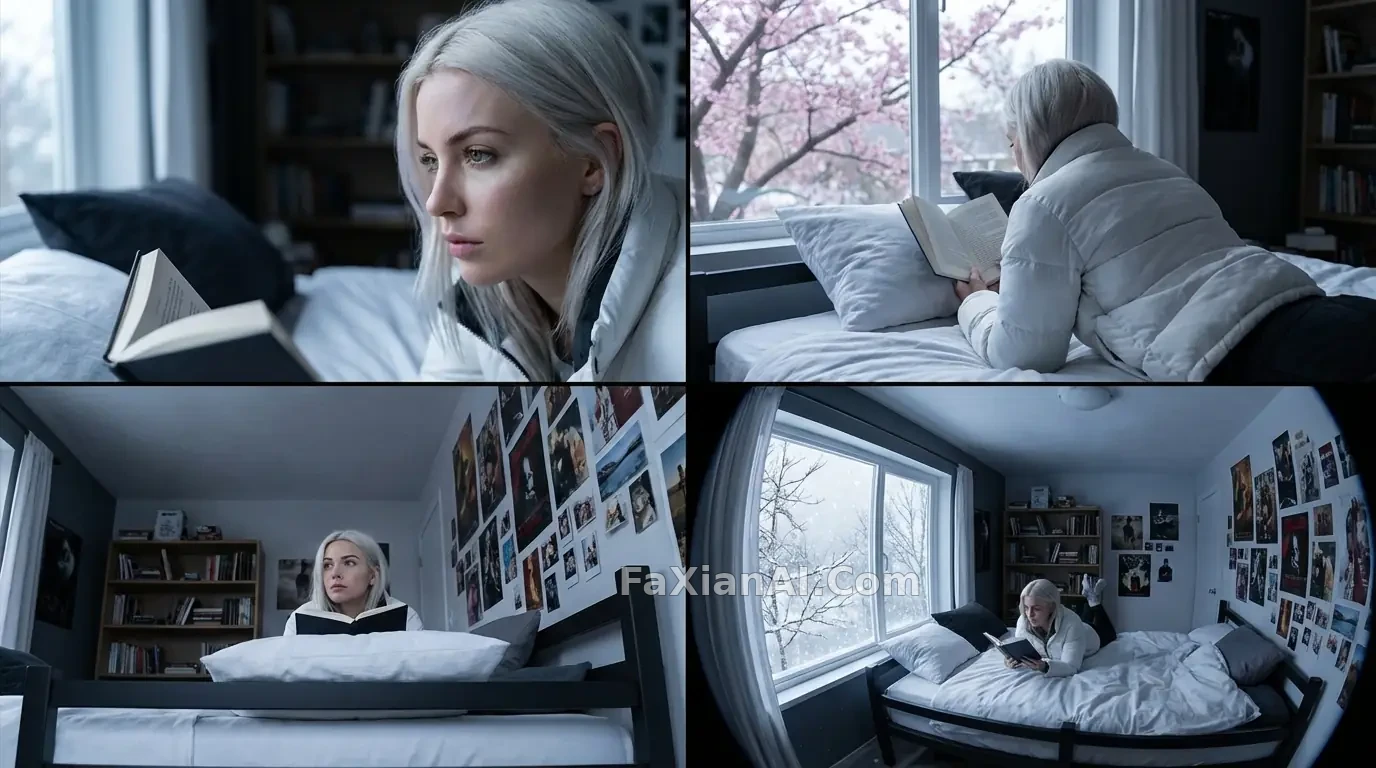
雪天宅家日记的四格分镜
两张参考图各司其职,四格拼出雪天窝被子看书的完整心情,像手账跨页排版。
✍️ 关键在参考图分工——图1管机位和空间关系,图2管长相,顺序别混;从近景怼脸到鱼眼拉远这四格,靠的不是滤镜是镜头语言在换,做故事贴纸素材时这套顺序可以直接套。
📋 提示词 自然语言948 字符
A four-panel horizontal storyboard in 16:9, shot like a realistic documentary rather than staged illustration. Treat Reference Image 1 as the anchor for spatial layout, pose and camera style, and pull the character's actual look from Reference Image 2.
Frame one: a close side-profile on the face — platinum-blonde hair, green eyes — reading in bed, background thrown out of focus, keeping the cool color temperature set by Image 1.
Frame two: the same reading pose from behind, now dressed in the outfit from Image 2, with cherry blossoms outside the window doing the seasonal work.
Frame three: a low, dramatic medium shot that leans into how cramped the room is, letting the bookshelf and the poster-covered wall carry the spatial story, position taken straight from Image 1.
Frame four: pull back to a wide fisheye establishing shot (angle still borrowed from Image 1) that settles the whole scene into one mood — a snowed-in day spent indoors.
📋 中文译写版 自然语言
四格横版16:9分镜,拍成纪实感而非摆拍插画。参考图1负责空间关系、姿态和运镜风格,人物长相则照图2来。第一格:侧脸近景特写,铂金色头发、绿色眼睛,在床上看书,背景虚化,保留图1定下的冷色调;第二格:同样的阅读姿势换成背影,穿图2里的衣服,窗外的樱花点出季节;第三格:低角度中景,突出房间的局促感,书架和贴满海报的墙承担空间叙事,机位延续图1;第四格:拉远到鱼眼广角建立镜头(角度仍来自图1),把整组画面收束成“雪天宅家”这一个情绪。