Light Slicing Through the Pines Like a Patch
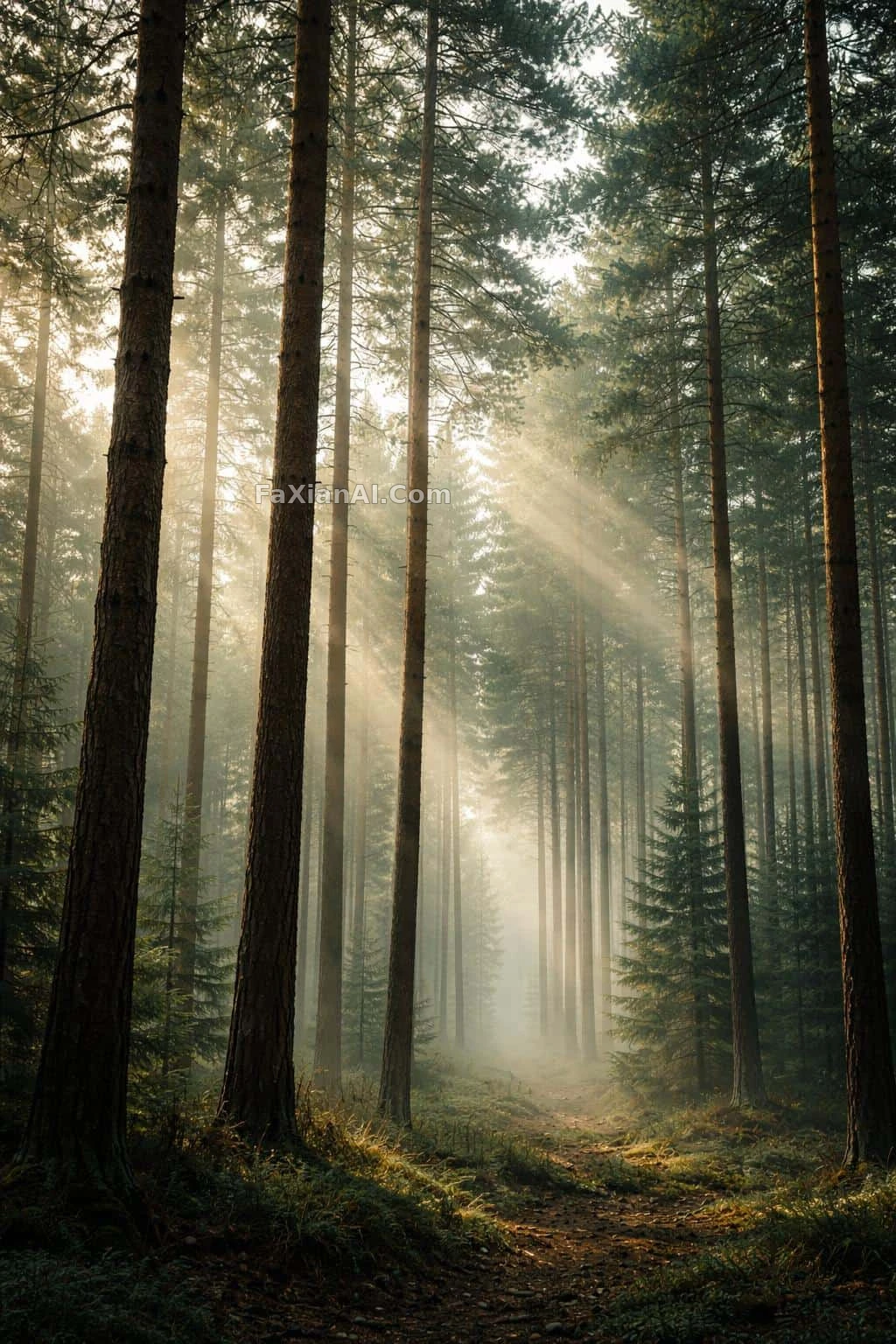
The trunks scale down with distance the way they should; the light shaft's angle is the only real variable -- shift it once and the whole mood changes.
✍️ Foreground bark and needles have to stay sharp while mid-ground trunks are allowed to soften -- that's the core logic of depth. Flip it, or make everything equally sharp or equally blurred, and it reads fake. The morning mist handles the fade-out into the distance.
📋 Prompt Natural Language1042 characters
Frame a tall pine forest for a 2:3 vertical wallpaper-format landscape photograph, trunks rising out of the lower quarter and continuing past the top edge. Use a low-angle viewpoint: three main vertical trunks near center-left, a thinner trunk center-right, scattered thin trunks through the right third, building layered depth across mid- and background. Filtered sunlight arcs as narrow shafts from the upper right into the middle plane, laying soft warm highlights across needles and bark. A gentle early-morning mist fills the lower third and middle distance, desaturating background trees progressively. Push texture -- rough pine bark, clustered needle tufts, damp forest-floor needles with subtle glossy patches where moisture catches light. Keep focus crisp on bark and nearest needles, moderate depth softening the mid-distance trunks slightly. Hold tonal balance cool-green, deep shadow anchors against pale green highlight, preserving vertical rhythm and generous negative space in the upper third for poster or wallpaper cropping.