
"Small Animals in Different Media: What to Check for Needle Felting, Clay, and Low Poly"
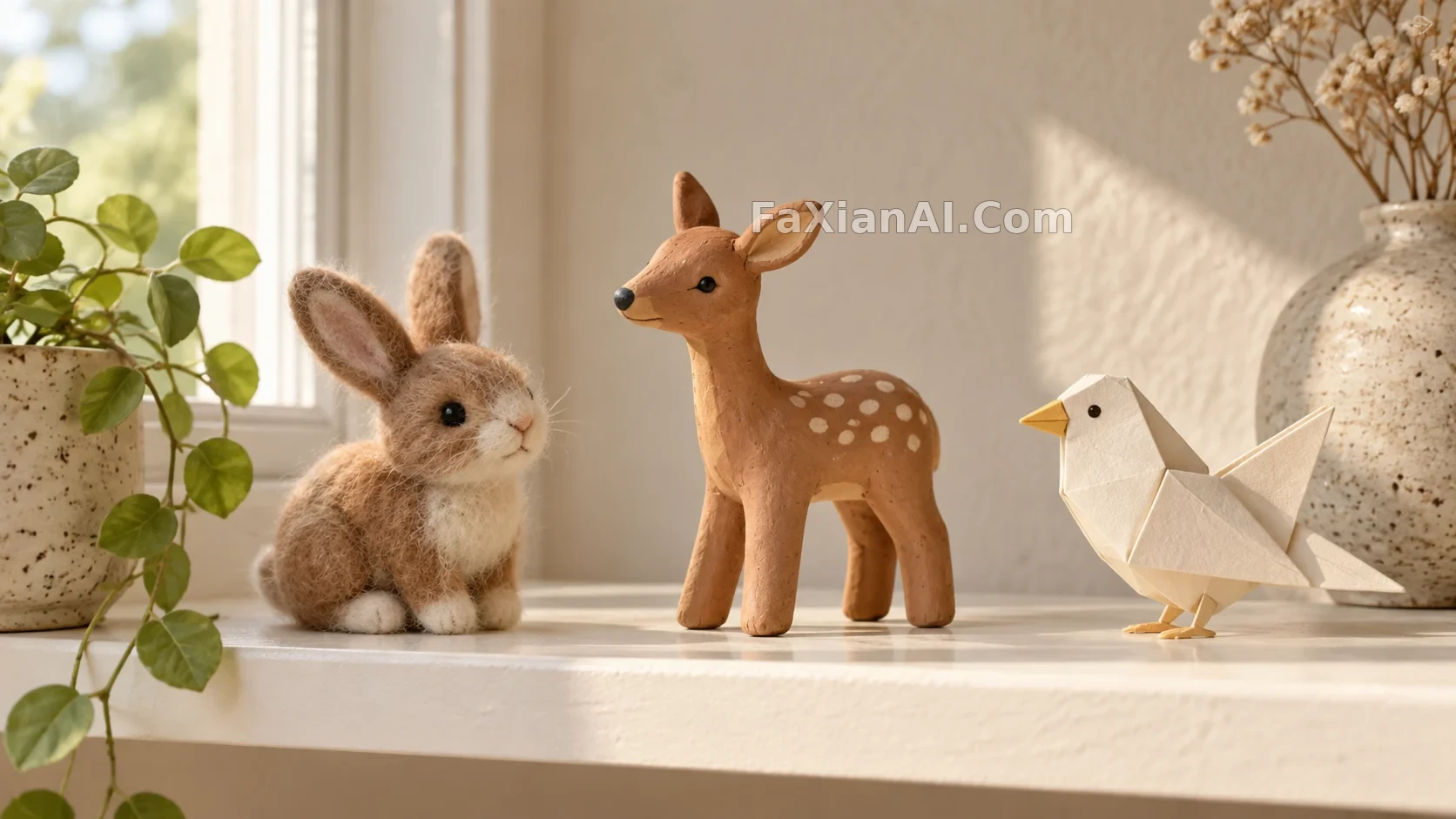
Capybaras, foxes, and puffins can all be simplified, but simplification does not mean deleting details at random. Needle felting should retain fibers and the soft edges caused by needling, clay should have continuous volume and craft seams, and low poly should let faceted planes carry the form. First determine the evidence that a medium truly needs, then decide which details can be omitted.
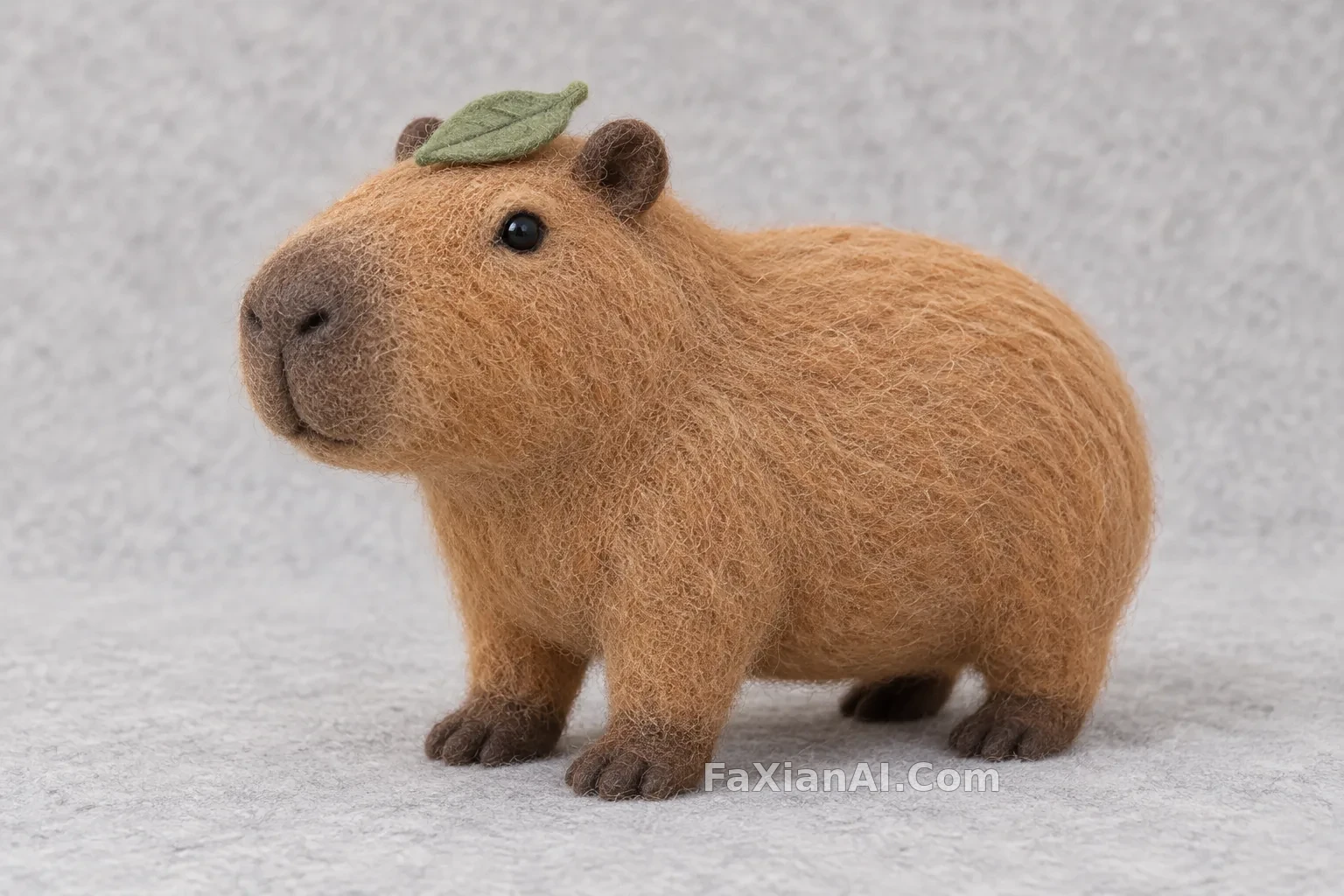
Needle-felted capybara: keep the short muzzle and limbs first
A round, blunt body easily turns into a structureless fur ball during generation. The capybara case uses three cues—short muzzle, short legs, and a small leaf on the head—to maintain recognition, with fine fur serving only the surface. When checking, first shrink the image: can you tell head from body at a glance? Then look at whether the nearby feet touch the ground and whether the leaf has been mistakenly made part of the head. Photographic depth of field can slightly soften the far edge, but it must not blur the entire toy. A needle-felted toy is not a realistic living animal, and the treatment of eyes and nose should match the handmade scale.
A Felt Capybara With A Leaf On Its Head
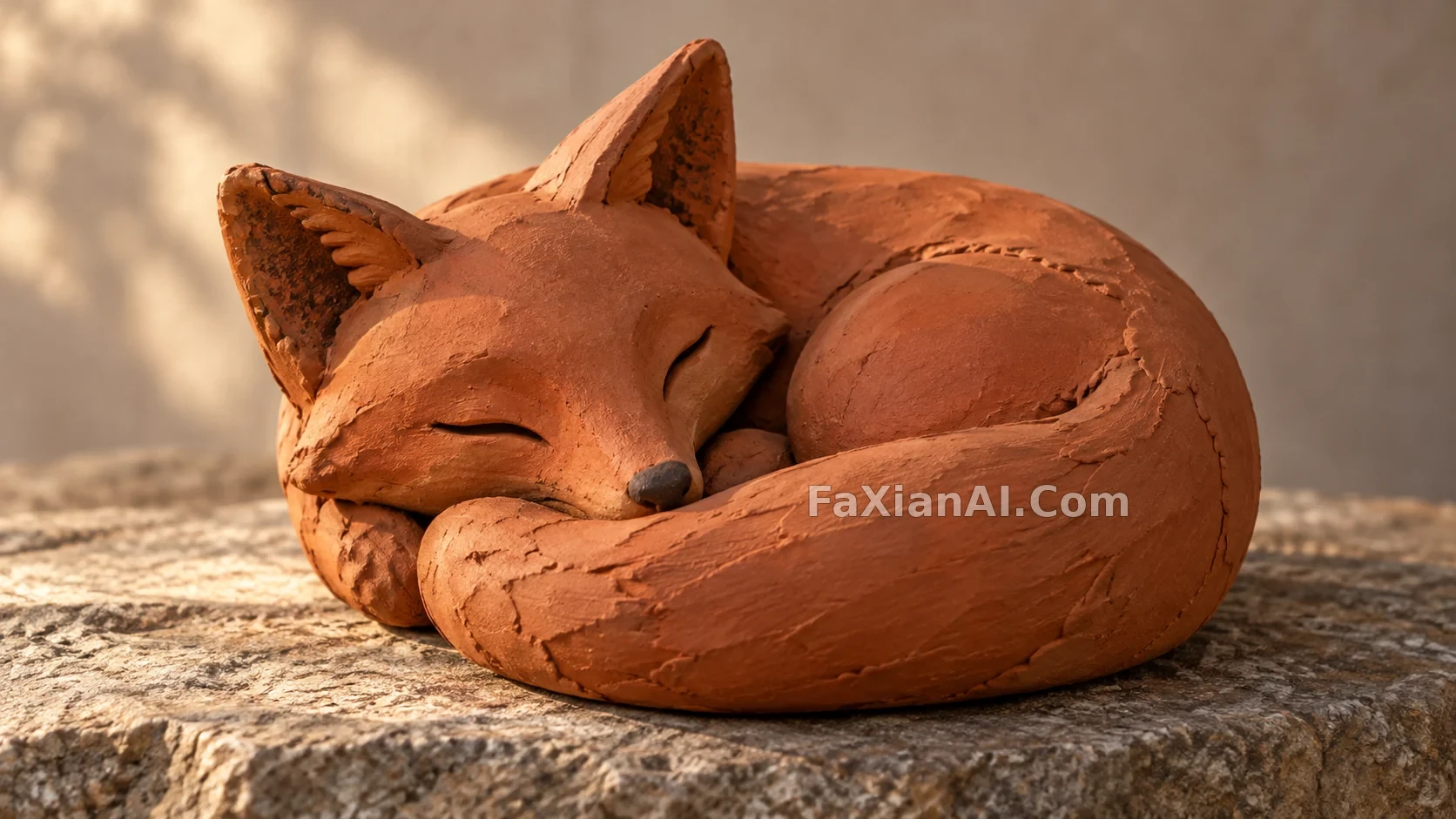
Clay fox needs a tail that belongs to the body
The sleeping pose looks simple, but the fox tail often turns into a separate ring during generation. The prompt writes the tail as curling along the side of the body and requires visible pinch seams, so that the pose and the making method both hold. Seams are only handmade traces, not cuts that separate head, back, and legs into disconnected parts. When reviewing, first trace from the spine to the base of the tail, then check the direction of ears and muzzle, and finally whether the iron-red surface is still matte. Adding cracks does not automatically add a handmade feel; instead, it may turn a quiet doll into a damaged sculpture.
A Ceramic Fox Curls Its Tail Into A Circle
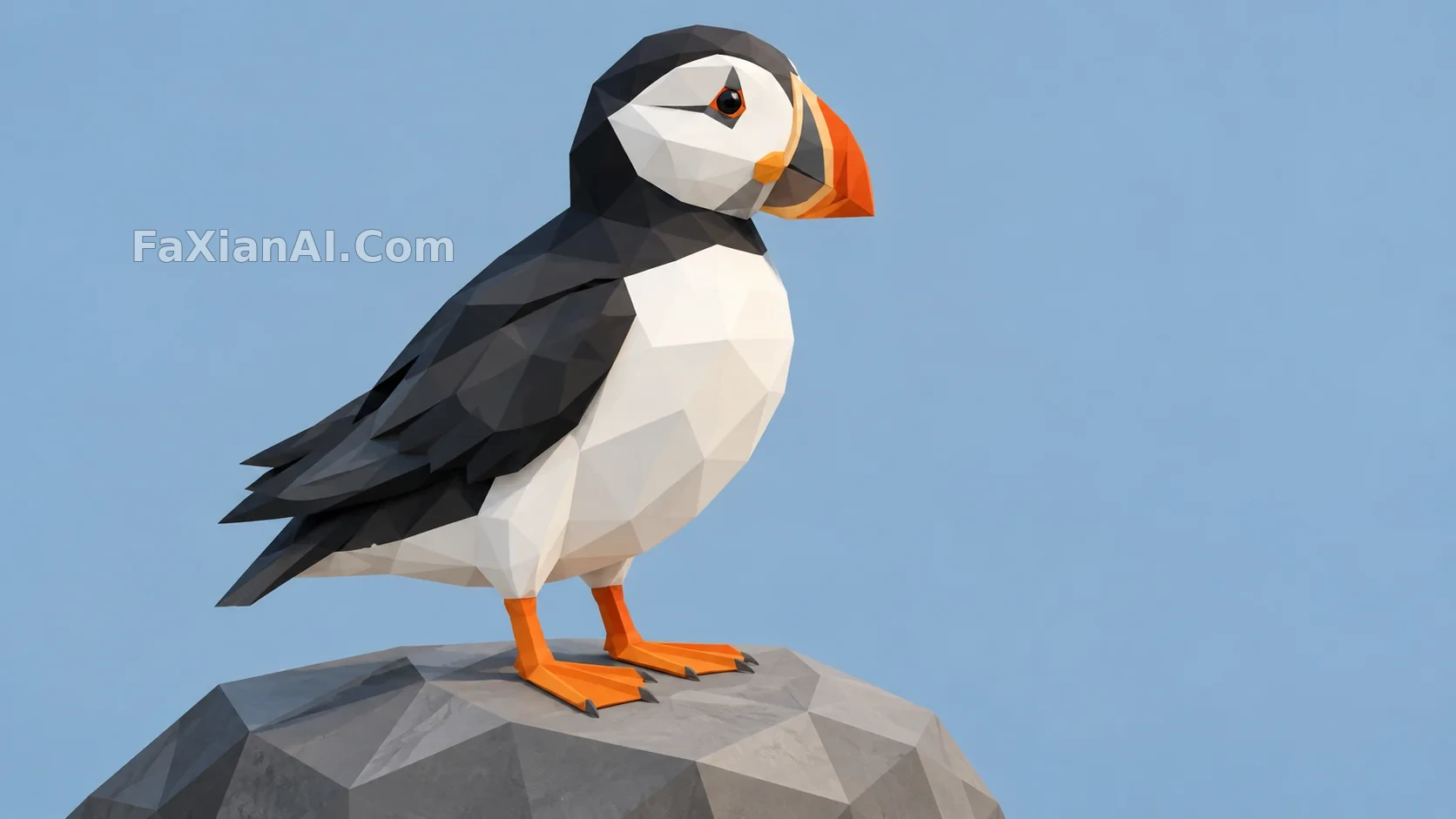
Low-poly puffin: faceted planes cannot replace anatomy
The puffin case keeps only the orange beak, black-and-white body, and gray rock, with strong color concentrated on the beak. Geometric facets should follow the turns of the chest and head, the feet still need stable support, and the wings need to attach at appropriate positions on the body. If a photo is mechanically shattered into triangles, you get a filter effect, not necessarily a clear three-dimensional form. You can first limit the background to a single color so the facets carry only the main subject; once the silhouette and center of gravity are stable, then consider the rock's facets and shadows. This kind of restriction suits character icons and small mascots, but it does not mean the model can already deliver a production-ready 3D mesh.
Change only one checkable condition at a time
Choose a simple animal, fix a side standing pose and complete silhouette, and try needle felting, clay, and low poly separately. Do not write all three materials into the prompt for one character image. For each version, record one structure most likely to fail, such as a buried short muzzle, a disconnected tail base, or floating feet; next time fix only that one condition and keep the composition that is already correct.
The capybara, fox and puffin offer three approaches to volume. The hero uses a felt rabbit, clay deer and paper bird to show different materials sharing a scene. Choose the medium first, then use the material article to check edges and contact shadows.
Further Reading on Edges and Contact Shadows
Original prompts and editorial analysis: FaxianAI