
Put the Season into the Medium: Papercut, Ink and Colored Pencil Prompts
“An autumn illustration” leaves too much undecided. The season changes leaves, weather and light; the medium determines how the picture is built. Papercut uses layers and cast shadows, ink uses density and blank space, and colored pencil builds color through strokes. The opening image places a cut red fox beside ink-marked fiber paper to make those rules visible.
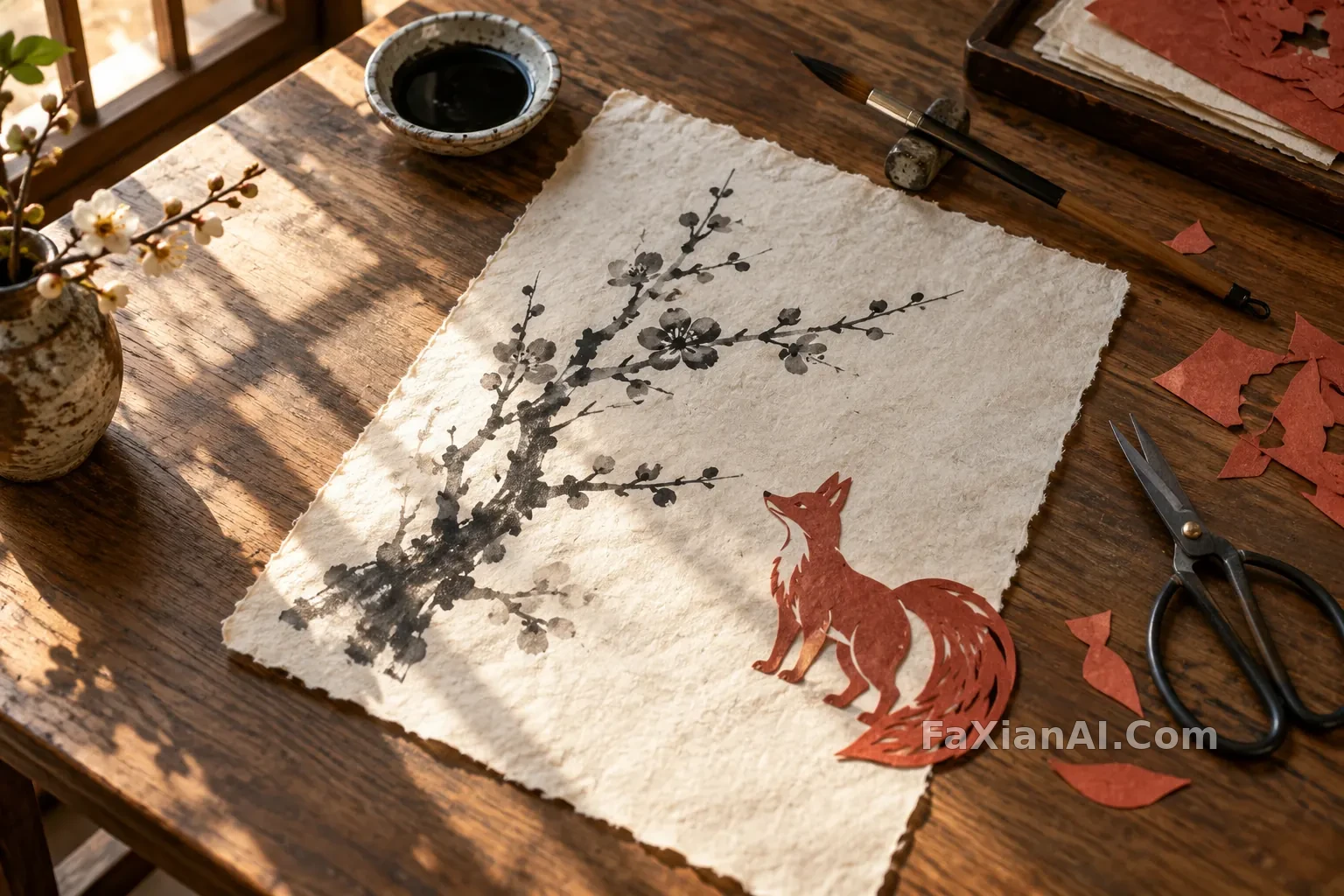
Let paper layers cast believable shadows
The ginkgo leaf pressing table depends on leaf veins, thin paper edges and contact with the tabletop. To turn that scene into papercut, assign foreground leaves, trunk and distant hills to separate sheets. Each shadow should fall on the adjacent layer. The mangrove papercut ferry uses broad shapes for the hull and canopy; paper edges, overlap and color distinguish depth. State the number of layers, cut edges and light direction so the result does not flatten into vector art.
Ink and pencil marks are not interchangeable
In forest ink blocks, broad black marks establish the riverbank while fine lines separate trees from the channel. Leave breathing room around the dark shapes or the distant river disappears. The colored-pencil tidal pool works in reverse: color builds from light to dark across visible paper grain. Keep distinct pencil strokes around each small creature instead of giving everything the same watercolor wash.
Make the season describe the scene
The blue night orchard changes the light-dark relation between trees and path while keeping their directions legible. In a snowy orchard, snow should gather on the upper sides of branches, in ground hollows and at paper-layer edges. Uniform white coating tells us little about form. Fallen leaves, rain tracks and light snow should each reveal orientation and time.
Before generating, state what makes the foreground, which layer is hidden and where the seasonal trace lands. Check those relationships before adding mood words. Compare more scenes in illustration, style and the material edges guide.