
Paper Prompts: Separate Folds, Cut Edges and Layer Shadows
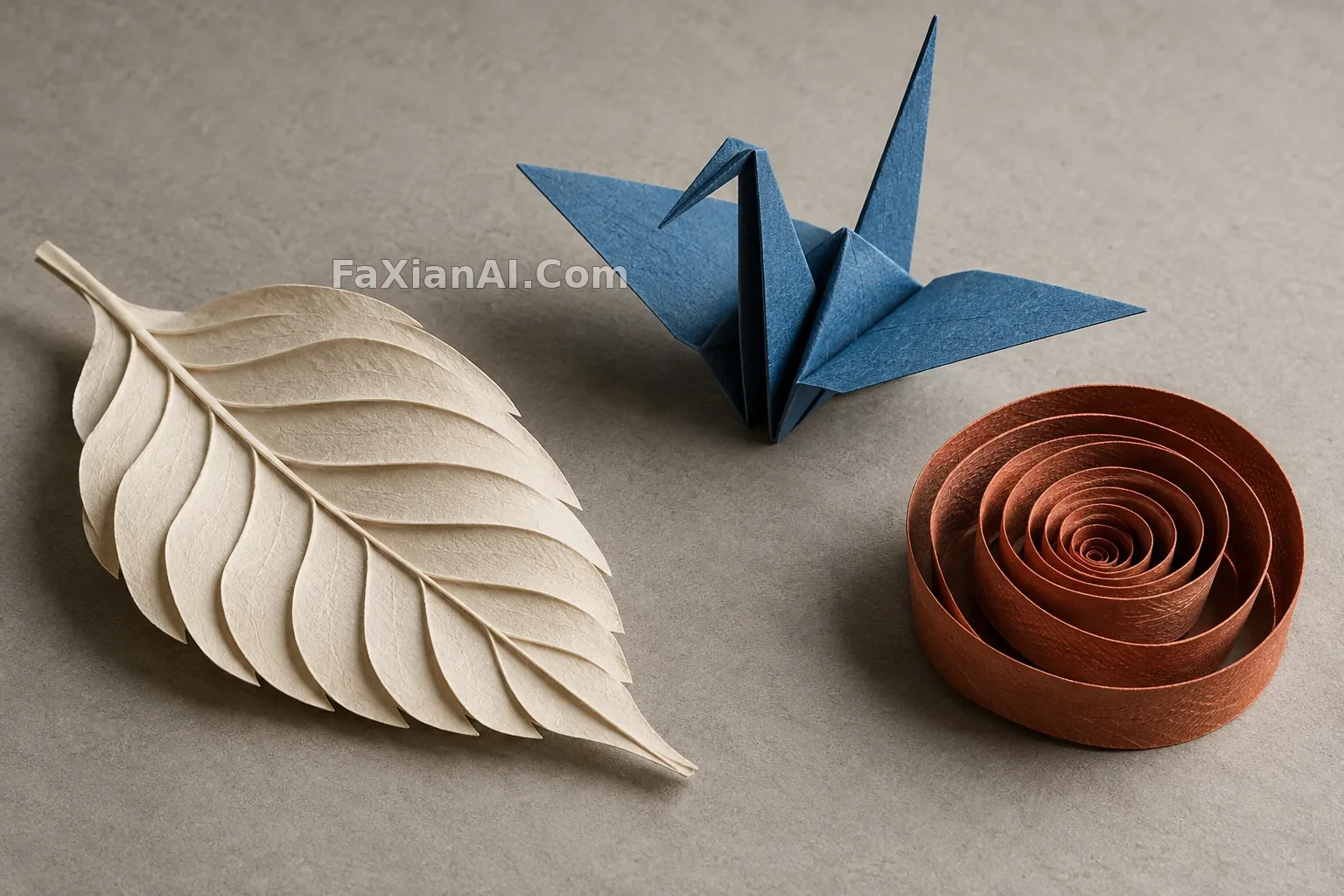
Paper craft is not one surface effect. Origami builds volume through folds, layered cut paper through spaced edges, and pulp through continuous ridges and fibers. Mixing these mechanisms can create a beautiful object that cannot be made. Three examples separate them; generated images cannot replace fabrication drawings.
Origami: Preserve Continuous Folded Planes
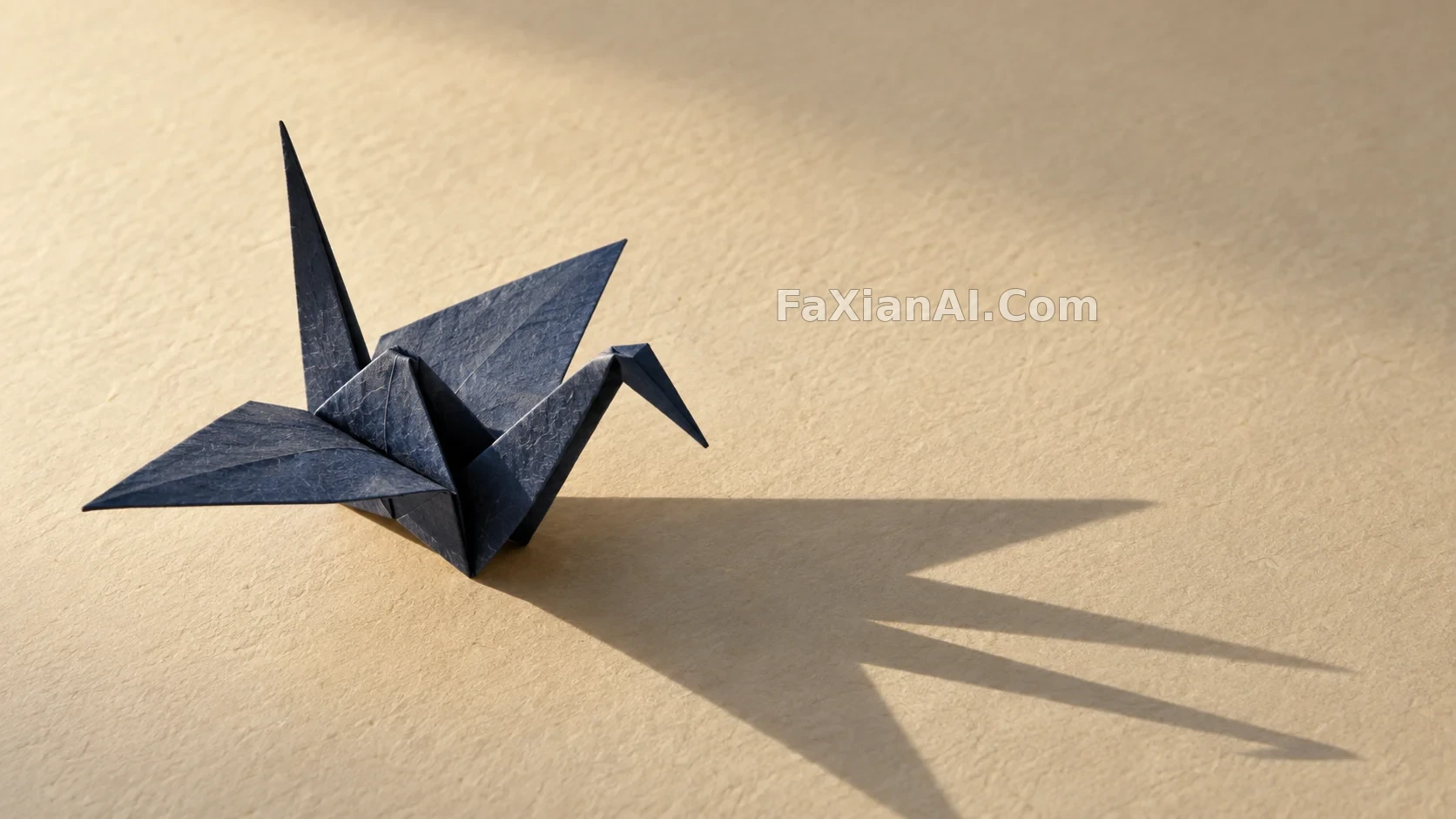
The indigo crane uses a single subject and a long side shadow to make folds readable. Describe paper color, creases and light direction together. A more complex silhouette is not automatically better. Check whether wings, neck and tail suggest continuous paper and whether the shadow follows their shapes. A tutorial still needs a real folding test: visual credibility does not prove foldability.
An Indigo Crane and Its Long Shadow
Layers: Shadows Come from Separation
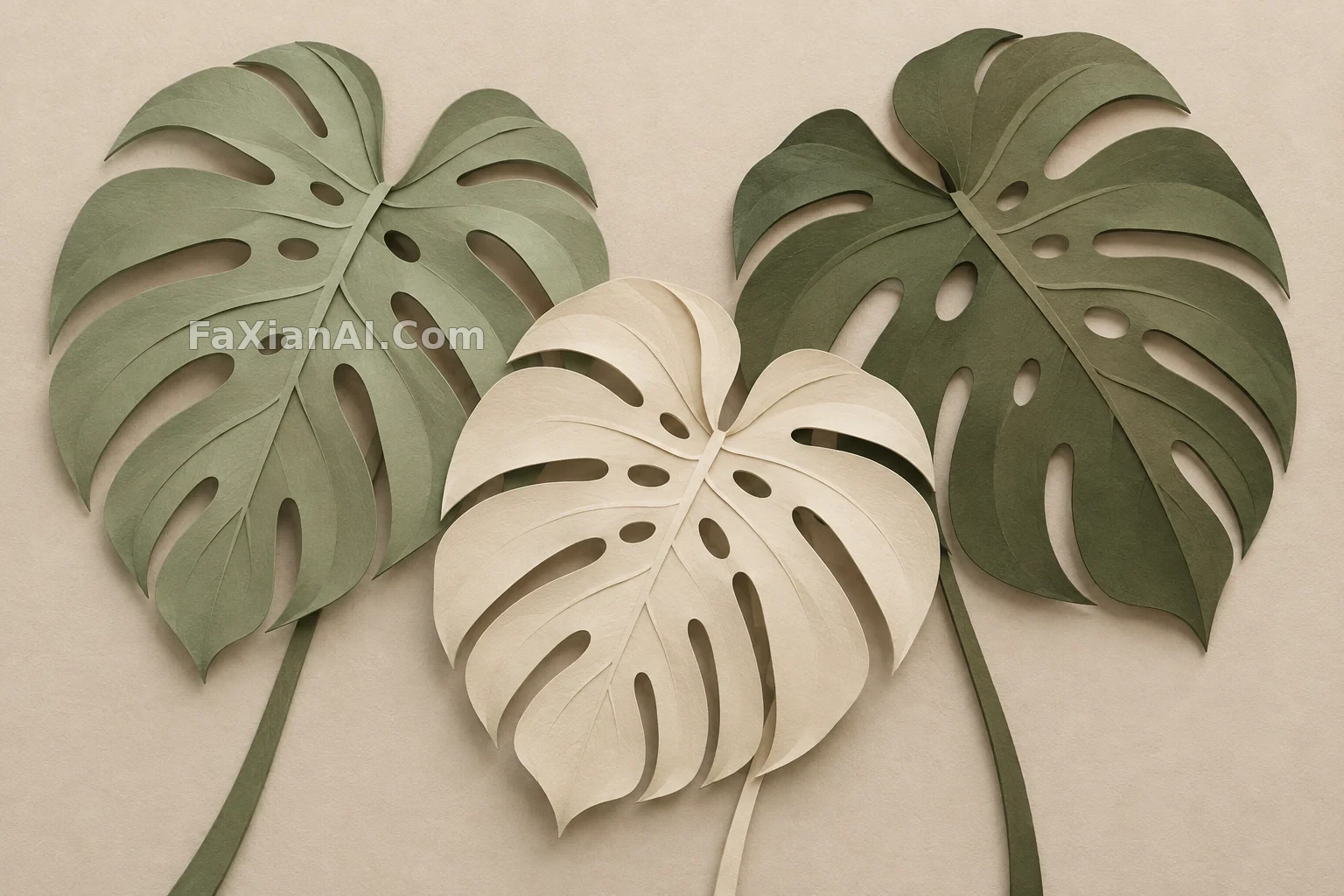
Three monstera leaves and restrained paper colors establish depth. Holes and cut edges need consistent thickness; raised edges should cast shadows on lower layers. Frontal light flattens layers, while very hard light turns every edge into a black line. Fix the number of leaves, describe height with soft oblique light, then check that repeated textures have not become veins or plastic.
Monstera Leaves in Raised Paper Layers
Pulp: A Continuous Surface with Irregular Fibers
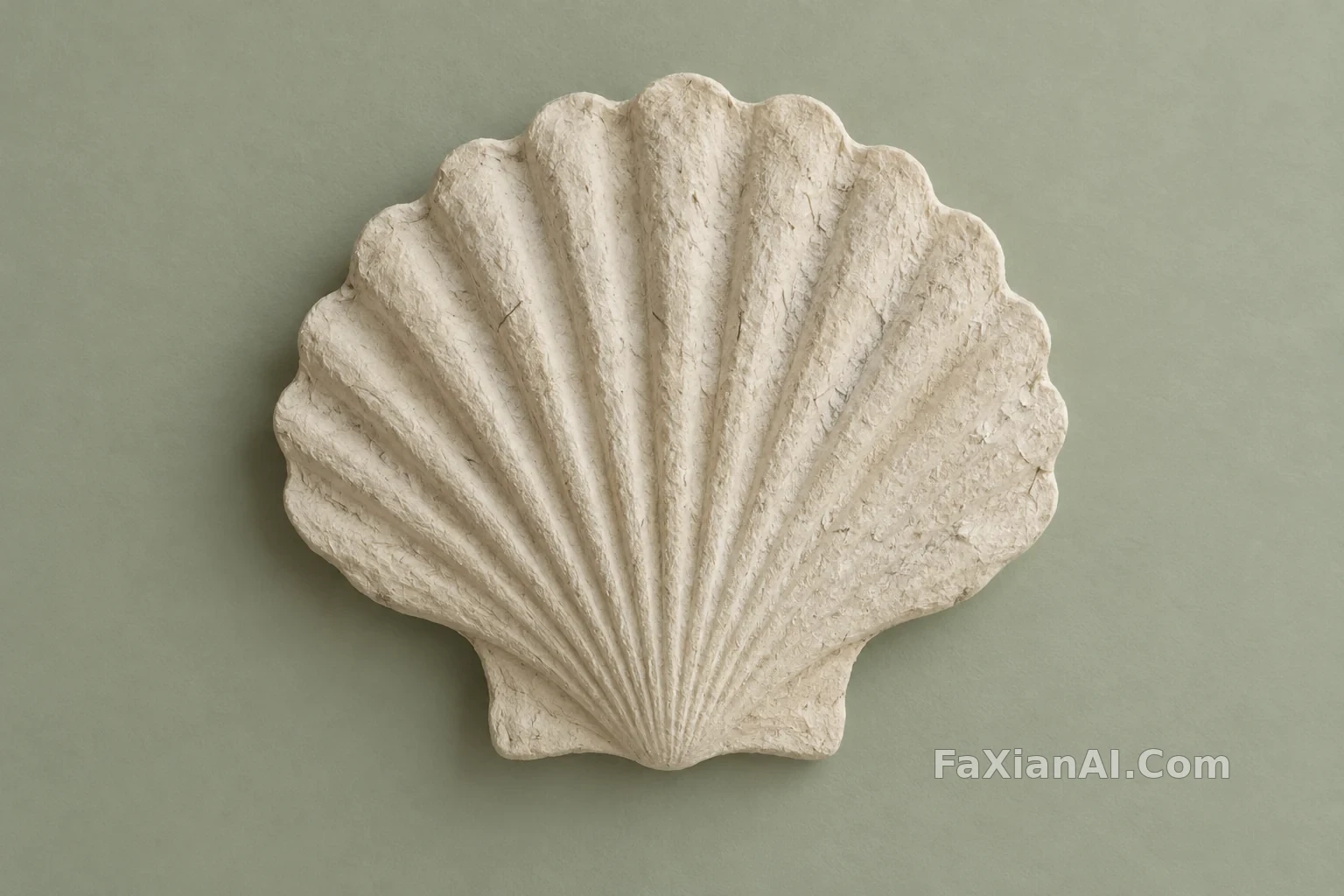
The shell relief is not a collection of separate sheets. It needs continuous radial ridges, modest unevenness and a few fibers, rather than regular geometric folds. Low-angle soft light reveals shallow relief. Too much microtexture hides the whole form. Check the shell silhouette and ridge direction before inspecting the surface.
Quiet Ridges in a Paper-Pulp Shell
Exercise: Explain How Paper Takes Shape
Keep an ivory ground and the same soft oblique light. Compare continuous folded planes forming a crane, three offset raised leaf layers, and radial ridges in a continuous pulp surface. Change only the structural mechanism and record differences in cut edges, folds and contact shadows. Packaging, cutting and folding production need separate dimensional and fabrication checks; these prompts serve visual studies and illustration references.
Explore paper craft and illustration examples, then compare oblique lighting in the structure-and-light article.