
Crochet Toy Prompts: Stitches, Yarn and Light Matter More Than the Word "Cute"
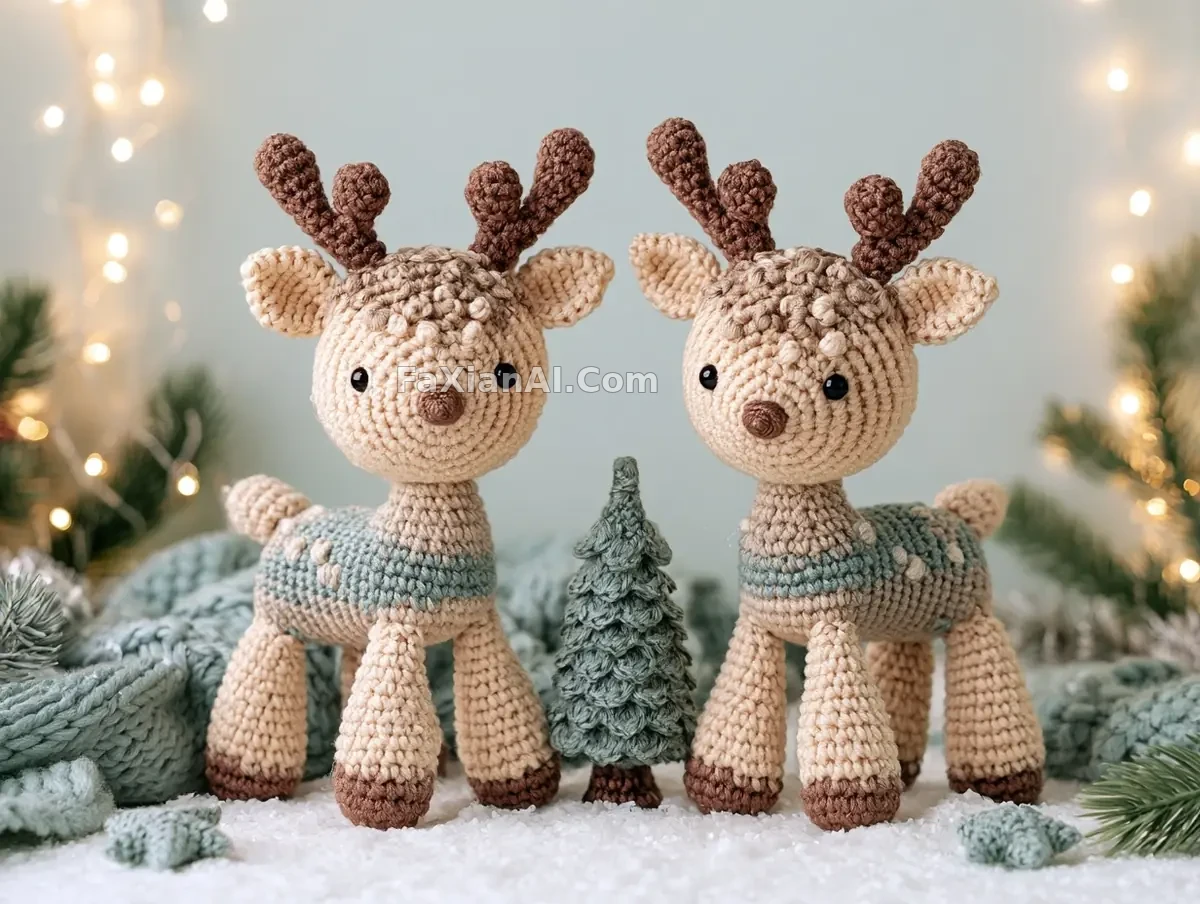
Crochet toys look simple, but they are surprisingly easy to get wrong. The usual outcome: you write crochet, amigurumi and cute in the prompt, the silhouette comes out right, but the surface is a smooth layer of flannel, or the whole thing looks like an injection-molded toy. Lose the loops and you lose the handmade feel.
The trouble is how much information "crochet" actually carries. A real crochet toy gets its credibility from a few very specific things: rows of loops, fine fuzz on the yarn surface, seams where the parts are sewn together, and slightly asymmetrical forms. Write those into the prompt and the model knows you don't want "a cute little animal" but "a little animal made out of yarn."
1. Stitches: Say They Are Visible, Then Say How Dense
The dusty-blue crochet reindeer is a good place to start. It doesn't stop at crocheted reindeer; it adds realistic crochet stitches and visible yarn fibers, asking for believable stitches and visible fibers. In the image above, the raised bobble stitches on top of the reindeer's head and the rows of short stitches on the legs are what that one line bought.
The editor's note on the crochet mage plush in a starry hat with a little bell records another trap: stitch density. Write the yarn fuzz too heavily and the whole toy blurs into a clump; too lightly and it looks like machine-made fabric. There's no magic number here. The steadier approach is to write two things together, stitches clearly defined and soft fine yarn, and let the model find its own balance between "you can see the structure" and "it feels soft."
2. Body Structure: Name the Short Limbs, the Tail and the Muzzle One by One
A crochet toy is worked piece by piece and then sewn together, with the head, body, limbs and ears each a separate part. If the prompt only says "an otter," the model draws it at real-animal proportions, with long thin limbs and fluffy fur, and the crochet flavor thins out.
The crochet otter in an olive scarf is worth copying. It writes out complete rounded tail and four paws and pale muzzle separately, and it even specifies olive for the scarf. Once the parts are named, the model tends to draw them as independent rounded masses, which is exactly the shape language of amigurumi. The line in the note, that it is more stable than simply asking for cute, is accurate.
Take it one step further: the direction of the loops should follow the body structure. In the crochet turtle librarian guarding a little ladder, the shell is a few brown spiral patches, while the limbs and head are single runs of green short stitches. The parts are told apart at a glance, so even with a whole shelf crammed with books behind it, the character still holds up.
3. Palette: Give Swatches, Not Mood Words
A phrase like "cozy winter palette" leaves the model far too much room. The reindeer case gives five colors outright: dusty blue, warm cream, cocoa brown, muted teal, soft silver. In the final image, the dusty-blue stripes on the reindeer, the cream body, and the cocoa antlers and hooves land almost one to one on that palette.
Yarn has a ceiling on color; real crochet pieces rarely show neon or complex gradients. So keep the palette to three to five colors with low saturation, and the result looks more like real yarn.
4. Background: Let the Props Be "Crocheted" Too
Put a crochet toy in a realistic living room and it often looks pasted on. The more natural move is to let the scene follow the material.
Under the reindeer is a knitted snowfield, and the little pine tree in the middle is crocheted too. The crochet tide-pool field station goes further: rocks, kelp, anemones and the little cabin are all written with yarn, looped and stitched, so the whole picture has a single material and the unity comes immediately. If you do need a realistic background, keep it simple: linen, a pale wooden table, a whole blurred bookshelf. None of those fight the loops for detail.
Also, the closing no duplicated objects in the reindeer case is very practical. When two or more toys share the frame, the model tends to draw an extra one, and this negation saves a lot of rerolls.
5. Light: Side Light Keeps the Shadows Between the Loops
Crochet texture shows up through shadow. Flat front light fills in the hollows between loops and turns the yarn into a flat texture map.
The hand-knitted wool mittens in morning light use cool morning light from the left window, light coming in at an angle from the left window, so every row of stitches has a bright side and a dark side, and even the loose fine fuzz is picked out. The note on the otter case also says soft light has to keep the shadows between the loops, so the fibers don't get smoothed into plastic. For how side light works on different materials, see also how side light brings out clay, glass and fiber.
If you want to put the toy into a larger miniature scene, the handling of scale and depth of field is covered in how miniature scenes hold up: scale, connection and one warm lamp.
A Crochet Toy Template You Can Adapt Directly
```
Craft photograph of a handmade crochet amigurumi [character: a small otter / a turtle librarian / two reindeer],
[pose: sitting upright / standing side by side], with [accessories: a tiny olive scarf / a wooden wand].
Clearly defined crochet stitches, soft fine yarn with visible fibers, rounded separate parts:
[name each part: round head, short stubby legs, complete rounded tail, pale muzzle].
Color palette: [three to five low-saturation colors: dusty blue, warm cream, cocoa brown].
Setting: [single-material background: knitted snowfield / unbleached linen / crocheted tide-pool rocks].
Soft side light from the left, gentle shadows between the yarn loops, shallow depth of field.
No people, no text, no logos, no duplicated objects. [aspect ratio: --ar 4:3]
```
Before you use it, decide one thing: what is the detail this toy most needs to show? The bobble stitches on top of the head, the ribbing on the scarf, or the direction of the loops on the shell? Spell that spot out, set up the side light, keep the rest simple, and the handmade crochet feel will come through on its own.