
How Miniature Scenes Hold Up: Scale, Connections, and a Warm Lamp
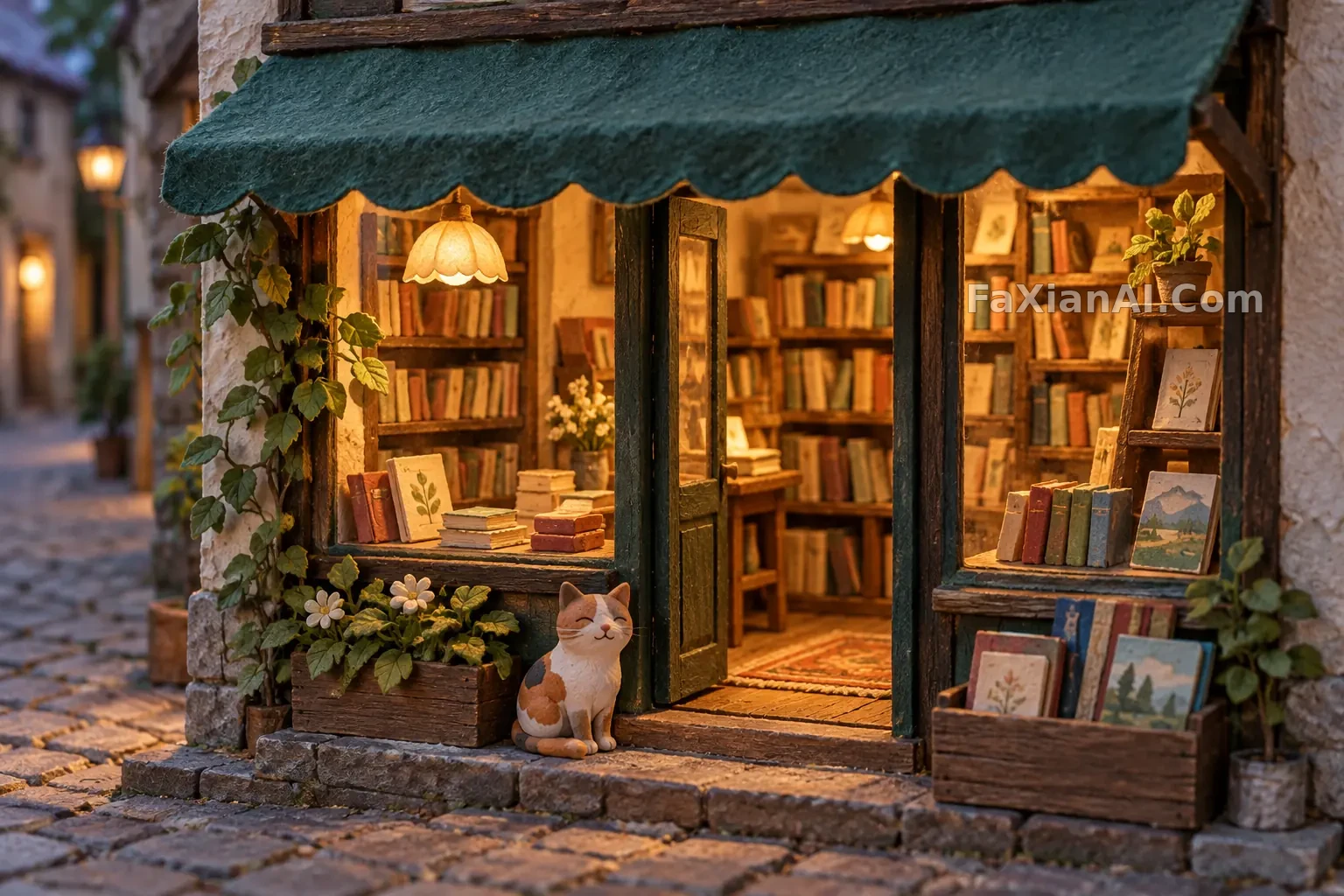
Miniature scenes are often described as "cute little rooms," but the result is just shrunken furniture without a real sense of a set. To make people believe it was built by hand, you need to provide evidence of scale, material edges, and light source positions. Together they determine whether the audience is looking at a space or a decorative illustration.
First, give scale a foothold
The existing wood puppet fox observatory lets the character and instruments explain size to each other; the matte pistachio robot gardener establishes purpose through the plant in its hand. The key is not to repeatedly write tiny, but to let readers see how small objects are held, put down, and used.
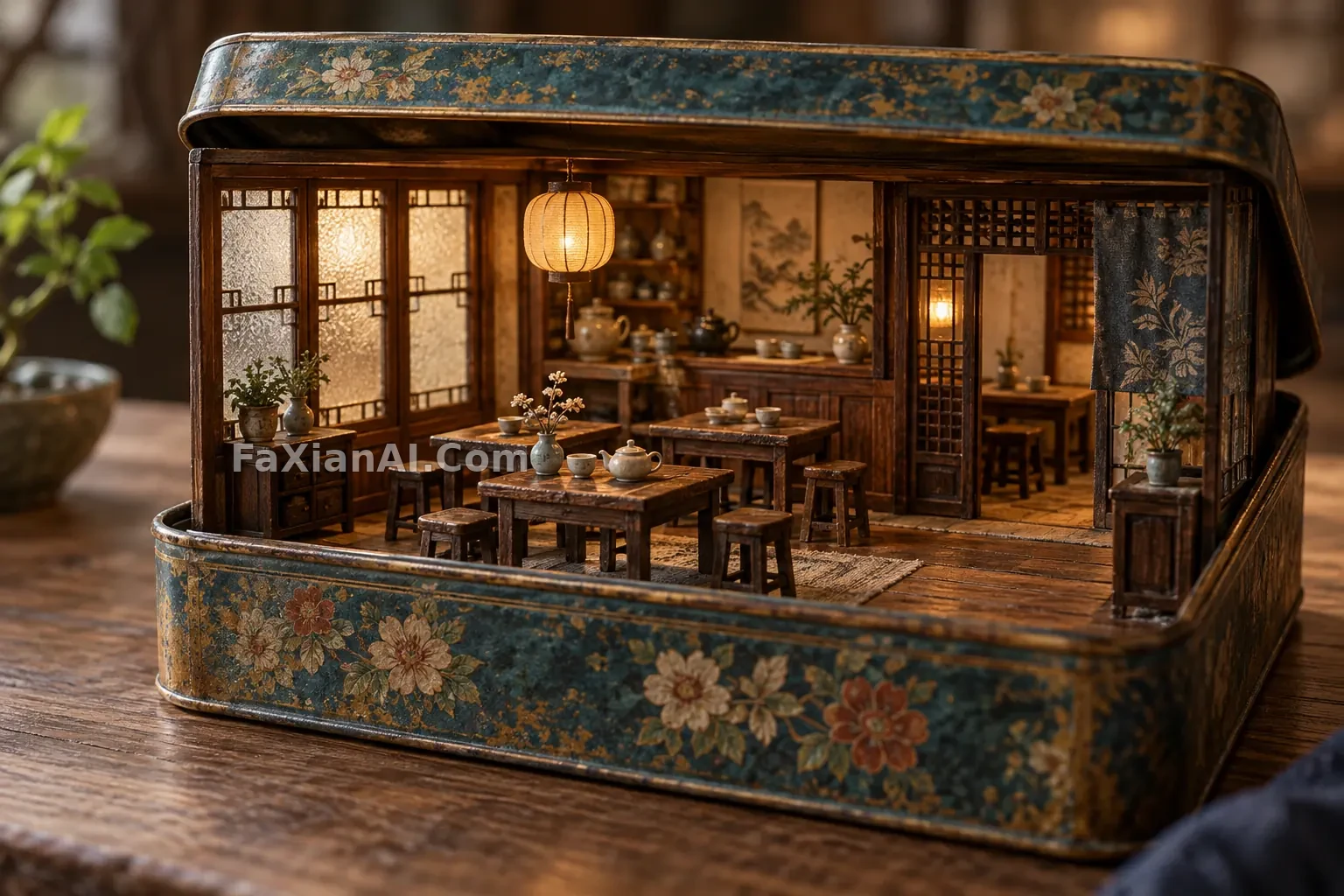
The miniature tin teahouse in this batch takes another approach: the tin box frame stays in the image, so the room has a clear external container. If the frame is cropped out, the miniature relationship degrades into an ordinary interior design drawing.
Materials should appear at the connections
Felt does not just mean fuzzy. The fox tailor's ear edges, cuffs, and small jacket seams all need fibers; clay characters' joints and props can retain slight indentations. The places where materials are easiest to read are often edges and connections, not a large area of uniform texture.
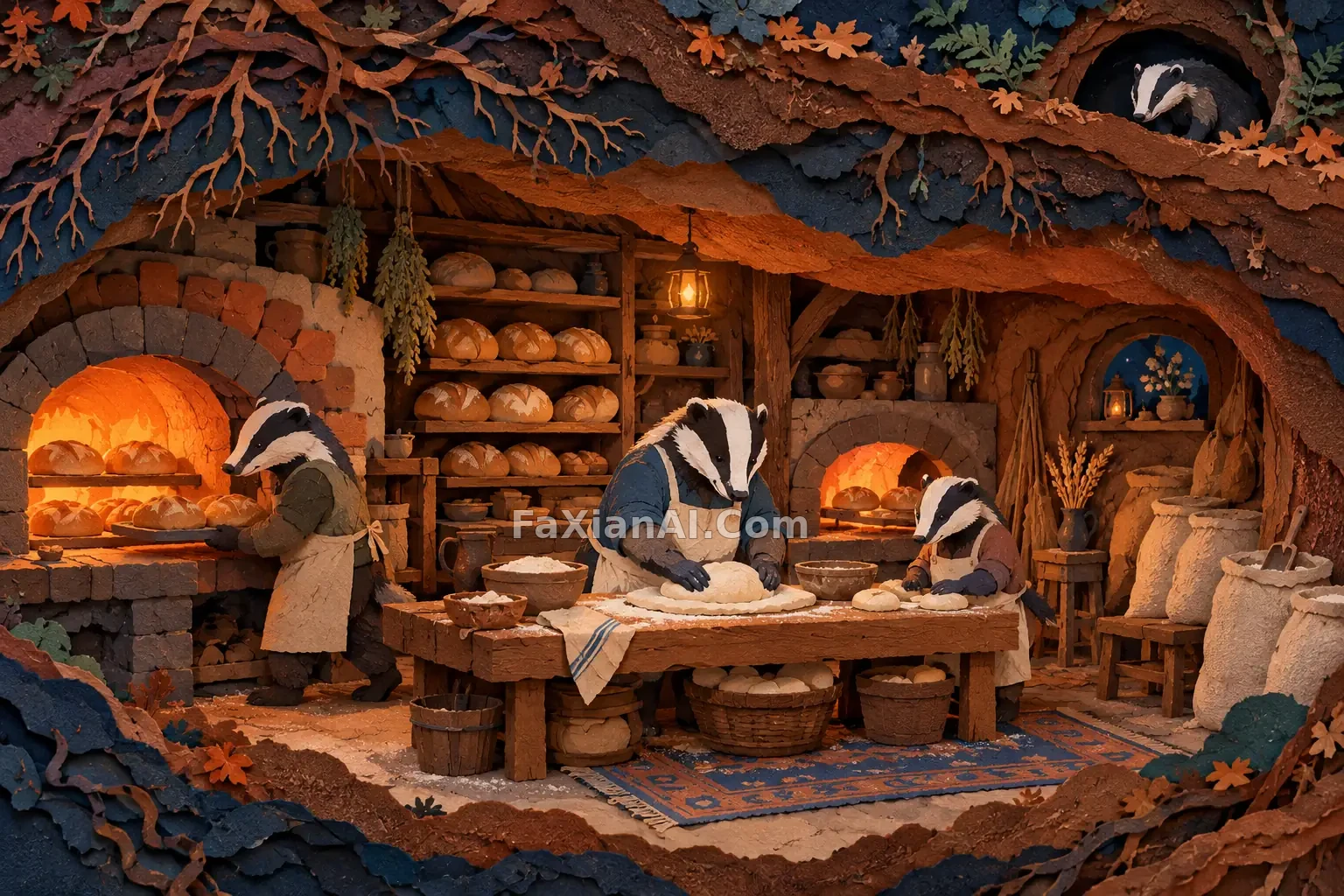
The paper-cut underground badger bakery arranges paper layers between tree roots, soil, and the furnace arch. A cross-section can show underground space, but too many layers will obscure the kneading action. First ensure the character's workbench is clear, then add surrounding layers—this is usually more stable.
A warm lamp needs to actually light things
If a lamp is only drawn as a yellow bright spot, the room will not feel warm because of it. You can specify that it illuminates the edge of the table, the side of a face, or book spines, so nearby objects show reflections of different intensities. Keep the outside of the window cooler, and the lamp's effect has a contrast—but do not dye every corner the same orange.
Prompts can be expanded in the order of "scene container—character action—material connections—where the main light falls." When checking, see whether hands and props connect, whether chair legs touch the ground, and whether doors and windows have enough thickness. For how surfaces respond to the same beam of light, you can continue reading lighting for porcelain glaze, linen, and metal.
These images are suitable for developing story sets and handmade concepts. If you want to build physical models based on them, you still need to design the actual structure and dimensions separately.