夾在巨石與水泥牆之間的人
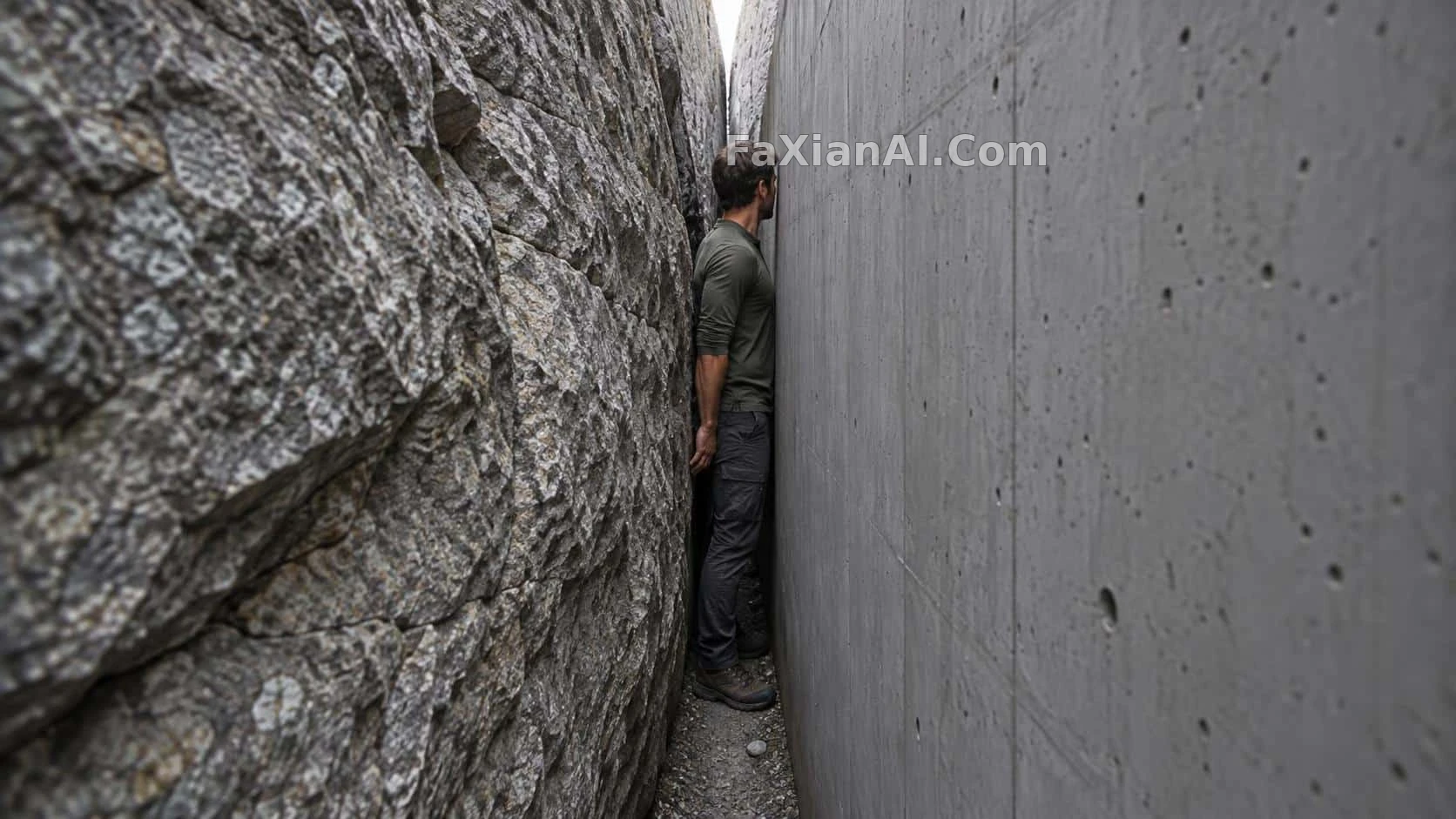
把“進退兩難”字面化:肩膀兩側各有一寸空氣,前路越走越窄。
✍️ 成語字面化的訣竅是“卡住但沒壓垮”:肩與牆之間留一線空氣,人才顯得有表情,真貼死了就只剩恐怖。左糙右平的材質對比讓俯光有可以擦的東西,一個燈就能拍出層次。
📋 提示詞 自然語言988 字元
Wide 16:9 composition, conceptual editorial image. Two unyielding surfaces face each other: a huge boulder of pitted, irregular grey stone on the left and a flat, hard wall of poured concrete on the right, with a gap barely wider than a person's shoulders between them. Viewed head-on, a person stands turned sideways inside that gap, one shoulder almost touching the cold rock and the other almost touching the concrete, arms pressed down along the body, head turned to look along the tight passage. A sliver of visible air remains between each shoulder and its surface, so the person is wedged but never crushed, and the channel ahead narrows further the farther it recedes from the camera.
Lighting is soft and overhead, dropping evenly into the gap. It rakes across the boulder's texture against the smooth concrete and leaves a thin shadow circling the feet. Keep clear margin around the boulder, the wall and the person on every side, and keep the scene free of lettering and text.
📋 中文譯寫版 自然語言
16:9 寬幅,概念性的編輯類影象。兩種毫不讓步的表面相對而立:左邊是一塊佈滿凹坑、形狀不規則的灰色巨石,右邊是平整堅硬的現澆混凝土牆,兩者之間的縫隙只比人的肩寬略寬一點。正面視角下,一個人側身站在縫隙裡,一邊肩膀幾乎貼著冰冷的岩石,另一邊幾乎貼著混凝土,雙臂緊貼身體垂下,頭轉向狹窄通道的深處。每一側肩膀與牆面之間都留著一線可見的空氣,所以人是被卡住而不是被壓住,前方的通道離鏡頭越遠越窄。
光線柔和,從頭頂均勻落進縫隙,擦過巨石的肌理與光滑混凝土形成對比,在腳邊留下一圈細細的陰影。巨石、牆和人物四周都留有清晰的邊距,畫面裡不出現任何文字。