
"Same Window Light: Why Celadon, Brass, and Linen Cannot Be Described the Same Way"
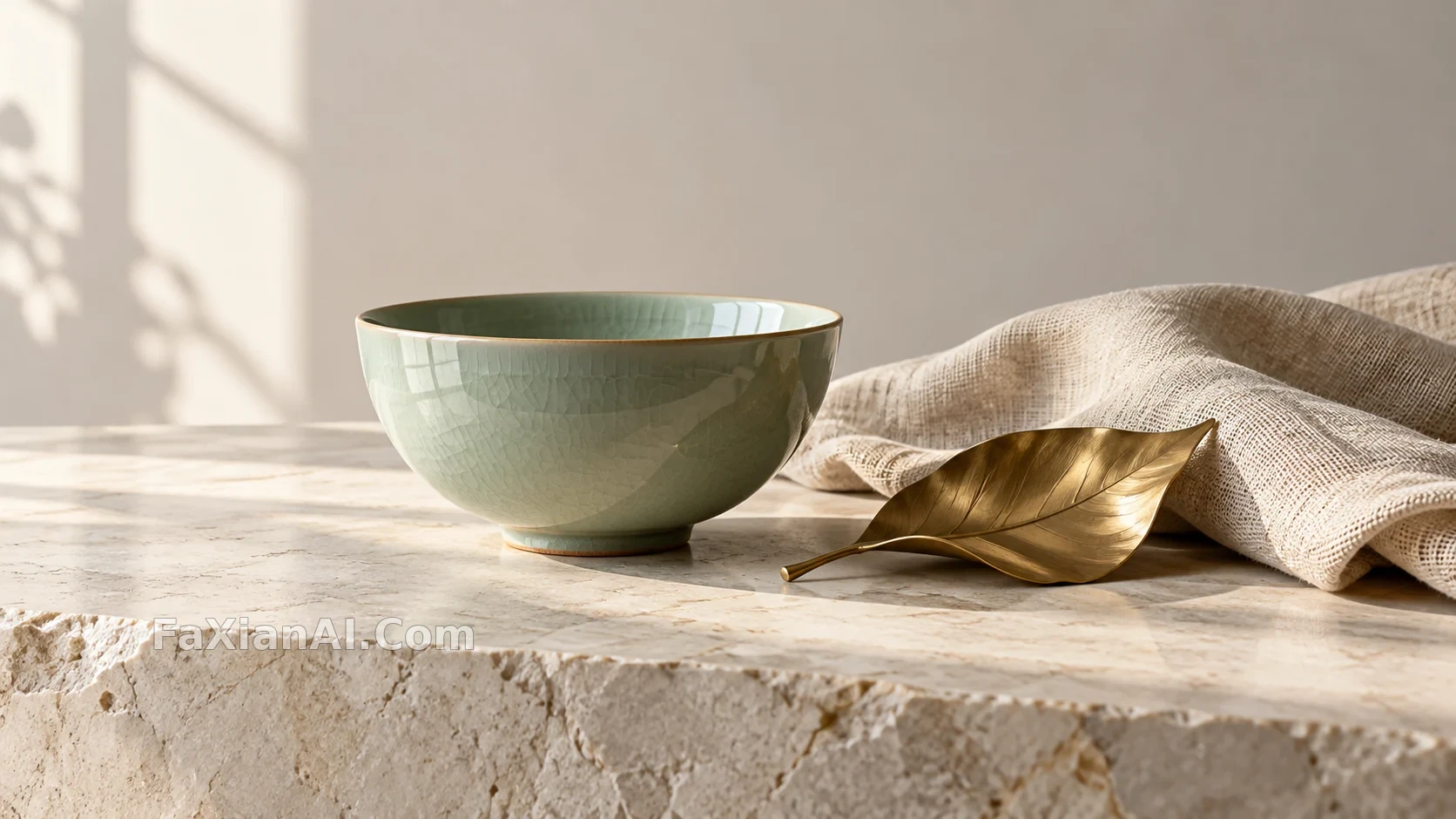
Placed by the same window, ceramic, metal, and fabric do not appear real in the same way. Celadon relies on the continuous reflection of glaze and bowl rim, brass on clearly directed brushing and curved bright bands, and linen on fiber undulation and soft shadows. Writing material cues into the object's structure is easier to check than repeatedly adding 'delicate' or 'refined'.
Celadon cracks belong to the glaze layer, not damage to the vessel
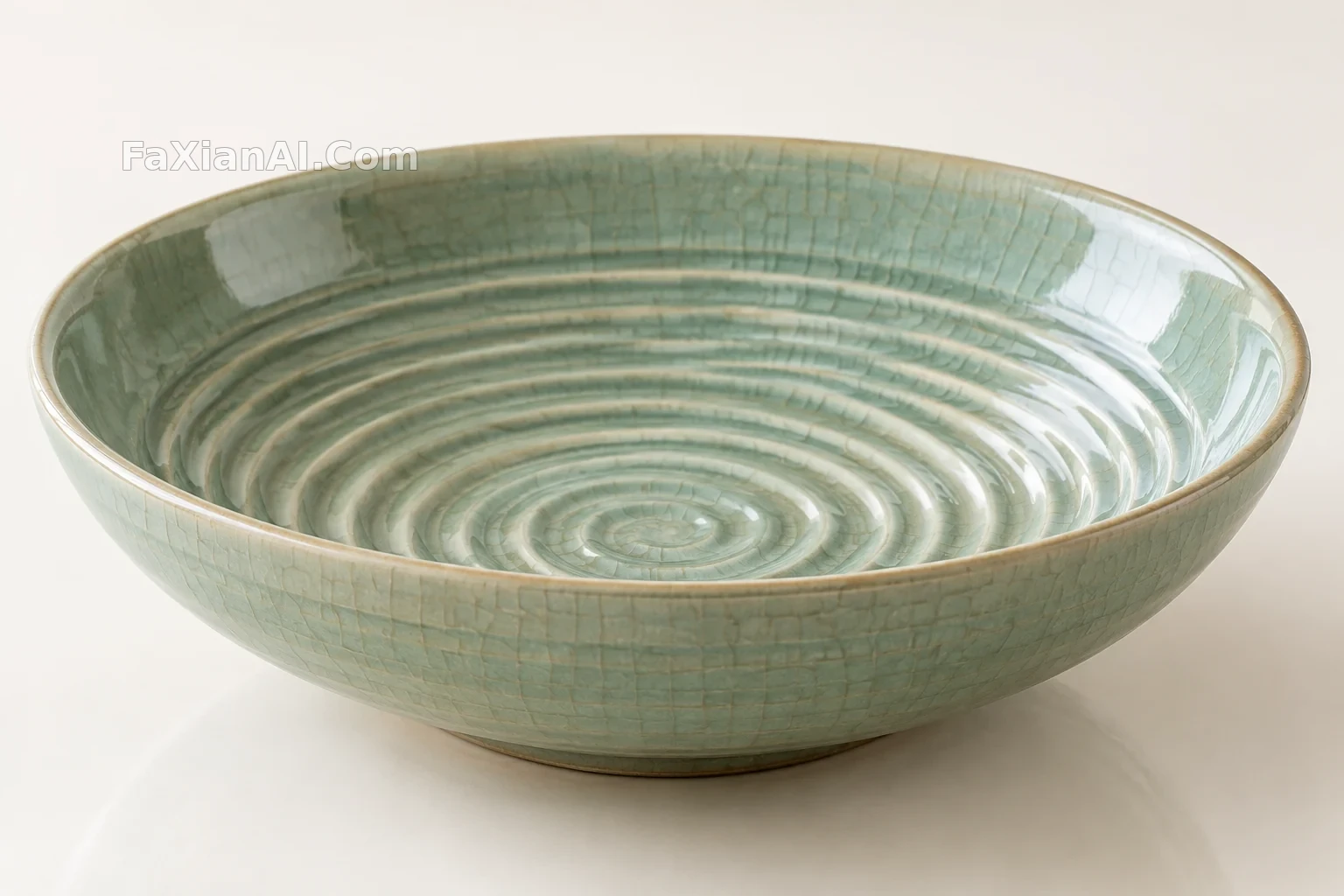
For the shallow bowl case, first define a complete rim, then describe concentric shallow lines and fine crackle. These conditions constrain each other: the rim defines the outline, the lines define the making method, and the crackle stays only in the glaze layer. If crackle is written as deep fissures, the model may make the bowl into a damaged piece; if only blue-green is written, highlights may turn into plastic shine. When checking, follow the rim for continuity, then see whether the concentric lines obey the same center, and only then look at the fine cracks. For a vessel concept image, you can first remove the crackle, confirm the basic form, and then add surface complexity.
A Ring Of Ripples In A Shallow Celadon Bowl
Brass needs a stable base and a reflection direction
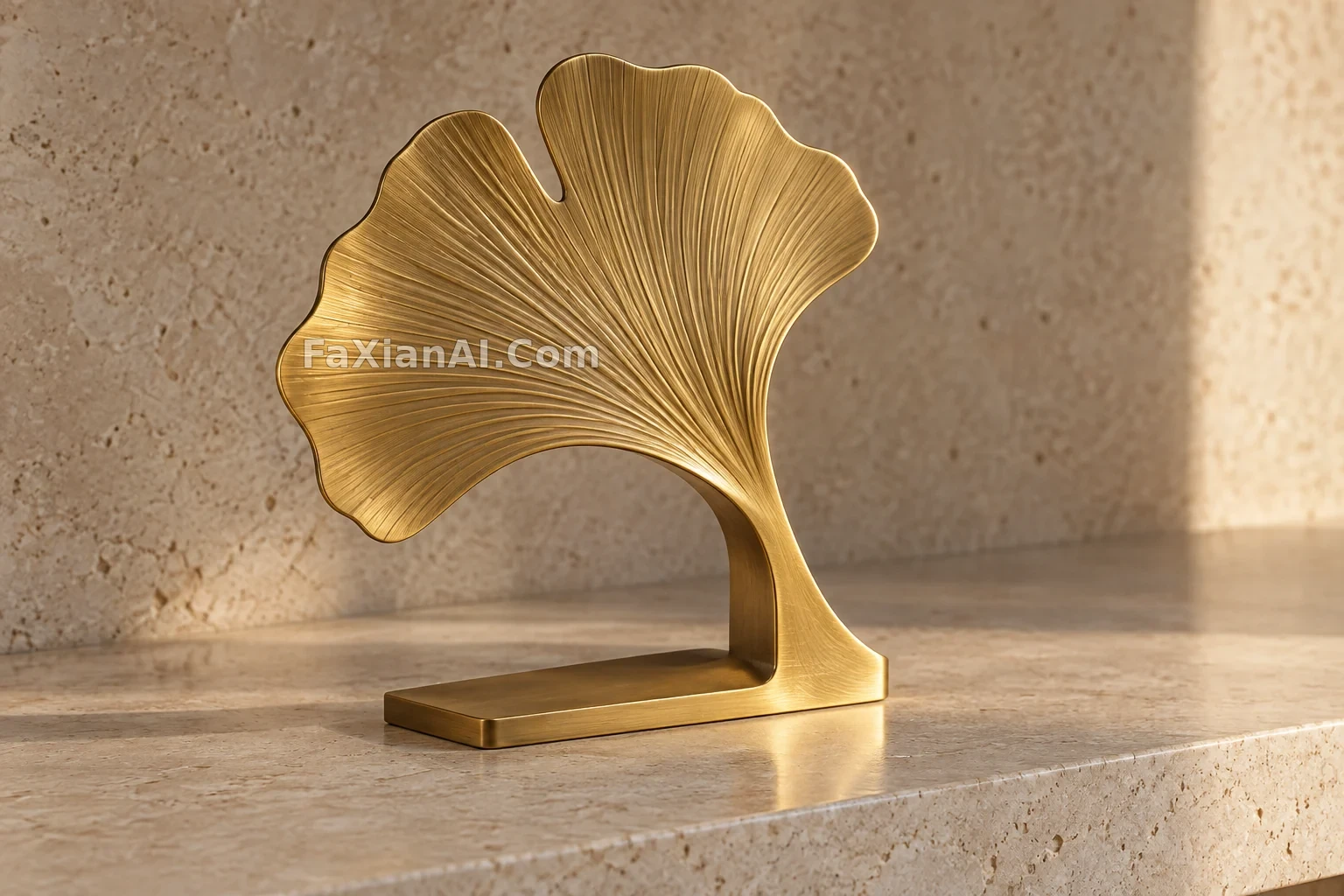
The ginkgo leaf bookend is not a piece of floating leaf-shaped metal; the connection between base and leaf surface determines whether it looks like a usable object. The prompt requires a clear brushing direction and moderately rounded edges, then lets warm reflections describe the undulation of the leaf surface. If every vein becomes a white glowing line, the metal instead looks like it has light strips carved into it; if the bright surface has no light-dark transition, brass is reduced to a block of yellow. In the main image, brass and linen can share the window light but should react differently: brass shows continuous bright bands, while the cloth surface produces loose, short fine shadows.
Brass Bookend Leaves Only A Single Leaf
Glass buttons reduce transparency and dispersion to a very small scale
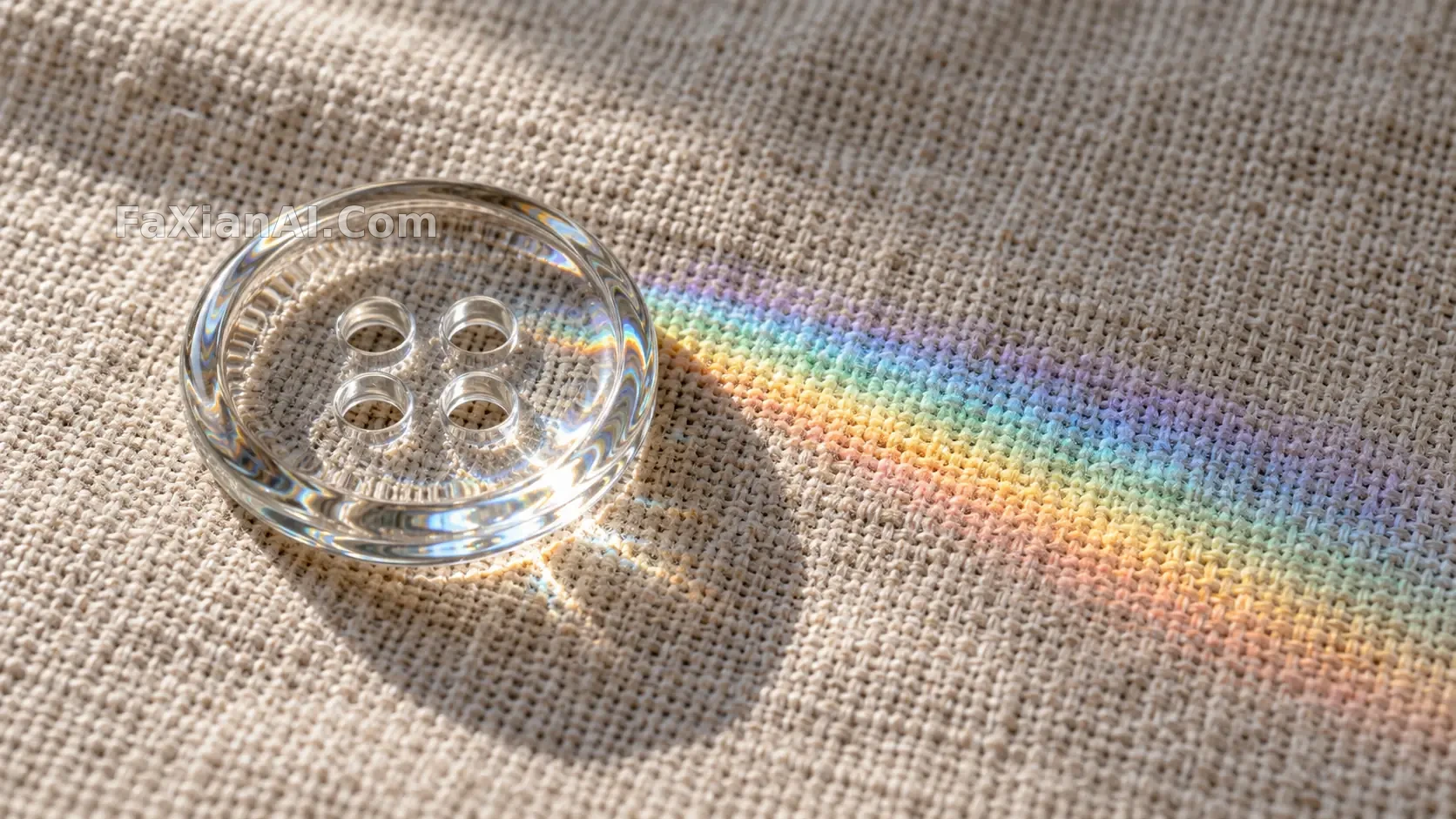
The button case requires four holes and a raw linen background; transparency cannot rely only on lowering opacity. The edges of the holes need thickness, fibers passing behind the glass should have understandable refraction, and the iridescence beside it should occupy only a small area. Spreading iridescence over the whole button or the entire cloth slides from physical cues into decorative effect. Checking can also be reversed: first confirm that the linen texture has not been completely smoothed away, then look at the glass edges, and finally at where the iridescence falls. A generated image does not prove real optical parameters; it can help compare where different prompts direct attention.
A Clear Button Casts A Fleck Of Rainbow
Change only one checkable condition at a time
Fix one shallow stone slab, one object, and one beam of side window light, and write ceramic, metal, and glass versions separately. Each time change only how the material responds to light, keeping the camera position and background. Zoom out to check the silhouette, zoom in to check the edges, then compare the original image and the final WebP: if key fibers, cracks, or fine bright bands have already clumped, further compression cannot make up for it.
The hero places celadon, brass and linen in one beam of window light; the three detail cases isolate glaze, brushing and transparent edges. The earlier article on edges and contact shadows extends these cues to complete object structure.
Further Reading on Edges and Contact Shadows
Original prompts and editorial analysis: FaxianAI