
From a Bookshop Ladder to a Hill Town Canal — Give Scenes a Route
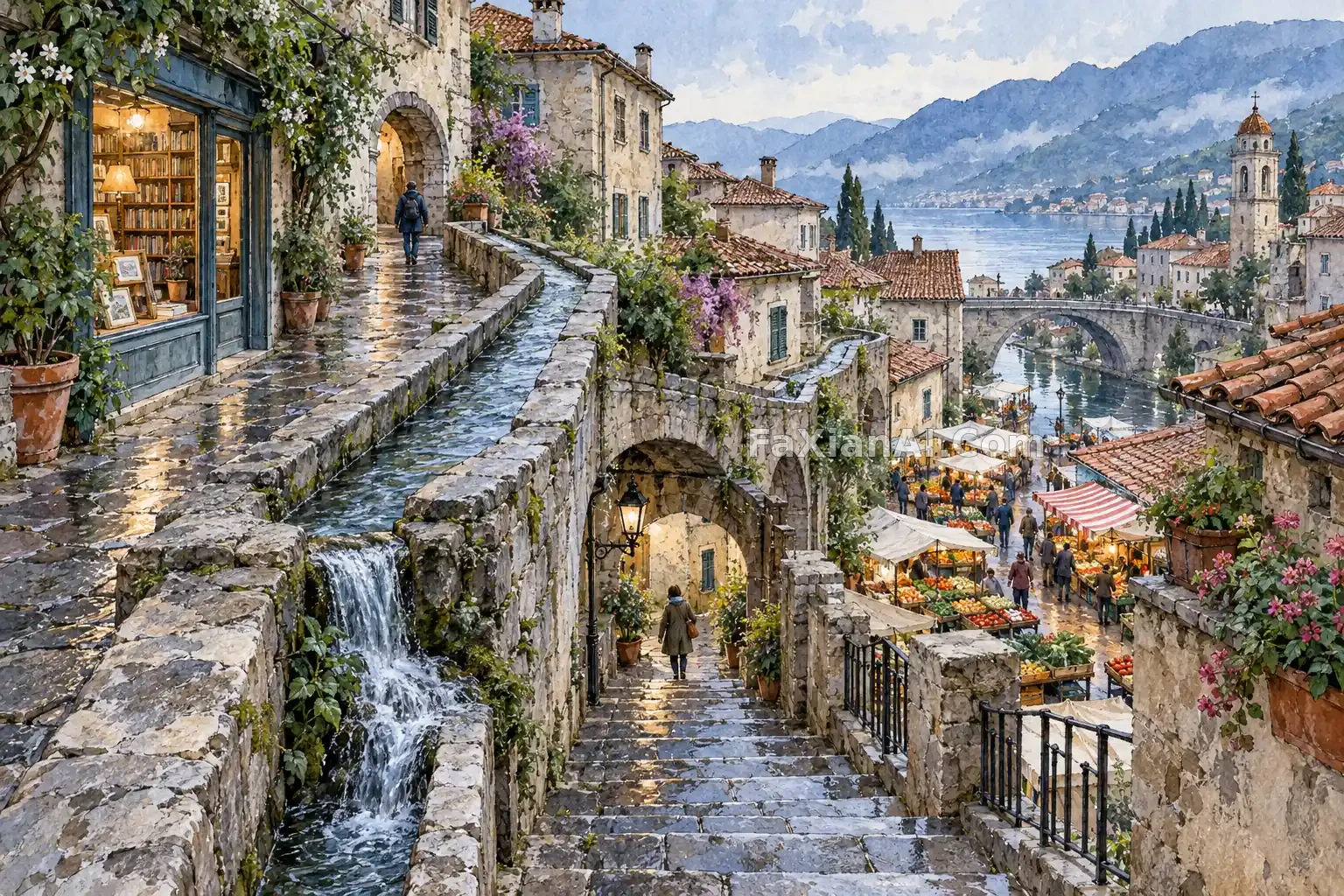
A scene graph can have many beautiful objects, but no room for believability. The solution is to first write how a person or a stream of water passes through the picture: what are the starting point, turning point, and end point, and then add style and weather. In the first picture, the water canal descends along the slope, pedestrians take the stairs to the market, and the bookstore is located on the roadside; these relationships are more specific than a separate column of "mountain city, bookstore, market".
There are also clear lines of movement in the small room.
Orange cat on the wooden stairs of the bookstoreThe orange cat was placed at a high height on a wooden ladder, while the store clerk organized the map book on the ground. People, ladders, and bookshelf form a vertical relationship; if the cat stands on the counter and the ladder at the same time, the picture will lose its priority.Picture book posters for community book fairPlace the exchanged books between the characters, and create a short moving line of sight and gestures. A suitable prompt for this type of scene should explain what the character is doing, not just what they are wearing.
Large scenes need to explain the height difference and water flow
Aqueduct between the roofs of a mountain cityThe slope is shown with an elevated aqueduct, a bridge and a wet market below. Water flows from high places to low places, stairs are used for people to pass, and bridges span water channels; the three routes are not substitutes for each other.The paper-winged spaceship flies over the corner of the buildingThen use the corner of the house and the pedestrians in the distance to illustrate the size and height of the aircraft. Both pictures require scale reference, but one focuses on terrain and the other on aerial location.
Before writing the scene, you can draw three points on the paper: where the protagonist is, the direction of movement, and the final target you want to see. Then give one of the turning points a light or color accent. After generation, check perspective, occlusion, and object size along the route; if the route doesn't make sense, deleting the decorative words is more effective than adding more decorations. Continue to viewIllustration classificationandCreative classificationScenario example in .