
Material is not an adjective: a cue word approach to edges, reactions and light
"Wood, metal, fabric, ceramic" are just material names. What really makes a model understand a material is how the edges end, how the surface reflects light, whether it bends under stress, and what traces water, salt, heat or time leave on it.

Let the material bear the structure, not just cover the surface
In Crochet Tide Pool Field Station, wool is not just a filter: the roving becomes a reef, the looped coil becomes kelp, and the suede determines the difference in softness and hardness at the water's edge. Basalt Moss Relief Map also distributes pulp, stone particles and lichen fibers to ridges, craters and vegetation, instead of spreading "roughness" evenly across the entire map.

Write down the reaction of the material when it encounters the environment
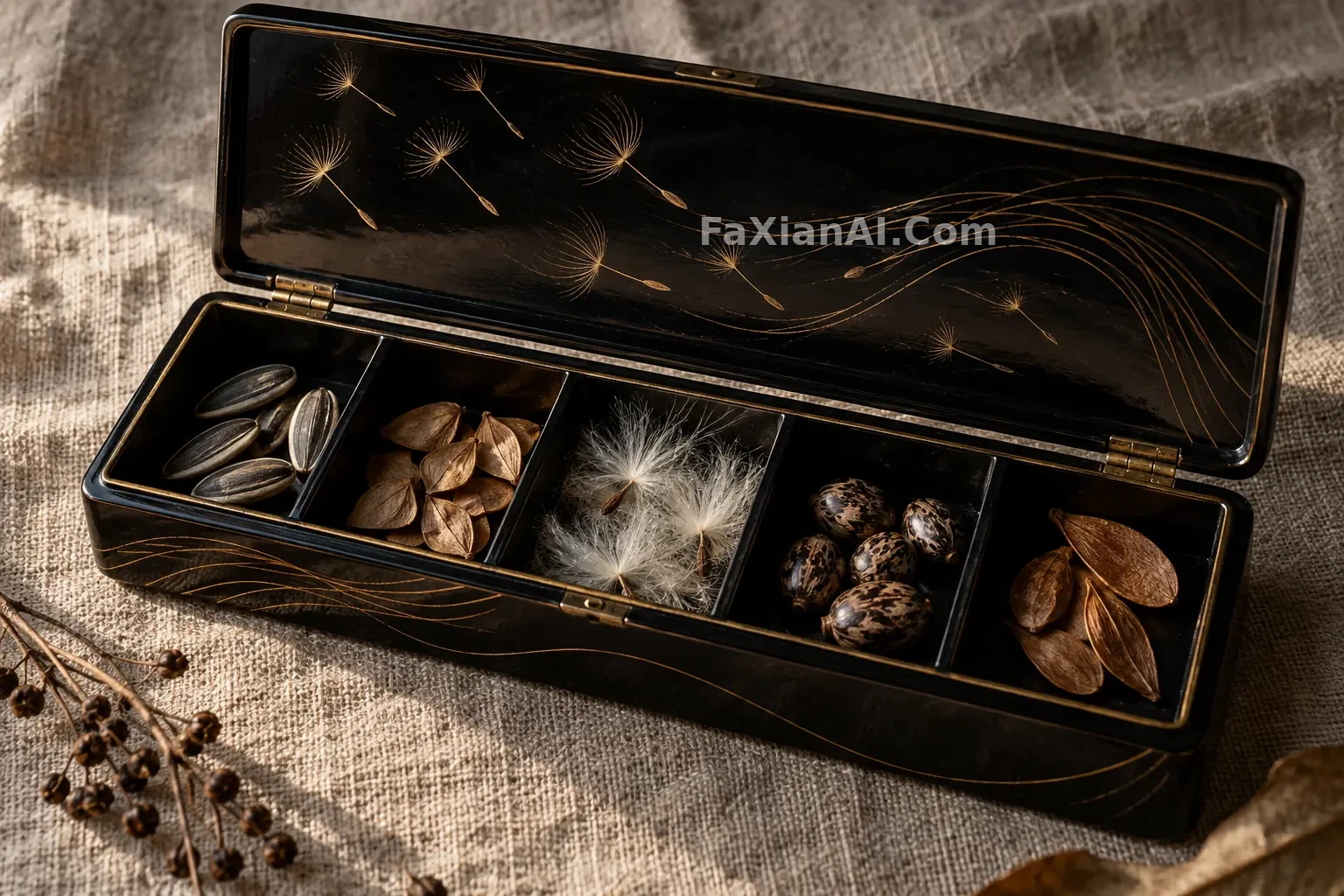
Coastal Bronze Tide Clock writes salt spray, rain and movement into patina streaks, clock hammers and drawstrings; Gold Painted Lacquer Seed Box uses low side light to illustrate the depth of the paint surface, gold line reflection and hinge structure. It is best to follow the material word with a reaction: water absorption, frosting, peeling, wear, light transmission or leaving fingerprints.
Edges are more likely to expose errors than the center
The fracture surface of Honeycomb Ceramic Filter Element Macro needs to show sintering pores, wet clay and brittle broken surfaces at the same time; Cloisonne Moth Brooch relies on the interface between gold wire cells and enamel to confirm the process. Just writing "advanced texture" won't fix these edges.
Verify with light, not mask
Narrow side light is suitable for pores and knife marks, diffuse light is suitable for translucent objects, and strong outline light is suitable for inspecting shapes. You can continue browsing the Style Classification, Bronze Texture Label and Material, Light to Space Workbook to change each adjective into a checkable visual result.