
How to Write a ChatGPT Saree Edit Prompt: Get the Sheen Right and a Saree Won't Look Like a Texture Overlay
The same shade of green reflects light completely differently on satin versus chiffon. That principle applies especially to saree outfit changes — a lot of people writing a chatgpt saree edit prompt only specify the color, not how the fabric reflects light, and the result gets the color right while the texture looks like a flat overlay pasted on — obviously fake at a glance.
The core of a chatgpt saree edit prompt is sheen, not just a color name
Half of what makes a saree look good is the color, and the other half is how that color "reflects" light. Silk is glossy and highly reflective, cotton is matte and low-reflective, chiffon sits in between with a bit of translucency. If the prompt only says "emerald green saree," the model is left guessing which type of reflectivity to use. The safer approach is to fold the material word directly into the color description — something like "matte cotton" or "glossy silk" — so the sheen follows the material rather than the color floating on its own.
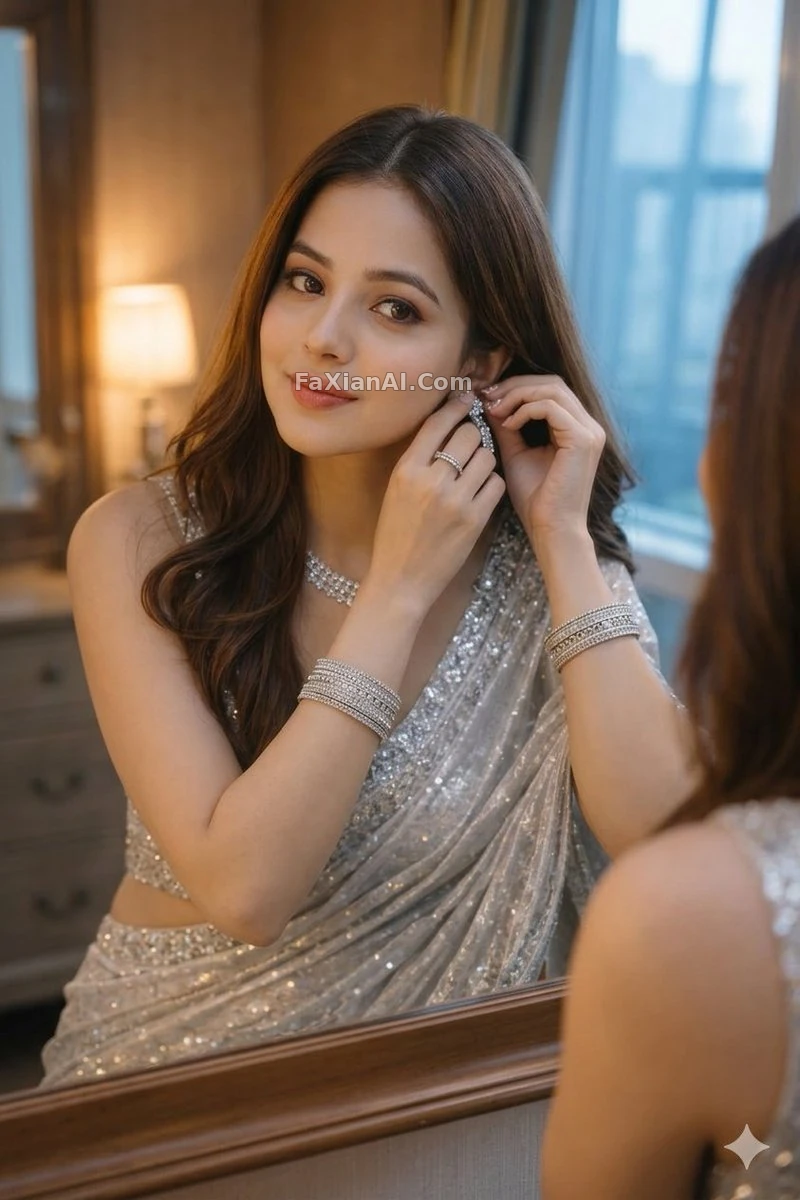
That flash of light in the mirror comes from the jewelry and fabric working together to produce sheen. See the full prompt.
- Change the subject's outfit to a silk saree in deep emerald green with gold zari border, keep the face, skin tone, and pose completely unchanged, drape the pallu over the left shoulder, soft studio light.
- Recreate the same face in a matte cotton saree with block-print pattern, muted earthy tones, natural daylight, keep hairstyle and jewelry from the original photo unchanged.
- Change the fabric texture from glossy satin to matte chiffon on the same saree color, keep the drape folds natural, avoid overly shiny highlights, soft diffused light.
How to describe embroidery and drape style in a saree photo editing prompt
Embroidery density and drape style are the two variables most often overlooked in a saree photo editing prompt. Describe density too vaguely and the model tends to render the pattern as a flat print rather than dimensional embroidery that follows the fabric's drape. Drape styles also differ by region — spelling out exactly which draping method you mean is far more accurate than writing just "traditional saree."
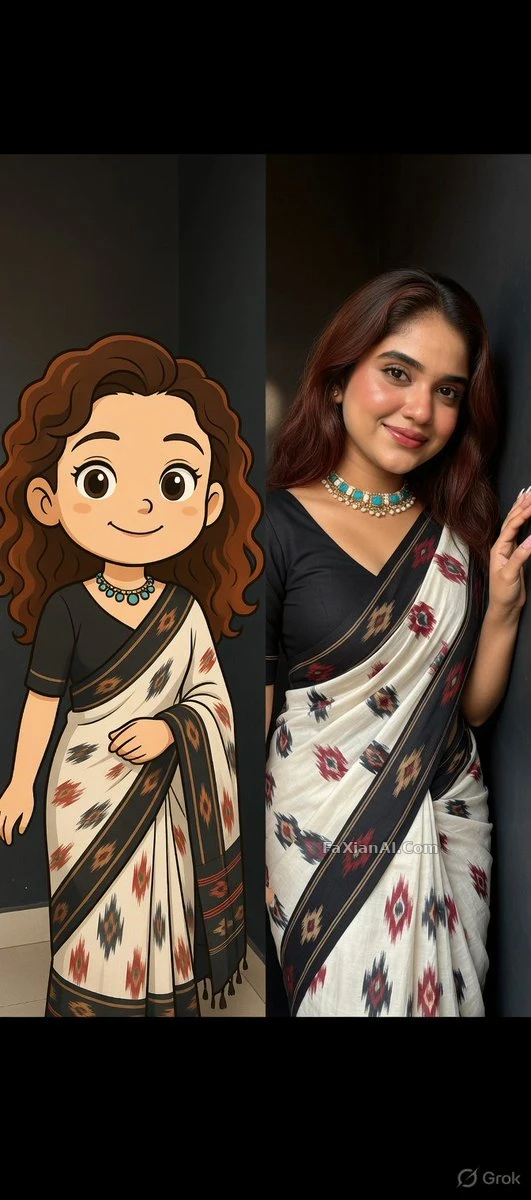
A side-by-side comparison is a blunt but effective way to check how well an outfit change worked — any distortion in the facial features shows up immediately. See the full prompt.
- Adjust the embroidery detail to a finer thread density along the border, keep the base color unchanged, ensure the pattern follows the fabric drape lines instead of looking flat-printed.
- Adjust drape style from Nivi style to Bengali style for the same saree fabric, keep all facial features unchanged, describe the pleats direction explicitly to avoid a flat wrap look.
- Change the accessory set to match a traditional outfit: replace modern earrings with jhumka-style drop earrings, keep hand pose and nail details unchanged.
- Recreate the same portrait side by side: one version in the original modern outfit, one version in a traditional saree, identical lighting and camera angle for direct comparison.
- Change background to a warm-toned traditional courtyard with wooden door, keep subject's saree color and skin tone rendering consistent with the new ambient light.
Traditional outfit ai edit isn't just about the saree — hanfu and kimono follow the same logic
A traditional outfit ai edit shouldn't be limited to a single garment type. The embroidery density of a hanfu and the obi-tying method of a kimono are, at their core, the same category of problem as saree embroidery and draping — all three layers stack the same way: fabric, craft detail, and how it's worn. Only the specific terminology differs by garment; when writing the prompt, just swap in the corresponding proper terms — the underlying logic doesn't need to be rethought.
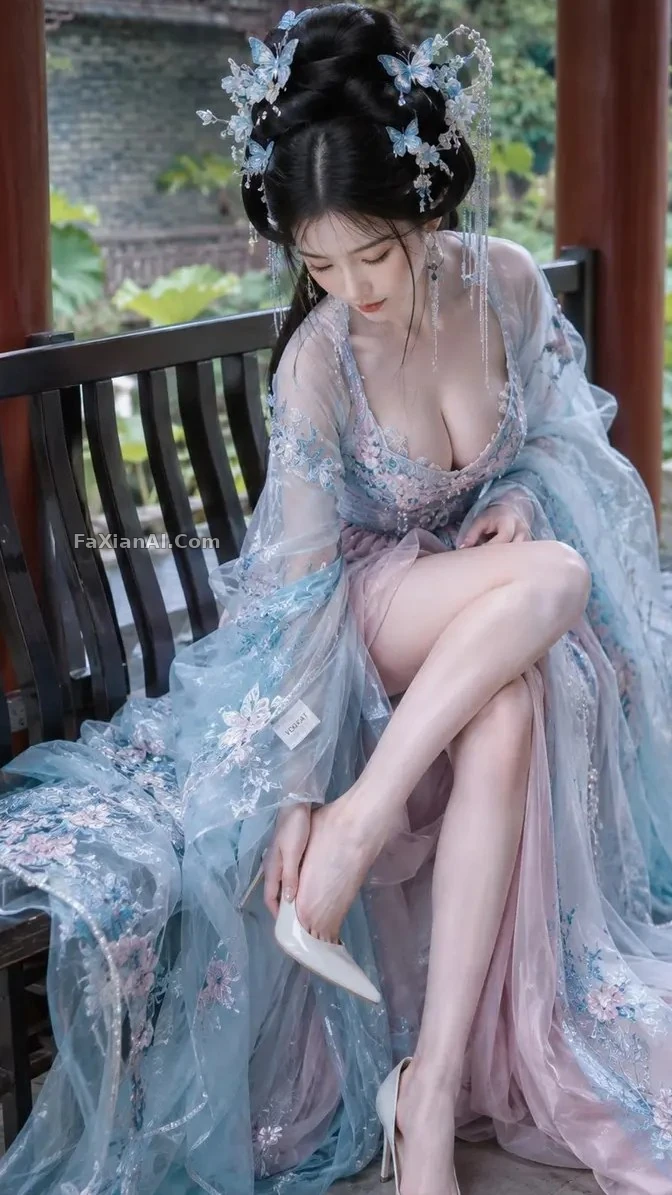
A hanfu outfit change also needs to address both the embroidery pattern and the hairstyle — missing either one makes the result feel thin. See the full example.
- Change outfit to a red silk hanfu with embroidered phoenix motif on the sleeves, keep facial features and body proportions identical, add a classic updo hairstyle with hairpins, soft indoor light.
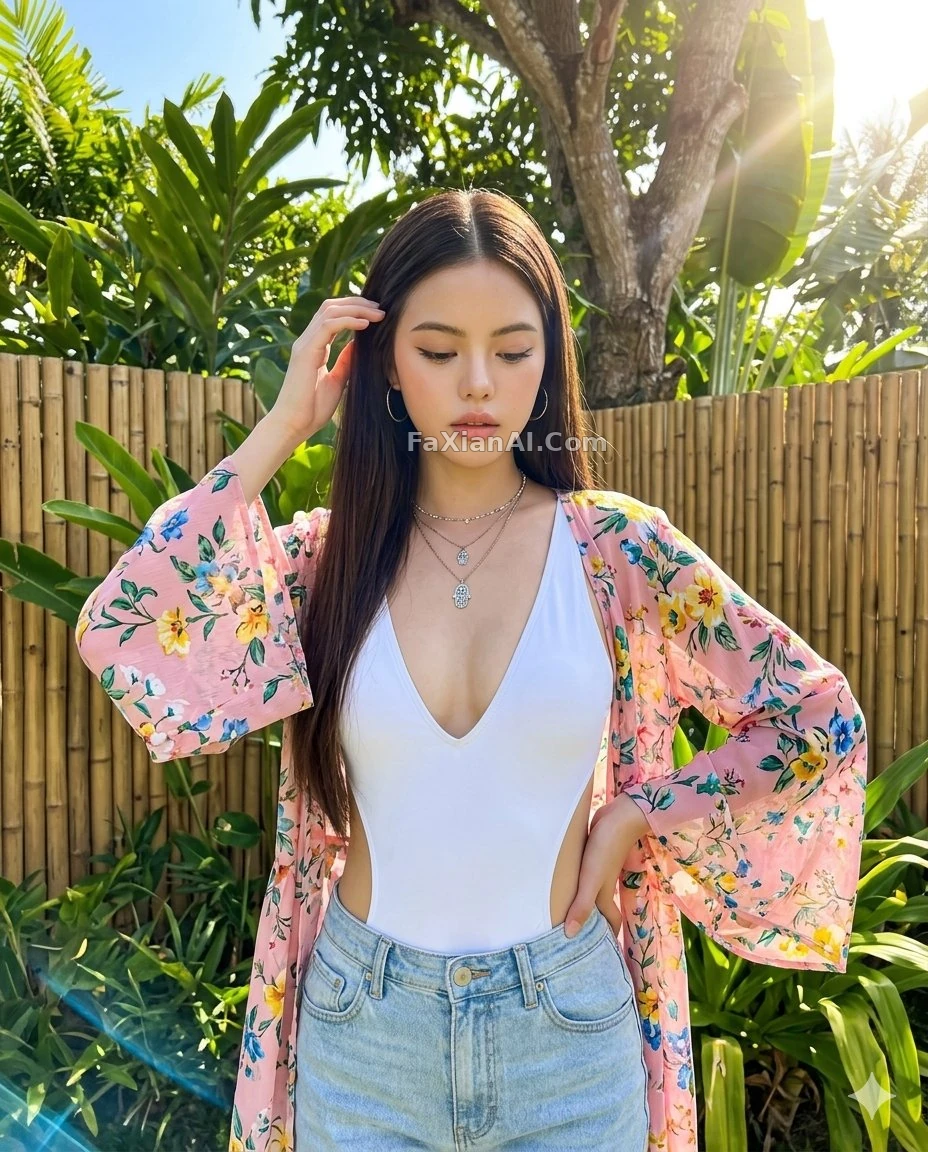
The way a kimono's obi sash is tied works the same as saree draping — spelling out the specific technique is more useful than writing a vague "traditional." See the full prompt.
- Recreate the subject wearing a tropical-print kimono layered over a plain inner robe, keep the original face and expression, warm golden hour sunlight, obi sash tied at the back.
- Change the pallu drape to cover the head loosely as a modest style variant, keep facial features fully visible and unaltered, soft warm light.
One thing worth remembering when writing this kind of outfit-change prompt: sarees, hanfu, and kimono are all garments with real, specific craft traditions behind them, not Halloween costume props. If a prompt only writes a style label without the specific craft details, it's easy to end up with a kind of "exhibit-ified" illusion — something that looks like the garment but is disconnected from the real texture and way it's actually worn. Spending an extra sentence or two on the specific fabric name, embroidery technique, and draping method makes a real difference both in the result and in the respect shown to the garment itself.
The most common way an outfit-change prompt goes wrong
No matter which traditional garment you're changing into, facial consistency has to be the top priority. The line "keep facial features unchanged" in the prompt can't be skipped — otherwise the outfit change might end up changing the person too. This is the same issue covered in how to keep character consistency — color sheen can be fine-tuned later, but if the face doesn't match, a whole carefully written material description is wasted.
These outfit prompts apply directly on Nano Banana too — material and embroidery-density descriptions produce similar results on both. For more portrait outfit-change material, browse the portrait category; for cartoon-style outfit changes, cross-reference cartoon avatar conversion approaches as well. The homepage also has full category navigation.