
Home › Creative Ideas › Four Eras Packed into One Shoe's Cross-Section
Four Eras Packed into One Shoe's Cross-Section
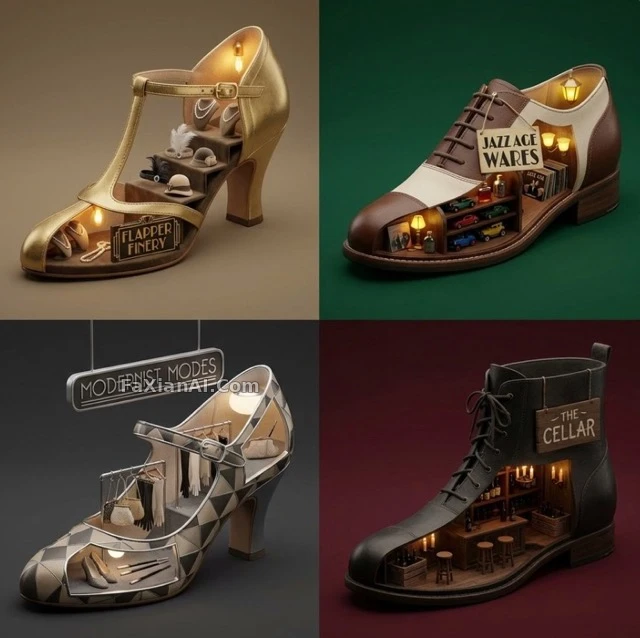
From gaslight to fluorescent tube, four eras of history get taken apart, sorted, and reassembled inside the cross-section of a single shoe.
✍️ The difference between the four eras isn't in the shoe shape — it's in the light source. Gaslight versus fluorescent tube sets the whole shop's emotional register, and the shoe itself ends up being the last detail added.
📋 Prompt Numbered Sections2164 characters
<instruction> This round focuses on the 1920s to run the full breakdown process:
1. Reasoning Engine
Input A corresponds to a specific historical era (e.g. the 1920s, the 1980s, the Victorian period, or the future).
Around this era, lock in four categories of footwear-related assets:
Shoe Style: identify the most representative shoe silhouette of the era.
(Example: 1920s → T-strap heels; 1980s → high-top sneakers; Victorian → button-up boots).
Matching Inventory: lock in the fashion accessories popular at the time.
(Example: 1920s → pearls and headbands; 1980s → cassette tapes and neon apparel; Victorian → cameos and lace gloves).
Shop Signage: determine the typeface and advertising presentation style.
(Example: Art Deco gold tones, neon tubing, hand-painted serif lettering).
Lighting Method: lock in the era's ambient lighting approach.
(Example: gaslight, fluorescent tube, incandescent bulb).
2. Container Setup
Target theme: a surreal "fashion history" retail scene.
Presentation format: 2x2 grid composition.
Core concept: each cell represents a stylistically distinct "era shop," all derived from Step 1's input (if the input is a broad era, provide four variants).
Display subject: a shoe corresponding to that era, sliced open and presented as a 3D cross-section model.
3. Interior Construction
Fit-out details: the shoe's interior is furnished with shelving and flooring matching the era's characteristics.
Victorian: velvet paired with mahogany.
1980s: checkerboard tile paired with slat-paneled walls.
Inventory display: shelves stocked full of the "inventory" items locked in during Step 1.
Signage detail: a miniature era-appropriate sign hanging from the shoe's ankle or tongue.
4. Visual Grammar
Palette selection: each cell's background color must echo the era's dominant palette (e.g. sepia tones for the 1800s, bright pink for the 1980s).
Lighting rendering: the interior shop lighting must match the "lighting" conclusion reached in Step 1 (warm yellow tones versus harsh white light).
Final output: a single 2x2-grid image, 1:1 aspect ratio, 3D rendering effect, "dollhouse"-style aesthetic, high texture fidelity.
</instruction>
Related Cases
 The Bride Steps Right Out of the Paper Card in 3D
 Turns Out the Great Wall Was Molded from Rice
 Meant to Look Up Obscure Albums, Ended Up Throwing a Concert
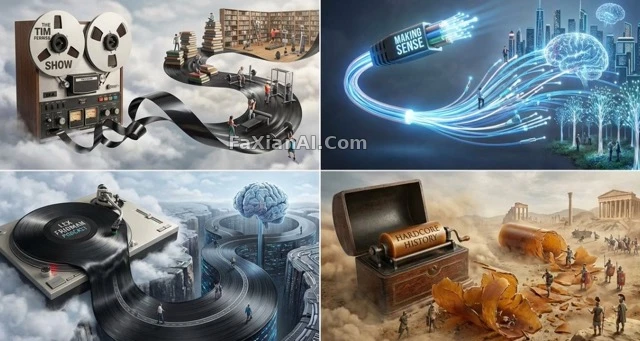 Four Podcasts, Four Physical Media Transformation Clauses
 A Theory's Architecture, Growing Out of Chalkboard Equations
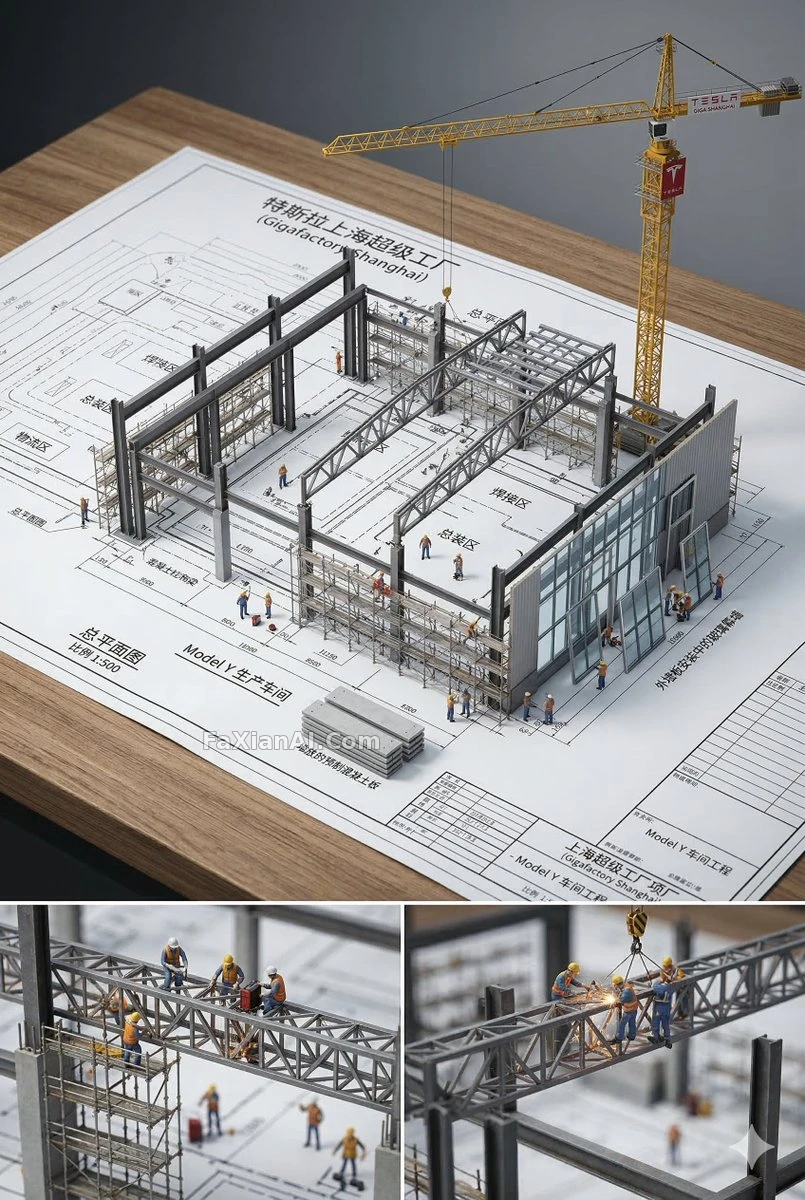 A Construction Site Growing Out of Blueprint Lines