Home › Creative Ideas › Tiny Character Sprinting Across a Comic Page
Tiny Character Sprinting Across a Comic Page
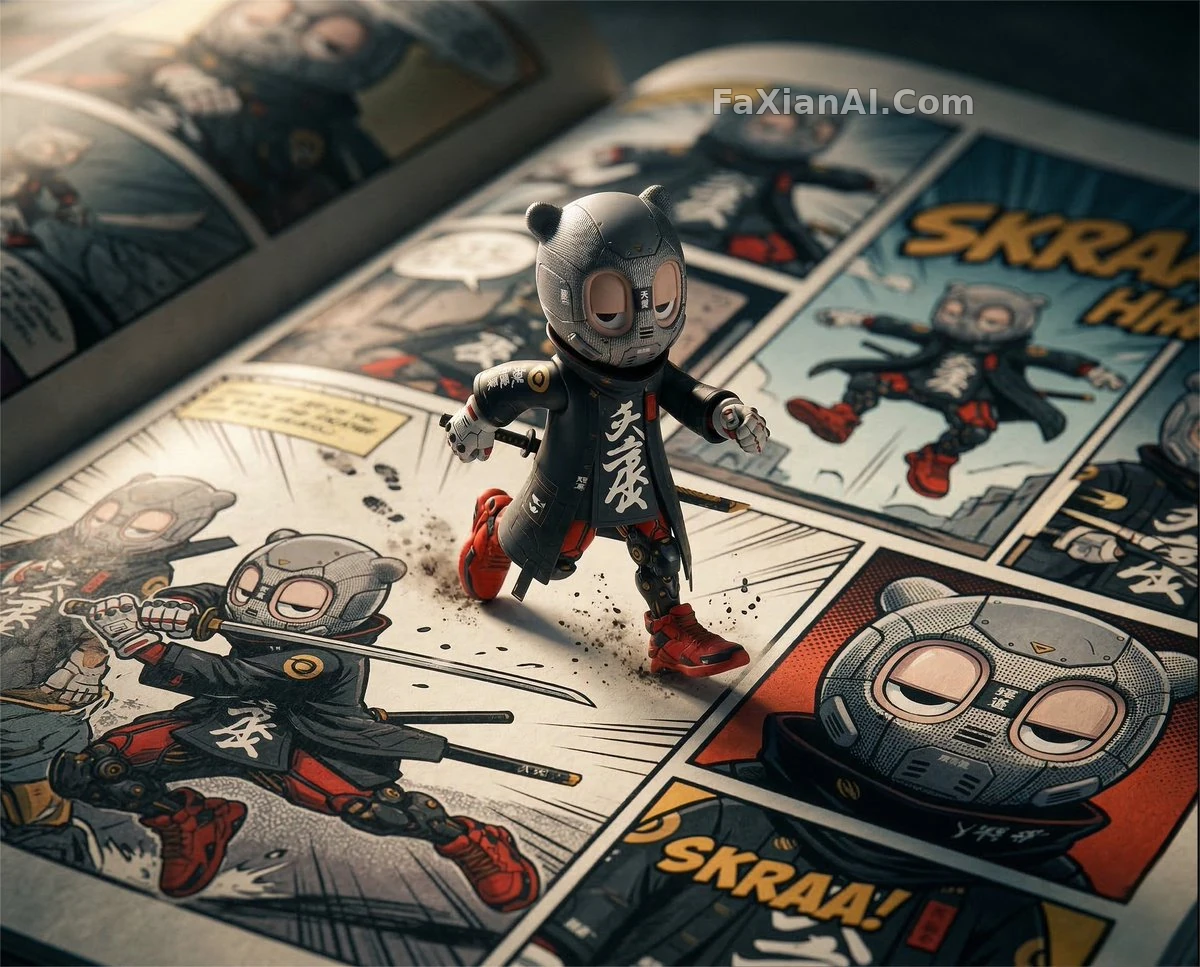
A pea-sized figure sprinting across the page, the panels telling his own story, light slanting in from the upper left.
✍️ Wherever the character's face is covered, the comic panels can't invent features to fill it in — that rule matters more than how dynamic the pose looks. Break it once, and the whole character design falls apart.
📋 Prompt Natural Language2180 characters
This is a highly cinematic macro toy-photography shot: a pea-sized character, carried over from the uploaded reference image, dramatically sprinting across the surface of a giant open comic book whose pages print his own comic panels. Identity lock is priority one — the miniature physical character and the comic panels printed on the page must match the reference's identity exactly: head shape, eye shape and spacing, stylization, silhouette, materials, and costume design must all stay consistent, no exceptions. If the character is already wearing a balaclava, mask, or helmet, or if the face is otherwise covered, then the comic panels must not invent facial anatomy either — no added nose, no added mouth; anywhere the reference shows no skin, the panels must show no skin either. The design language depicted in the comic panels must match the character exactly, just rendered in a printed-comic art style — no anthropomorphizing, no reinterpreting the anatomy. In terms of action, the miniature character is running across the page as if moving through his own story; giant comic panels surround him, each drawn in bold comic-book linework capturing his dynamic action pose. The camera sits very low, almost level with the paper, using a 90–100mm macro lens for a heroic sense of scale; the character sits slightly off-center, leaning forward, caught mid-motion. Depth of field is extremely shallow: the running character and the immediate page area are sharp and crisp, while the surrounding panels and the distant page edges fall into soft blur. Light rakes in from the upper left, sharp and cinematic, casting dramatic shadows across the page and picking out small reflections on the glossy printed surface. Surface detail should read down to the micro level: ink texture, paper fiber, faint glossy reflections, all visible. Color grading leans into rich, saturated comic-book tones with warm cinematic highlights and soft ambient glow, for an overall moody macro-photography atmosphere. Rendering should aim for a believable macro toy-photography aesthetic, emphasizing the illusion of scale between the tiny character and the vast comic-book world. Aspect ratio 5:4.