Home › Style Transfer › Solving Transparency With Thin-Film Interference
Solving Transparency With Thin-Film Interference
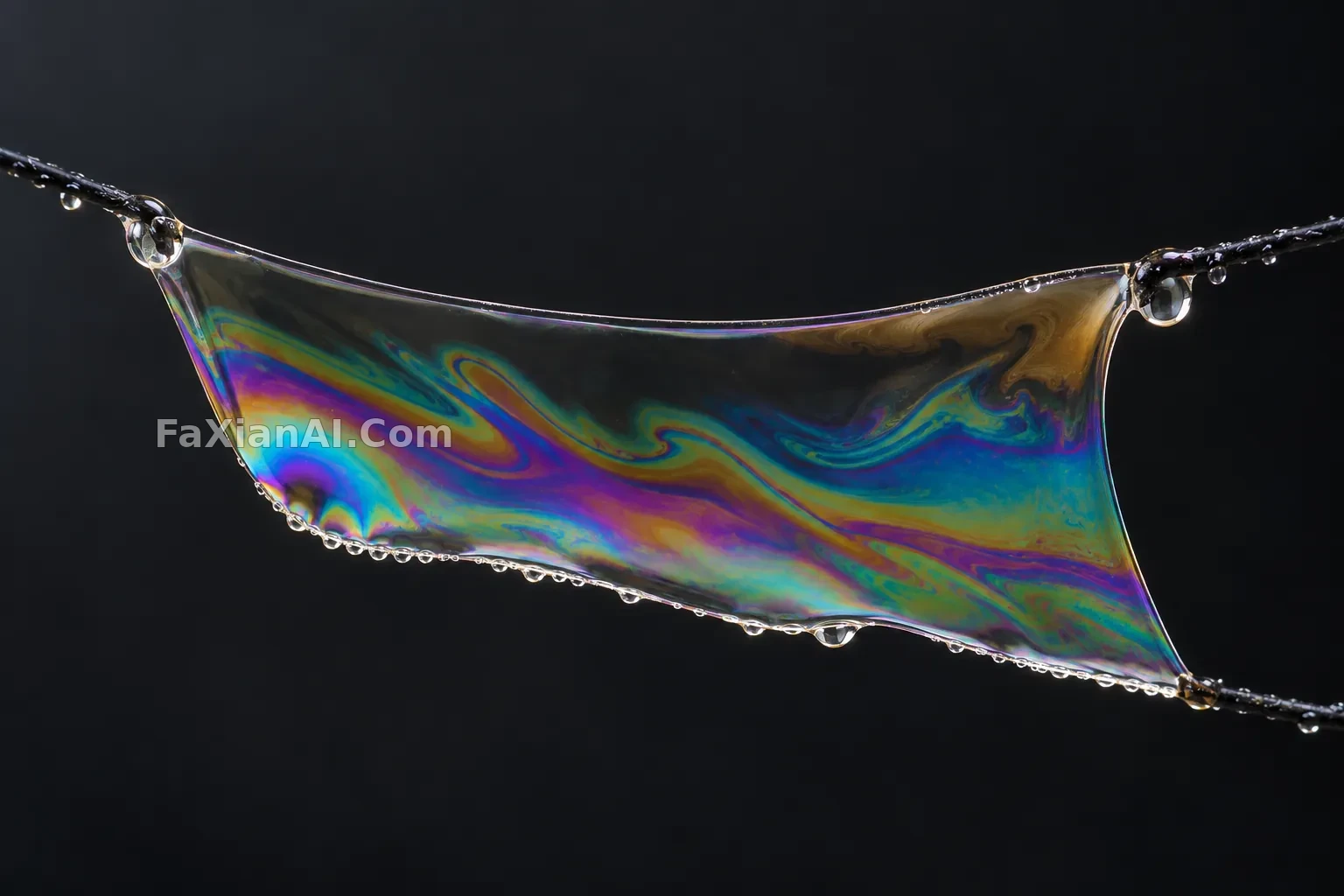
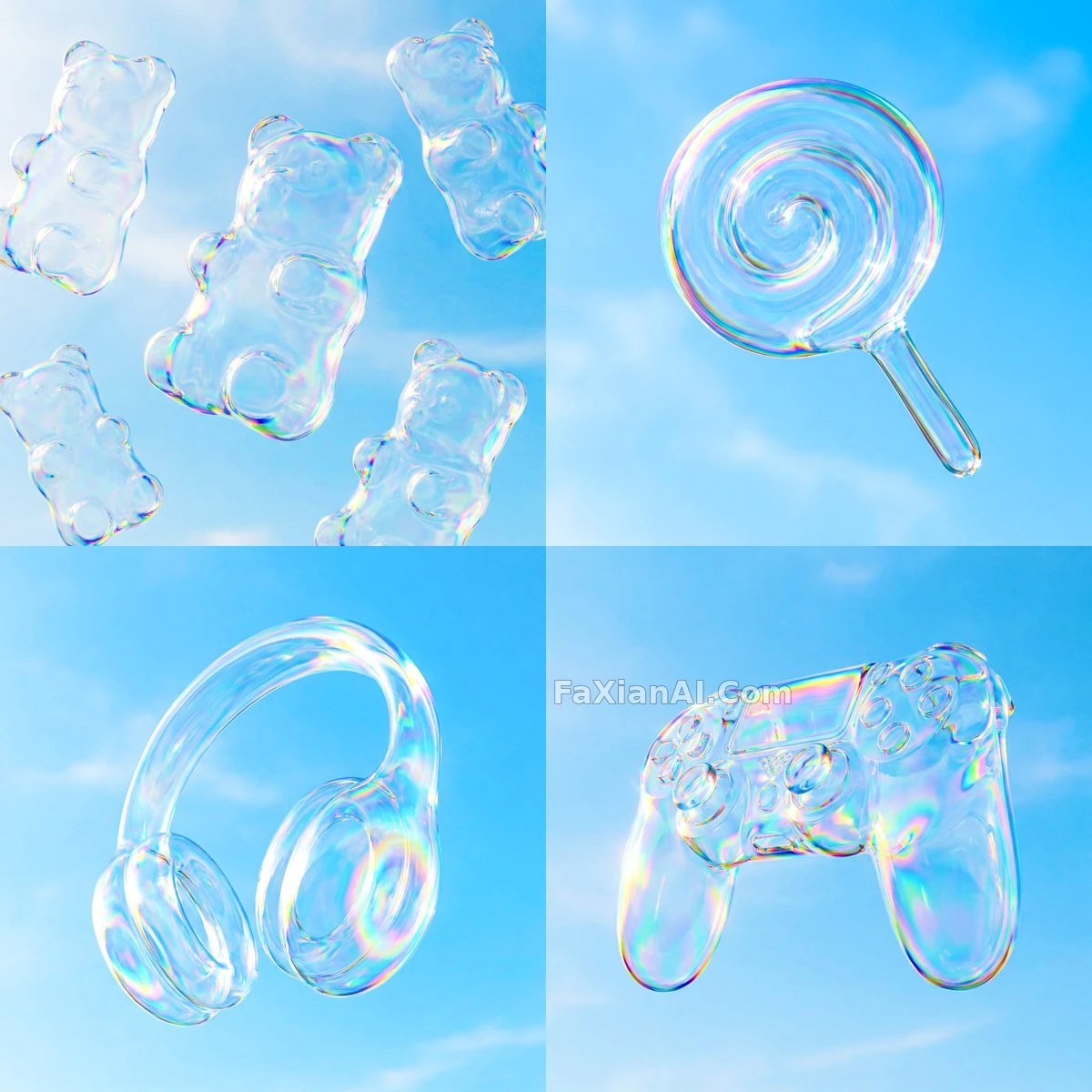
The question is how to make an object read as fully transparent — the answer lies in thin-film interference and prismatic light splitting, with color that never goes dull.
✍️ The problem is that transparency often ends up looking like empty space. This version solves it with thin-film interference — strong enough dispersion keeps the transparency from feeling hollow, and that's where the prismatic light-splitting earns its keep.
📋 Prompt Natural Language832 characters
A floating [object: [OBJECT]] rendered entirely in soap-bubble material — an ultra-thin, fully transparent shell with no solid parts, every element sharing one seamless continuous surface over a hollow, lightweight structure and smooth organic geometry. Thin-film interference is intensified, producing strong chromatic dispersion, visible spectrum separation, prismatic light splitting, vivid iridescent reflections, and high-contrast iridescence with rainbow highlights tracing every edge. Colors are slightly boosted and cleanly separated, never dull or desaturated. Centered composition, low angle shot, floating against a soft sky-blue gradient with faint hints of light cloud, bright luminous daylight, clear and well-lit, minimal background. Polished CGI aesthetic, ultra-clean render, soft reflections, high detail, no haze.