Home › Style Transfer › Clutter Up Close, a Face From Farther Back
Clutter Up Close, a Face From Farther Back
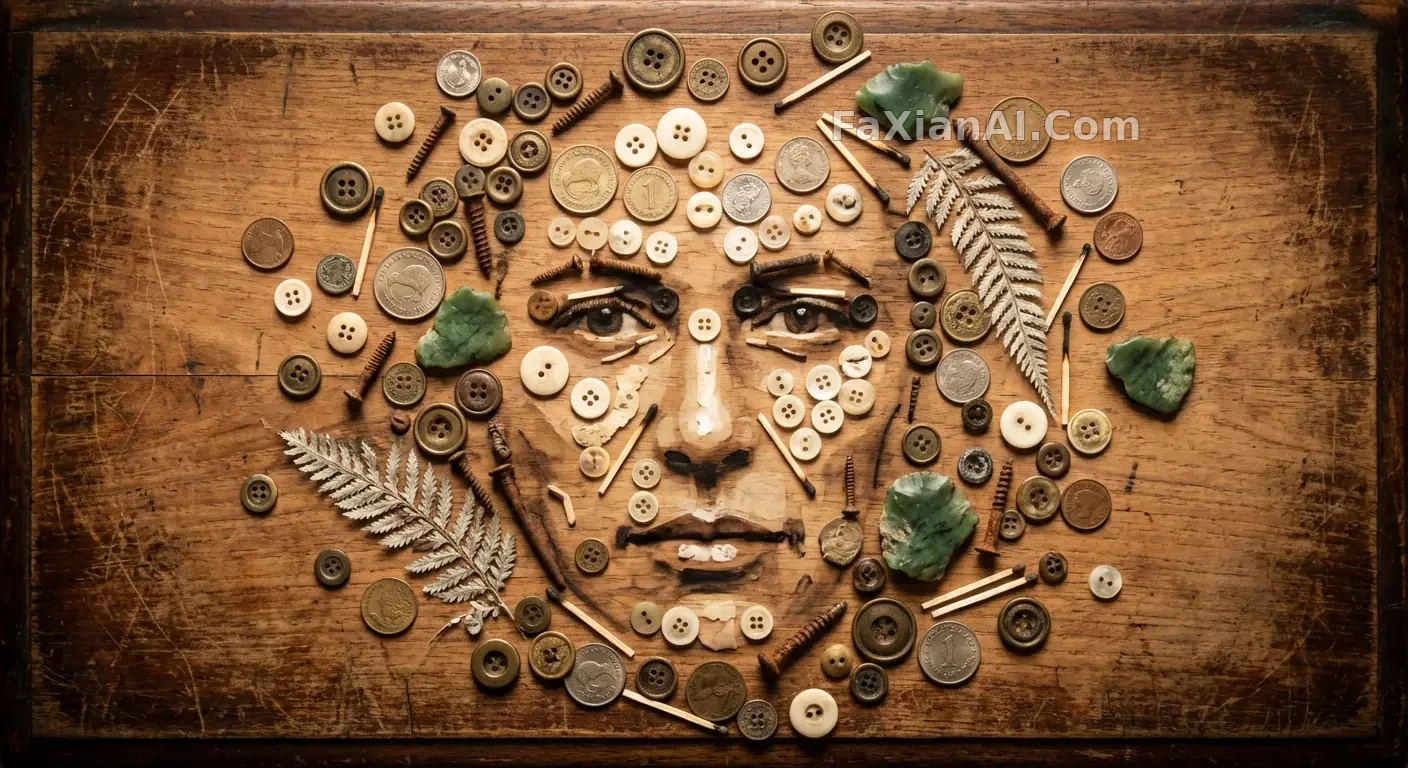
It looks like a pile of odds and ends at first, but step back two paces and it resolves into a face — a trick played on your own eyes.
✍️ The trick lives in the instruction that the face should only resolve at a certain distance, staying pure clutter up close — which dictates how sparing the shadow and negative-space density has to be. The New Zealand coins and jade fragments are just the shell; the real work is controlling the recognition distance, and the same logic transfers to any other country's set of objects.
📋 Prompt Natural Language746 characters
Shoot a top-down tabletop still life — buttons, screws, New Zealand coins, silver fern leaves, matchsticks, and pounamu jade fragments scattered across a surface as if at random. Arrange them with real intent, though: the placement and shading should resolve into a clear human face when viewed at the right distance. Keep it deceptive up close — pure clutter — and only readable as a portrait once you step back and let your eyes unfocus slightly. Use neutral tones, soft overhead lighting, and a gentle vignette, with realistic cast shadows under each piece for depth. Set it on a worn rimu-wood table, scratched and patinated with age, and keep the arrangement organic rather than symmetrical. No text, no obvious outlines, no artificial glow.