
Writing Complex Subjects Clearly: A Prompt Notebook on Structure, Material, and Scale
A complex subject does not require a long prompt. Readability usually depends on three decisions: how parts relate, how materials end, and what scale helps the viewer understand the scene. This batch moves from architectural cutaways and industrial hardware to handmade maps, so those decisions can be tested separately.
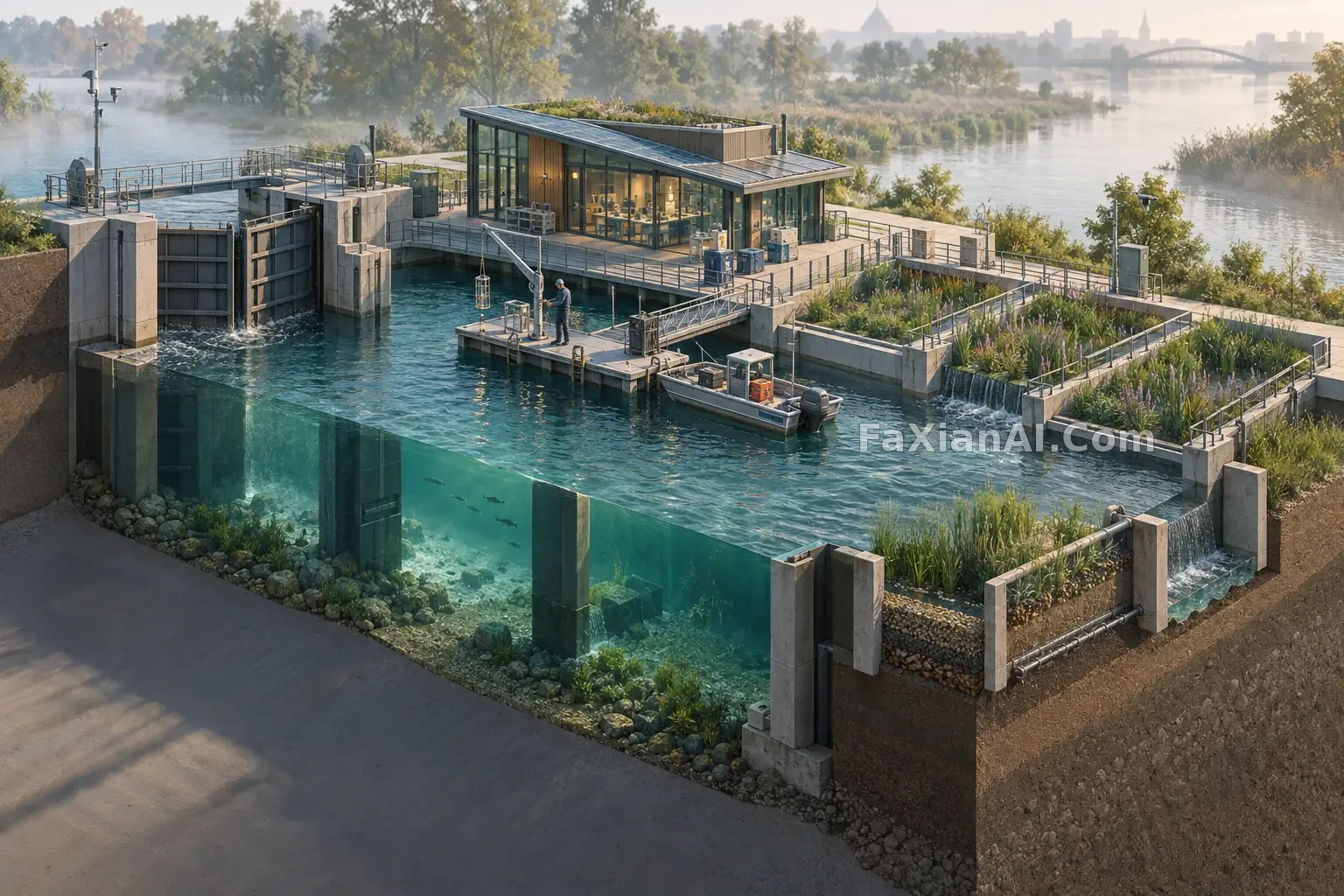
Describe relationships before appearance
Isometric Canal Research Station starts with the connections among the lock, sampling deck, service boat, and wetland cells instead of piling on words such as “futuristic” or “cinematic.” Liquid-Cooled AI Server Cutaway likewise turns cold plates, manifolds, compute modules, and airflow into a path that can be followed. Color and light become useful only after the relationship is clear.
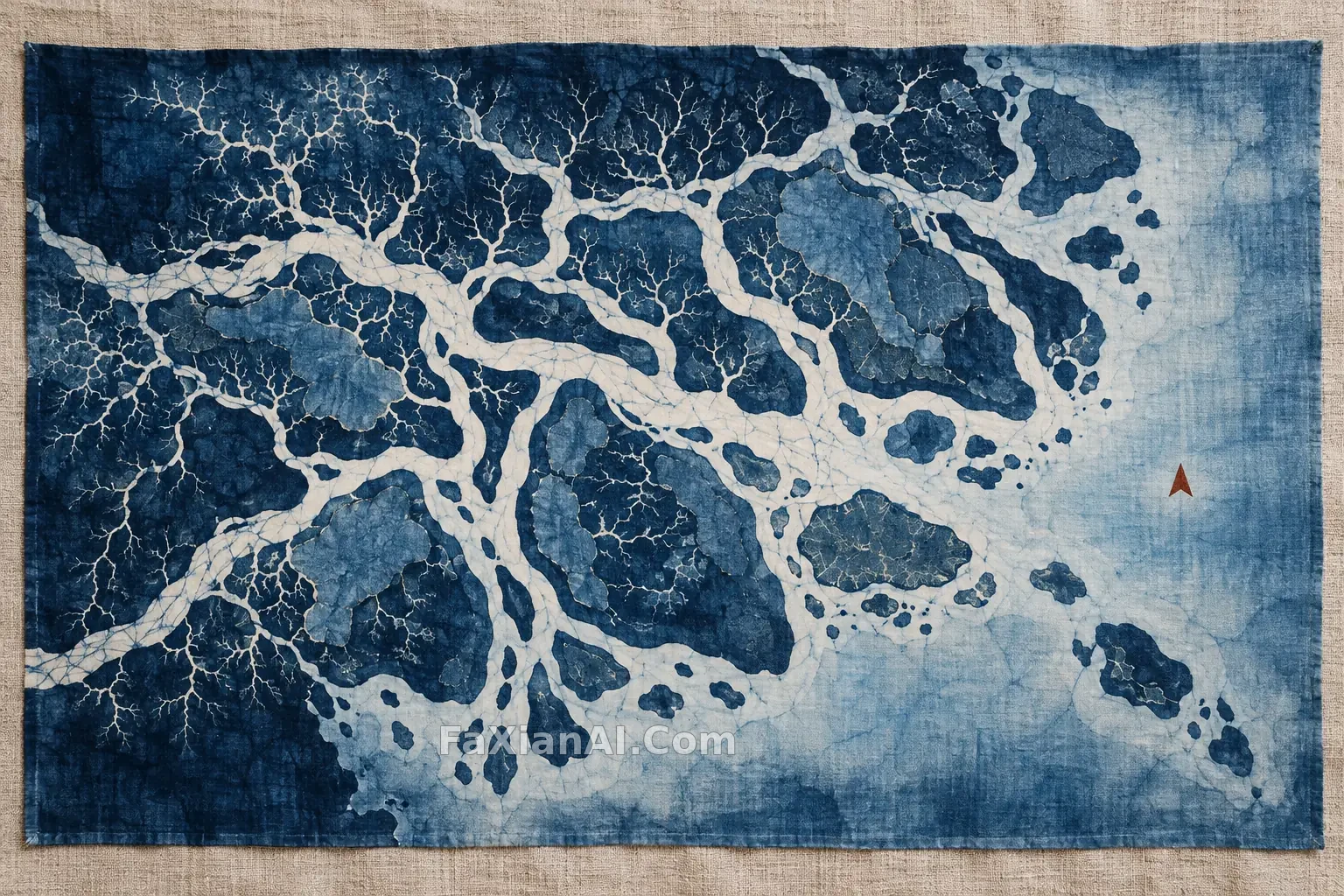
A material needs an edge and a response
Indigo Batik Mangrove Map does more than request “fabric texture”: wax cracks become tidal channels, while the weave and cloth edge remain visible. Rhinoceros Beetle in Resin separates the bubbles inside the transparent block, the shell ridges, and refraction at the edge. A material word earns its place only when it changes edges, reflections, grain, or deformation.

Use scale to remove ambiguity
Rammed-Earth Gallery Construction Cutaway uses scaffolding, formwork, and adult workers to establish architectural scale. Paper-Clay Tidal Observatory is explicitly a tabletop model, where fingerprints and fibers become strengths. The same subject needs entirely different detail density at life size and model size.
Keep only constraints that change the image
“No text,” “no logo,” and “one coherent scene” have specific jobs in equipment, posters, and maps. Repeating “high-definition,” “exquisite,” or “professional” rarely repairs a composition. Compare the Constructivist Bicycle Workshop, the design category, the isometric-map tag, and the earlier material, light, and space workbook to test whether each phrase truly changes the subject, structure, or light.