
From Material Edges to Spatial Depth: A Prompt Review Notebook
A useful image prompt rarely improves by adding more adjectives. It improves when subject, material, light, and space each perform a clear job. These new cases cover paper fiber, amber, embroidery, liquid chrome, glass, and botanical macro photography, making them a practical checklist for readable edges, believable light, and coherent depth.
Name the subject, then describe where the material ends
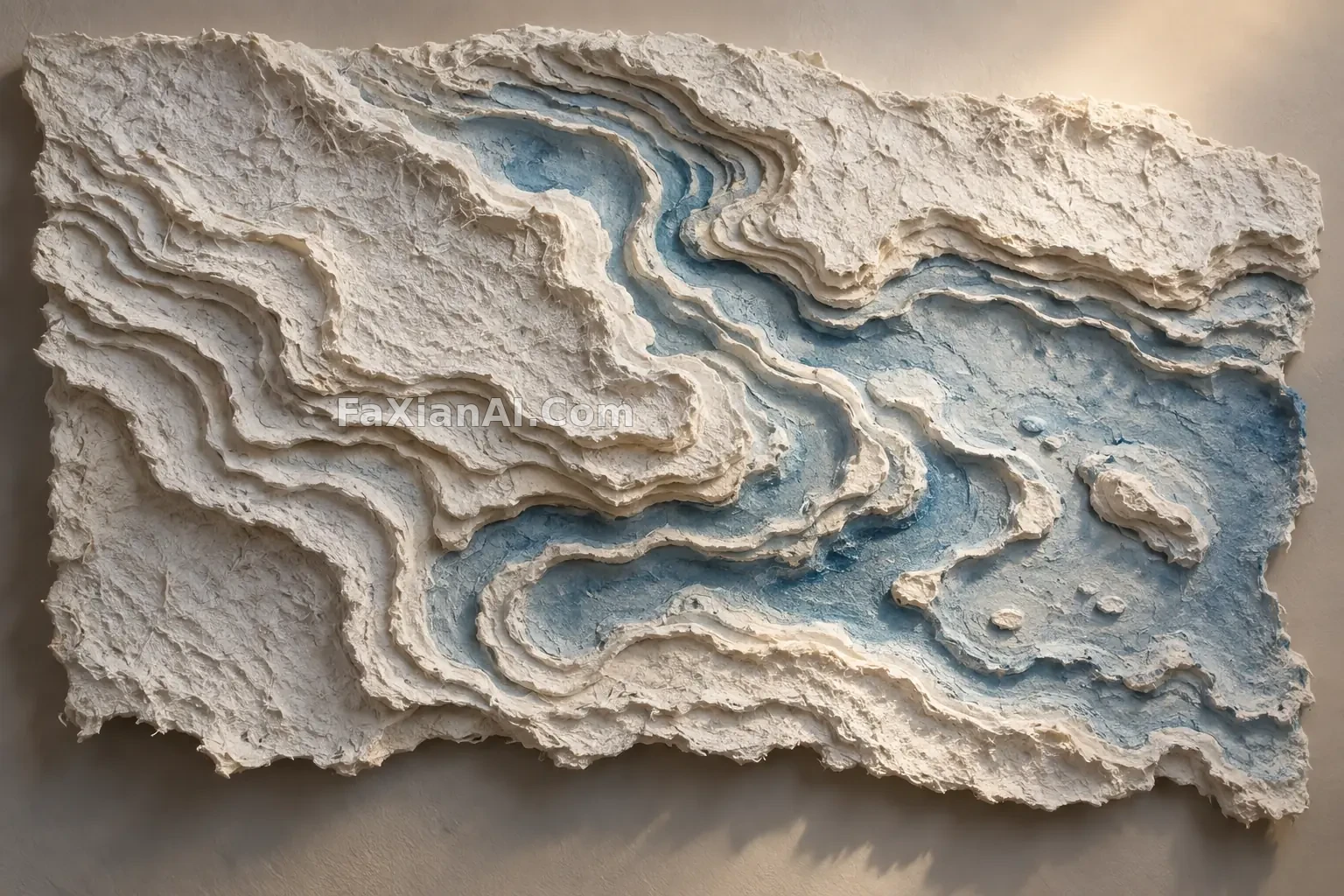
The subject tells us what to see; its edge tells us whether to believe it. Paper-Pulp Tidal Relief separates rough white fibers from mineral-blue recessed channels, so the raking light can explain both ridges and hollows. Amber Fossil Paperweight separates the fossil inside, edge refraction, and the shadow on the table instead of reducing “amber” to a single orange mass.

Let light explain a material instead of decorating it
Soft light suits continuous transitions on glaze and opal glass; raking light reveals pulp, stitches, and etched lines. In Cloisonné Beetle Brooch, gold wires and enamel cells are the cause, while highlights merely prove their structure. In Liquid Chrome Lounge Chair, reflections must bend with the folded surfaces or the mercury effect collapses into mirror noise.
Build space with occlusion, shadows, and scale
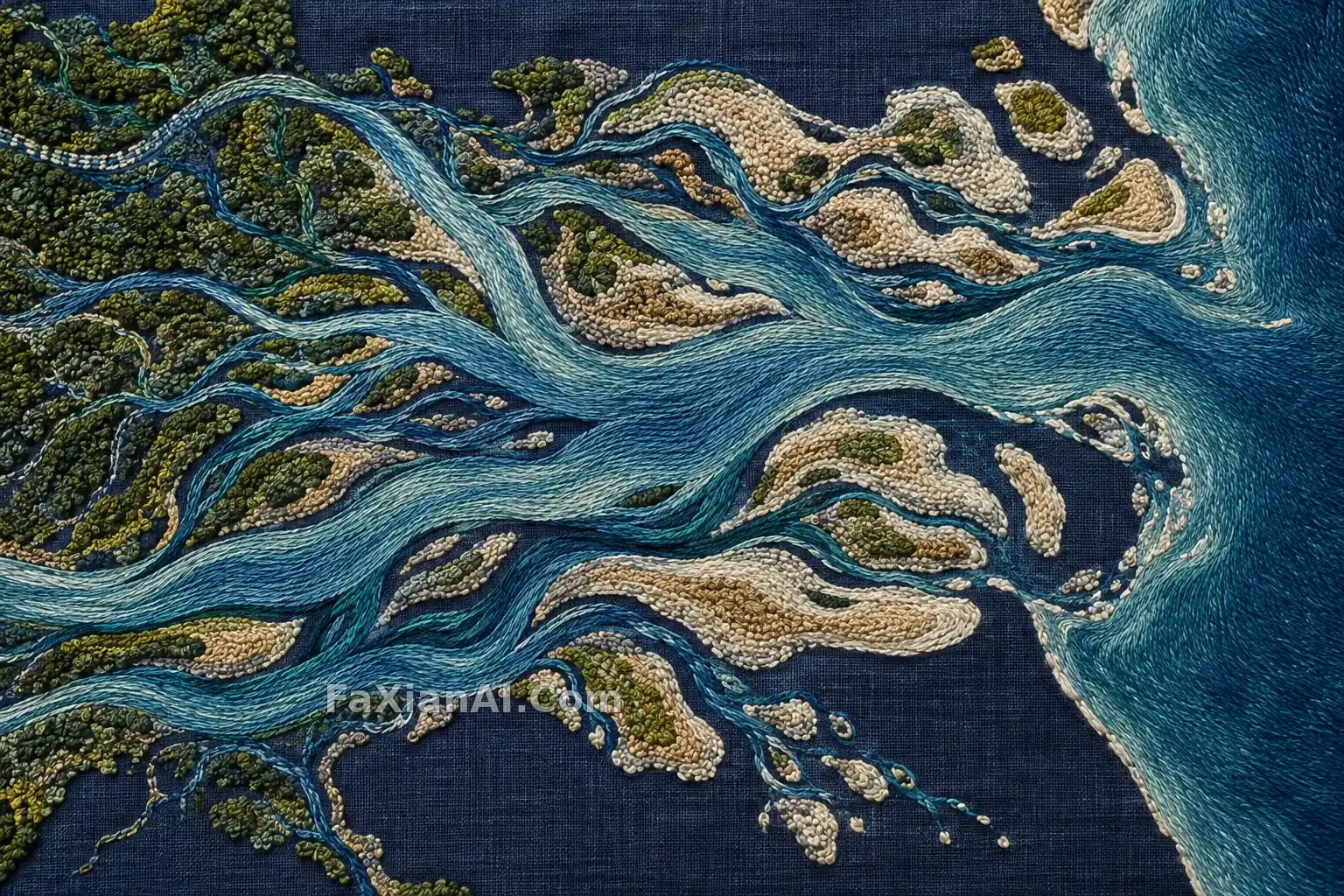
Spatial language can be concrete. Embroidered River Map uses navy linen as ground, satin stitch for water, and seed stitch for sandbars; thread relief becomes terrain. Iris Dew Macro uses the order of petal, droplet, and focus plane to turn a tiny scale into a complete environment.
Check whether every constraint earns its place
“No text” has a clear role for packages, maps, and specimen cabinets. “Sharp subject” should identify whether the critical detail is an elytron, a gold wire, or a paper fiber. Remove tail phrases that cannot change the picture, then compare the pulp-relief tag, the design category, and the earlier material, light, and space workbook.