
From origami manta rays to coastal salt pans — Let edges and scale tell the story
If a prompt says "geometric sense", the model may give a clean structure, or it may just cut the picture into beautiful color blocks. The difference often lies in whether the prompt explain: what material the edge is made of, what objects indicate the scale, and how the light makes this information visible. These three questions are examined below using two sets of cases from different media.
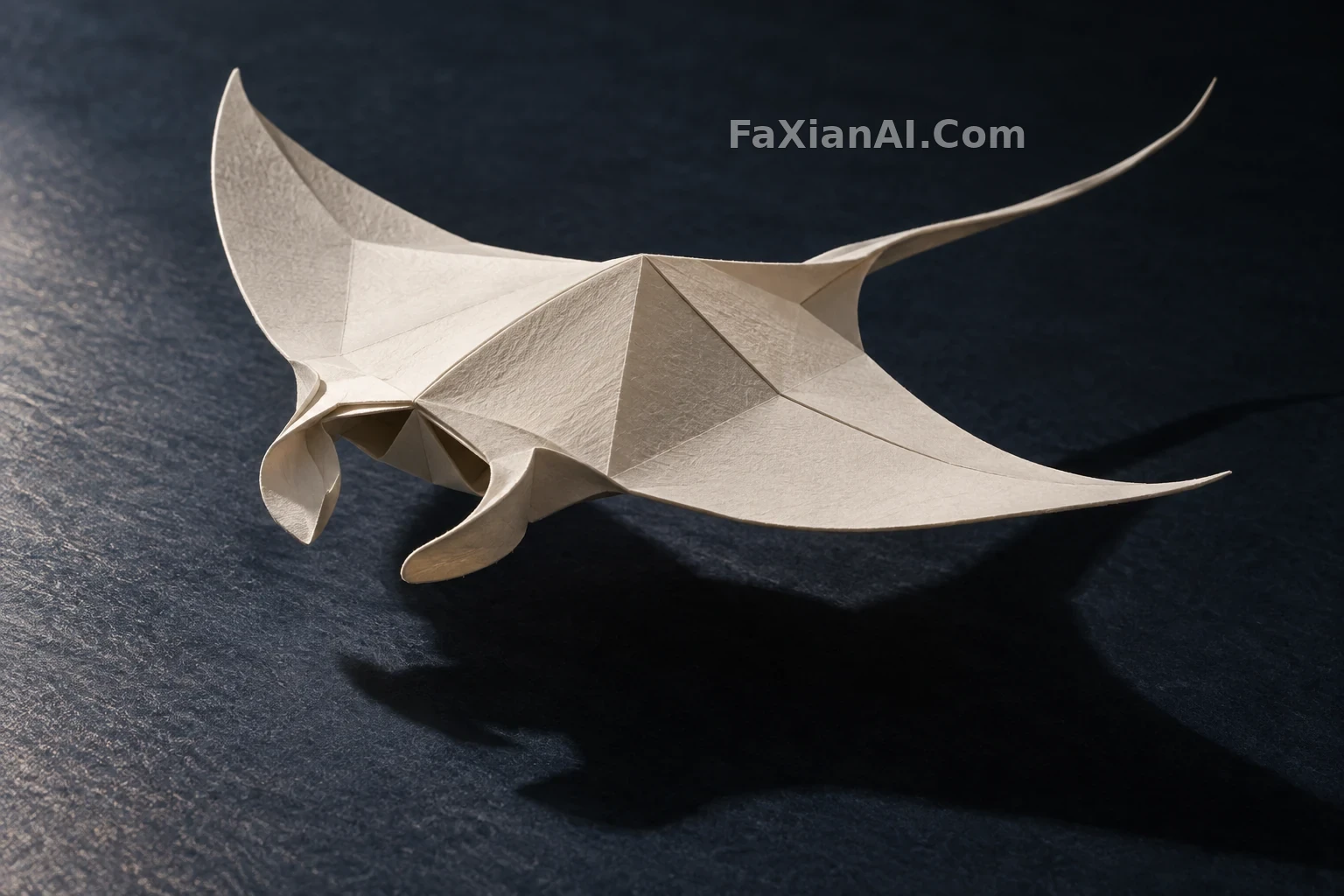
The geometry of origami comes from the forces and edges of the paper
Paper-folded manta ray's suspended bone linesWrite the long wings, tail and central axis as fold lines on the same piece of paper. The shadow on the table indicates the height of the paper sculpture from the table. When generating, first define the "piece of paper" and the viewing angle, and then explain the creases, fibers and side light, which can reduce the chance of the model turning the paper sculpture into a plastic toy. with existingCobalt Blue Paper KingfisherIn comparison, the kingfisher relies on corner folds and perching branches to maintain a small size, while the manta ray uses wide wings and suspended projections to create lateral tension; under the same "geometric crease" label, the main structure and spatial treatment are indeed different.
This method is suitable for paper crafts, toy concept drawings and materials practice. The limitations are also very clear: if there is no thickness or fulcrum for the large-area paper wings, the model will easily give sharp corners that cannot be folded. When checking the final image, look to see if the edges of the paper are continuous and whether the shadows are consistent with the direction of the light source, not just whether the outline looks like a manta ray.
The geometry of aerial photography must be able to explain the landforms
The pink and blue boundary of coastal salt fieldsA standard system is composed of an evaporation pond, a salt bank and a small maintenance vehicle. The pink and turquoise color of the pool water is the result of the salt fields, not arbitrary coloring; a diagonal coastline separates the pool area from the natural sea surface. originalAerial photography of early irrigation rice fieldsWhile terraces and irrigation canals establish order, the new case organizes the picture with flat salt ponds and mineral embankments. Both cases are aerial photography, but the hydrological structures are not interchangeable.
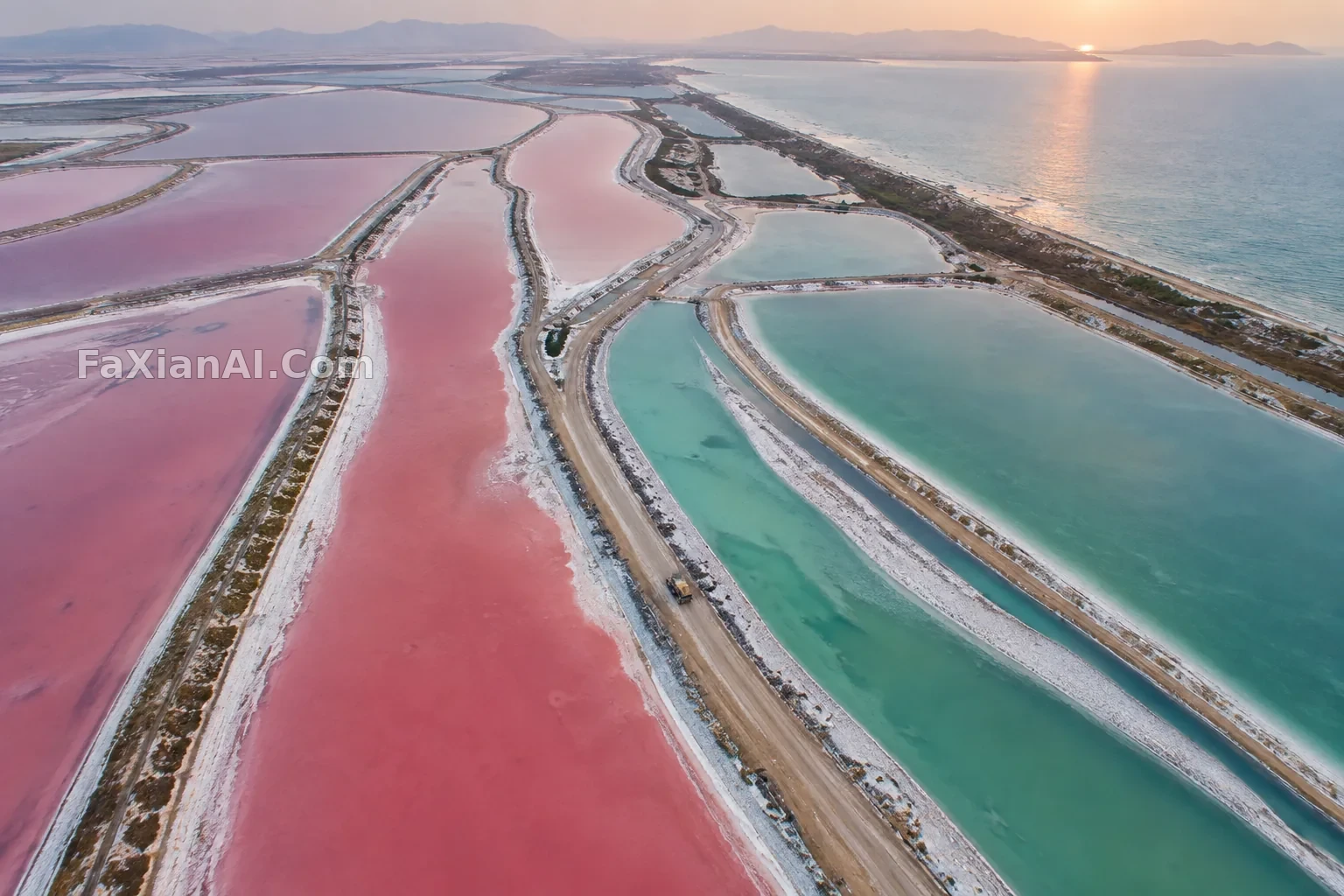
This type of writing is suitable for geographical wallpapers, environmental thematic pictures and overhead composition exercises. The color of the salt pond may be affected by the season and the state of microorganisms; the prompt can specify the relative color gamut, and the schematic picture should not be regarded as the actual measured color of a certain salt field. If scientific explanation is needed, create another map or chart with sources.
Ask three questions first, then add style words
First ask whether the edge belongs to paper, earth, water or architecture; then find a credible scale reference; and finally decide from which direction to light the key structure. Stylistic anchors are chosen after materials, proportions and lighting are decided. Paper sculpture is better for examining creases and projections, and aerial photography is better for examining paths and landforms. Can continue to viewFigure classification,Wallpaper classification,Geometric Crease Labelandaerial photography tags.Structural prompt word method from timeline to profileFurther discuss how complex scenes retain structural continuity.